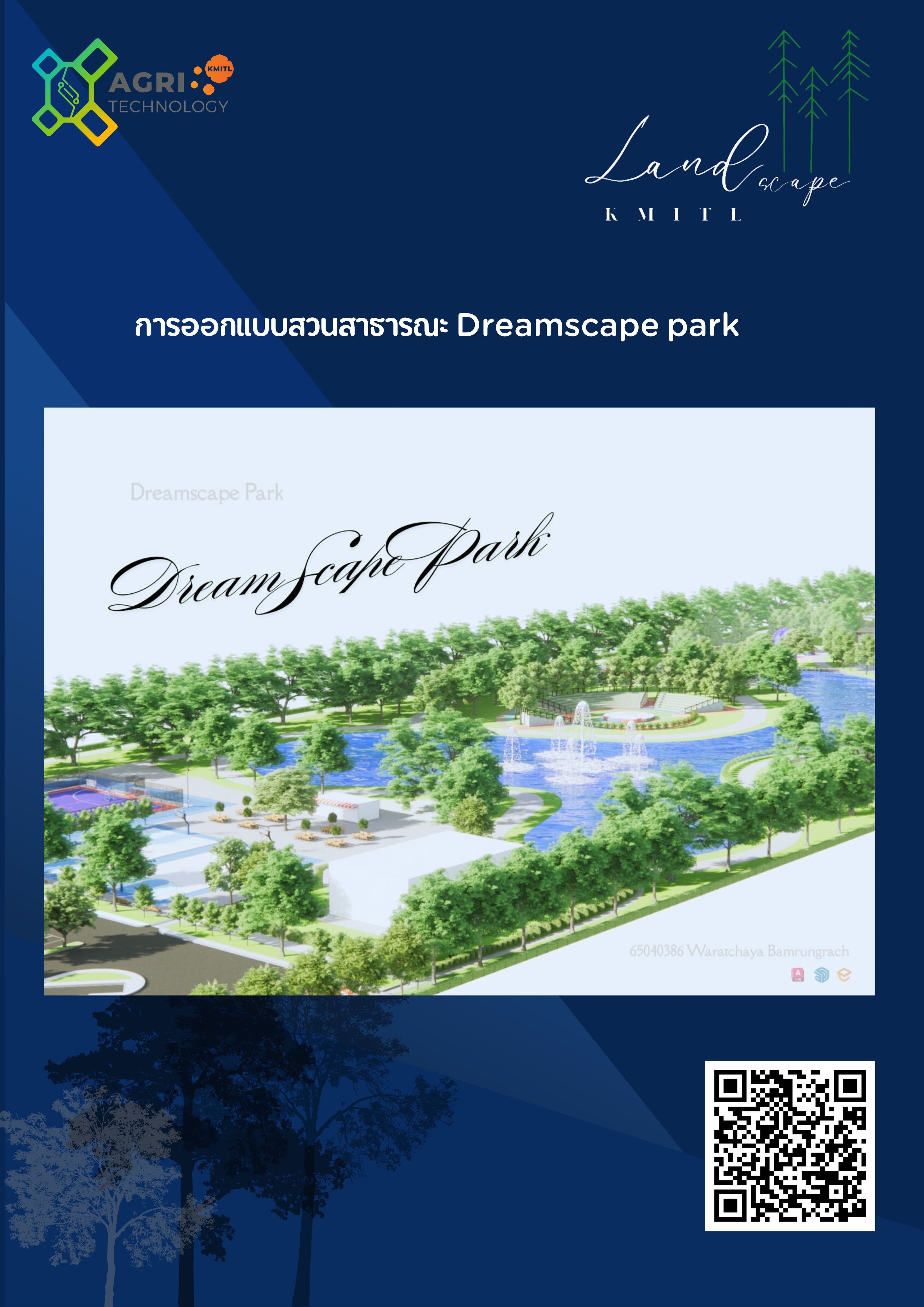
The design of Dreamscape Park, a public park covering an area of 50 rai, is based on the concept of ART. The design focuses on preserving green spaces while enhancing functionality to cater to people of all ages. The park features a landmark in the form of a water pond shaped like a drop of ink and a medium-sized amphitheater for various activities. Additional relaxation areas include a café, chill-out seating, outdoor activity zones, and sports facilities such as a basketball court, a takraw court, and walking/running paths around the park. There are also pet zones, children's play areas, gardens at various points, and accessible pathways throughout the area. Users can enjoy a peaceful environment and engage in activities according to their preferences.
สวนสาธารณะเดิมอาจขาดการบำรุงรักษา ขาดฟังก์ชันที่ตอบโจทย์การใช้งานของคนยุคใหม่ หรือมีการออกแบบที่ไม่รองรับกิจกรรมที่หลากหลาย ส่งผลให้สวนสาธารณะไม่ได้ถูกใช้งานอย่างเต็มศักยภาพ การทำสวนสาธารณะเดิมให้เป็นพื้นที่ใหม่ที่ทันสมัยและตอบสนองความต้องการของผู้ใช้งานจึงเป็นสิ่งจำเป็น การออกแบบครั้งนี้ไม่เพียงมุ่งเน้นการเพิ่มฟังก์ชันการใช้งานและความสวยงาม แต่ยังคำนึงถึงการอนุรักษ์พื้นที่สีเขียว และการสร้างสภาพแวดล้อมที่กระตุ้นให้คนออกมาใช้พื้นที่สาธารณะมากขึ้น โครงการนี้มีความสำคัญเพราะช่วยคืนชีวิตให้กับสวนสาธารณะที่เคยถูกละเลย และเปลี่ยนให้เป็นศูนย์กลางกิจกรรมของชุมชน ไม่ว่าจะเป็นการพักผ่อน ออกกำลังกาย ทำกิจกรรมสร้างสรรค์ หรือพบปะสังสรรค์ นอกจากนี้ การออกแบบใหม่ยังช่วยเสริมสร้างอัตลักษณ์ให้กับพื้นที่ ให้สวนแห่งนี้กลายเป็นแลนด์มาร์กสำคัญที่ดึงดูดผู้คน
คณะวิศวกรรมศาสตร์
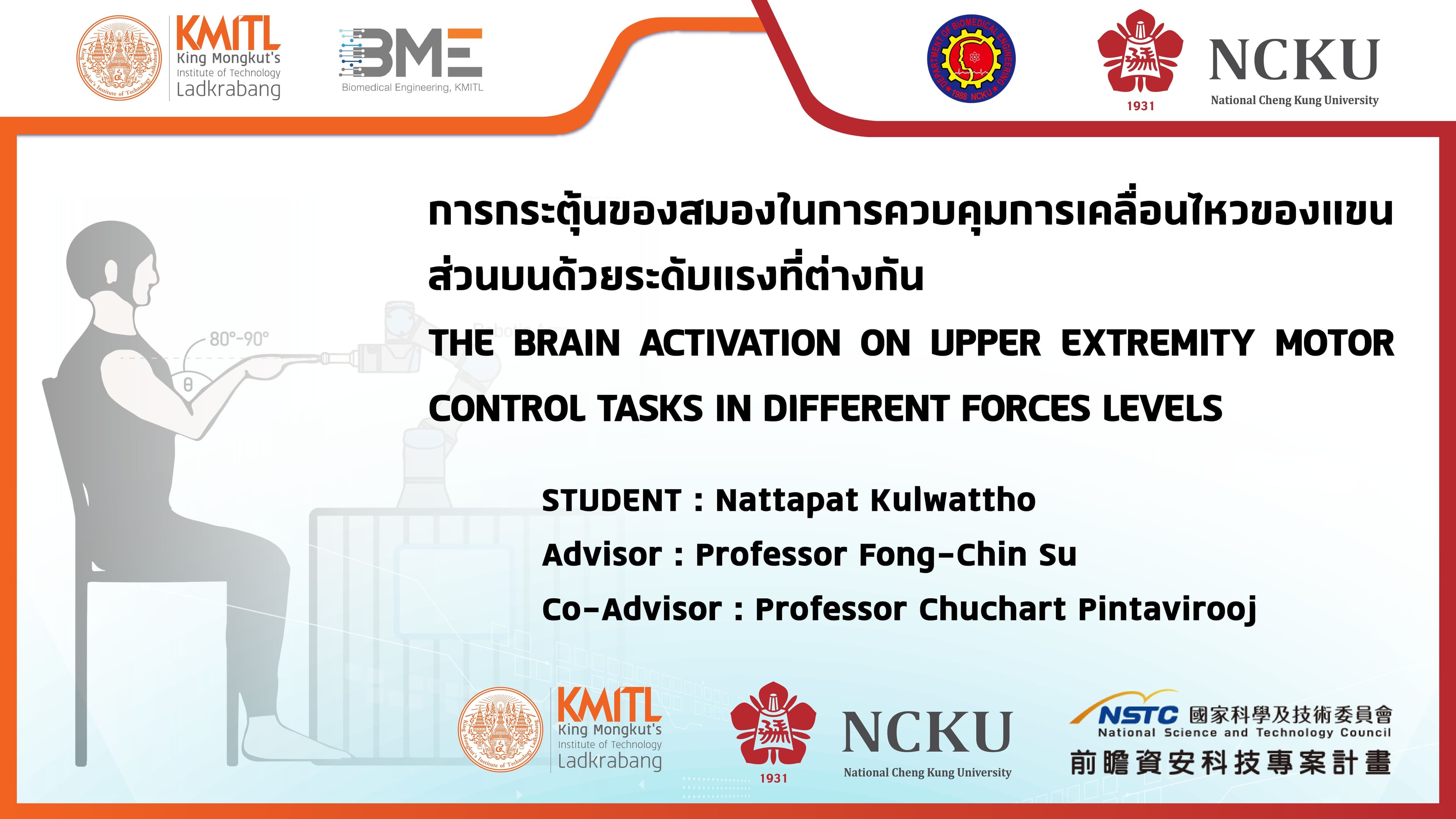
Motor control is a critical process for muscle contraction, which is initiated by nerve impulses governed by the motor cortex. This process is vital for performing activities of daily living (ADLs). Consequently, a disruption in communication between the brain and muscles, as seen in various chronic conditions and diseases, can impair bodily movement and ADLs. Evaluating the interaction between brain function and motor control is significant for the diagnosis and treatment of motor control disorders; moreover, it can contribute to the development of brain-computer interfaces (BCIs). The purpose of this study is to investigate brain activation in designed upper extremity motor control tasks in regulating the pushing force in different brain regions; and develop investigation methods to assess motor control tasks and brain activation using a robotic arm to guide upper extremity force and motor control. Eighteen healthy young adults were asked to perform upper extremity motor control tasks and recorded the hemodynamic signals. Functional Near-Infrared Spectroscopy (fNIRs) and robotic arms were used to assess brain activation and the regulation of pushing force and extremity motor control. Two types of motion, static and dynamic, move along a designated trajectory in both forward and backward directions, and three different force levels selected from a range of ADLs, including 4, 12, and 20 N, were used as force-regulating upper extremity motor control tasks. The hemodynamic responses were measured in specific regions of interest, namely the primary motor cortex (M1), premotor cortex (PMC), supplementary motor area (SMA), and prefrontal cortex (PFC). Utilizing a two-way repeated measures ANOVA with Bonferroni correction (p < 0.00625) across all regions, we observed no significant interaction effect between force levels and movement types on oxygenated hemoglobin (HbO) levels. However, in both contralateral (c) and ipsilateral (i) PFC, movement type—static versus dynamic—significantly affected brain activation. Additionally, cM1, iPFC, and PMC showed a significant effect of force level on brain activation.
คณะสถาปัตยกรรม ศิลปะและการออกแบบ
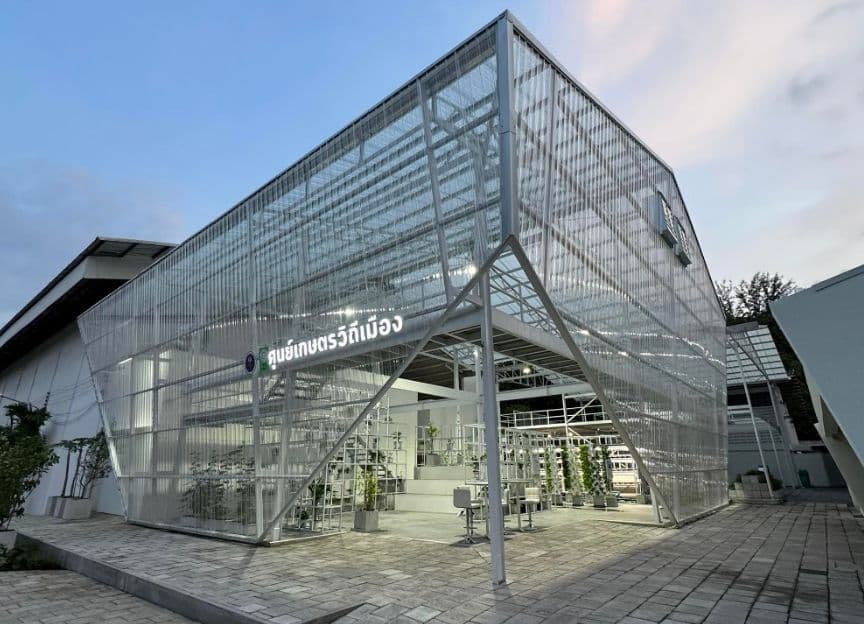
From the current situation and uncertainty; leads to the concept of food security. It is the application of innovation and technology to create high productivity in a limited area. The unused buildings in urban areas were renovated for planting, created as a learning area for planting in urban area. The different methods of growing plants were presented. There are 35 planting innovations for disseminating knowledge, to create food security, self-reliant, supports sustainable living.
คณะเทคโนโลยีการเกษตร
-