

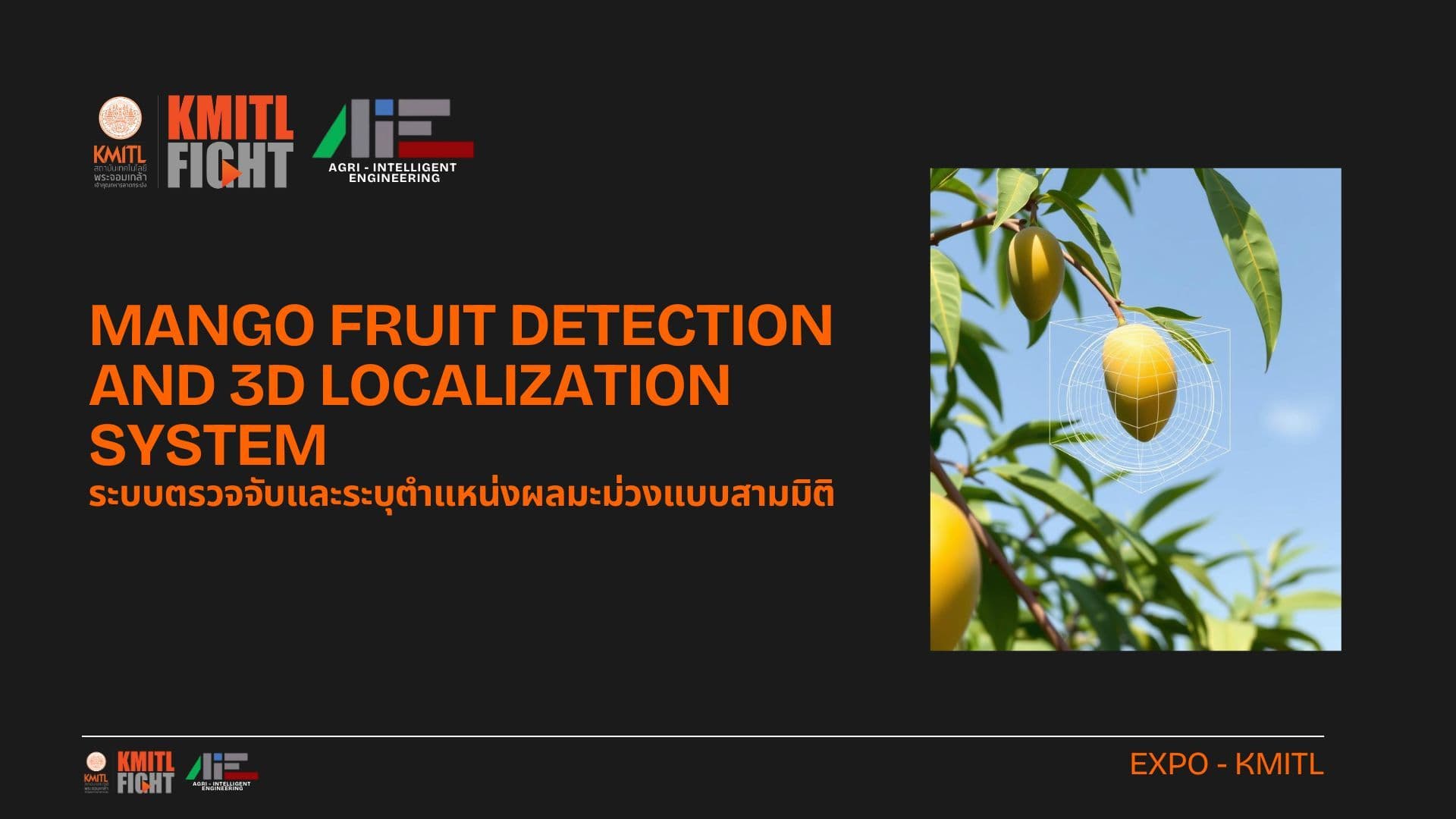
The evaluation of mango yield and consumer behavior reflects an increasing awareness of product origins, with a growing demand for traceability to understand how the produce has been cultivated and managed. This study explores the relationship between mango characteristics and cultivation practices before harvest, using location identification to provide insights into these processes. To achieve this, a model was developed to detect and locate mangoes using 2D images via a Deep Learning approach. The study also investigates techniques to determine the real-world coordinates of mangoes from 2D images. The YOLOv8 model was employed for object detection, integrated with camera calibration and triangulation techniques to estimate the 3D positions of detected mangoes. Experiments involved 125 trials with randomized mango positions and camera placements at varying yaw and pitch angles. Parameters extracted from sequential images were compared to derive the actual 3D positions of the mangoes. The YOLOv8 model demonstrated high performance with prediction metrics of Precision (0.928), Recall (0.901), mAP50 (0.965), mAP50-95 (0.785), and F1-Score (0.914). These results indicate sufficient accuracy for predicting mango positions, with an average positional error of approximately 38 centimeters.
ในปัจจุบัน เทคโนโลยีทางการเกษตรได้รับการพัฒนาอย่างต่อเนื่อง เพื่อเพิ่มประสิทธิภาพในการผลิตและการจัดการผลผลิตอย่างแม่นยำ การตรวจจับตำแหน่งของผลผลิตในพื้นที่เกษตรกรรมถือเป็นหนึ่งในความท้าทายสำคัญที่นักวิจัยและผู้ประกอบการในอุตสาหกรรมเกษตรกรรมต้องการหาทางออก โดยเฉพาะการตรวจจับและการประเมินผลผลิตของผลมะม่วง ที่เป็นผลไม้ที่มีความสำคัญทางเศรษฐกิจในหลายประเทศ ซึ่งประเทศไทยเป็นหนึ่งในผู้ผลิตมะม่วงรายใหญ่ของโลก รวมถึงพฤติกรรมของผู้บริโภคที่มีความตระหนักถึงที่มาของผลผลิตมากยิ่งขึ้น ต้องการตรวจสอบย้อนกลับถึงที่มาของผลผลิตว่าผลผลิตนั้นๆได้รับการดูแลมาอย่างไรผ่านการระบุตำแหน่งของผลนั้นๆ ทั้งเป็นแหล่งข้อมูลที่บ่งบอกถึงลักษะของผลผลิตที่ได้มาได้ผ่านการดูแลรูปแบบใดในขณะที่ยังไม่ถูกเก็บเกี่ยว การพัฒนาเทคนิคในการหาตำแหน่งบนโลกจริง 3 มิติ ของมะม่วงจากข้อมูลภาพ 2 มิติ จึงเป็นเรื่องที่มีความสำคัญอย่างยิ่งในด้านการเกษตร เนื่องจากการตรวจจับและการประเมินผลผลิตในพื้นที่เกษตรกรรมเป็นขั้นตอนสำคัญในการจัดการและการเก็บเกี่ยวผลผลิต เทคนิคที่ใช้ในงานวิจัยนี้คือการผสมผสานระหว่างการสอบเทียบกล้อง (Camera Calibration) การตรวจจับวัตถุจากภาพ 2 มิติเพื่อคำนวณตำแหน่งในมิติ 3 มิติ โดยเทคนิค Triangulation และเทคโนโลยีการตรวจจับภาพที่มีความแม่นยำสูงอย่าง YOLOv8 มาใช้ ซึ่งเป็นโมเดลที่พัฒนาโดยใช้การเรียนรู้เชิงลึก (deep learning) ที่มีประสิทธิภาพในการตรวจจับวัตถุในภาพได้อย่างรวดเร็วและแม่นยำ ทั้งนี้ผู้จัดทำจึงมีแนวคิดที่ต้องการพัฒนาวิธีการหาตำแหน่งของผลมะม่วง เพื่อเพิ่มความสามารถในการประเมินผลผลิตทางการเกษตร ซึ่งเป็นปัจจัยสำคัญในการทำการเกษตรแบบเกษตรแม่นยำ (Precision Agriculture) การใช้เทคโนโลยีที่มีความแม่นยำสูงในการตรวจจับและประมวลผลข้อมูลภาพสามารถช่วยให้การจัดการผลผลิตในภาคเกษตรกรรมมีประสิทธิภาพมากขึ้น การรับรู้ข้อมูลของผลผลิต ลดความผิดพลาดในการประเมิน และความรวดเร็วในการจัดการ นอกจากนี้ยังสามารถนำไปประยุกต์ใช้ในการพัฒนาเทคโนโลยีใหม่ๆ ที่สามารถช่วยเพิ่มผลผลิตในภาคเกษตรกรรมและเสริมสร้างความยั่งยืนในอุตสาหกรรมเกษตรกรรมในอนาคต

คณะอุตสาหกรรมอาหาร
The "PRIVARY" product is an innovative herbal jelly beverage designed to support weight management and promote health through the benefits of four Thai herbs: roselle, safflower, chrysanthemum, and bitter melon. These herbs are rich in active compounds such as flavonoids, beta-carotene, and anthocyanins, which help reduce blood lipids, prevent inflammation, and exhibit antioxidant properties. The product emphasizes convenience and caters to health-conscious consumers using advanced production techniques like Inverse and External Gelation to create spheres encapsulating key bioactive compounds. Additionally, the product aligns with sustainability goals by enhancing the value of Thai herbs and supporting local communities.

คณะวิทยาศาสตร์
With the urgent need for rapid screening of Aflatoxin B1 (AFB1) due to its association with increased liver cirrhosis and hepatocellular carcinoma cases from contaminated agricultural foods, we propose a novel electrochemical aptasensor. This aptasensor is based on trimetallic nanoparticles AuPt-Ru supported by reduced graphene oxide (AuPt-Ru/RGO) modified on a low-cost and disposable goldleaf electrode (GLEAuPt-Ru/RGO) for detection of AFB1. The trimetallic nanoparticle AuPt-Ru was synthesized using an ultrasonic-driven chemical reduction method. The synthesized AuPt-Ru exhibited a waxberry-like appearance, with AuPt core-shell structure and ruthenium dispersed over the particles. The average particle size was 57.35 ± 8.24 nm. The AuPt-Ru was integrated into RGO sheets (inner diameter of 0.5 to 1.6 µm) in order to enhance electron transfer efficiency and increase the specific immobilizing surface area of the thiol-5’-terminated modified aptamer (Apt) to target AFB1. With a large electrochemical surface area and low electrochemical impedance, GLEAuPt-Ru/RGO displays ultra-high sensitivity for AFB1 detection. Differential pulse voltammetry (DPV) measurements revealed a linear range for AFB1 detection range from 0.3 to 30.0 pg mL-1 (R2 = 0.9972), with a limit of detection (LOD, S/N = 3) and a limit of quantification (LOQ, S/N = 10) of 0.009 pg mL-1 and 0.031 pg mL-1, respectively. The developed aptasensor also demonstrated excellent accuracy in real agricultural products, including dried red chili, garlic, peanut, pepper, and Thai jasmine rice, achieving recovery rates between 94.6 and 107.9%. The fabricated aptamer-based GLEAuPt-Ru/RGO performance is comparable to that of a modified commercial electrode, which has great potential application prospects for detecting AFB1 in agricultural products.
คณะเทคโนโลยีการเกษตร
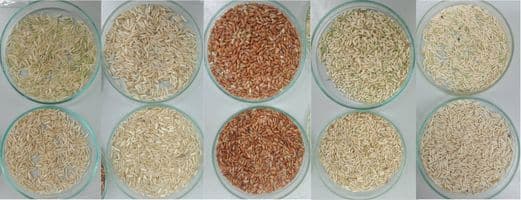
Rice is a salt-sensitive crop. The objective of this study was to evaluate the effect of salinity at flowering stage on physiological traits and yield of landrace rice. The experiment design was 4*10 Factorial in RCBD with 4 replications. Factor A was four salinity levels: control, 6, 12 and 16 dS/m; Factor B was 10 rice varieties. Data were collected on physiological traits and grain yield. The results showed that increasing salinity level decreased rice yield. The highest yield reduction was found when the rice received salt stress at 16 dS/m. In addition, rice varieties showed different yield performance when exposed to salt stress. In this found that Hom Yai variety had the lowest yield reduction when grown at 16 dS/m salinity level and did not differ from salt tolerant check variety.