
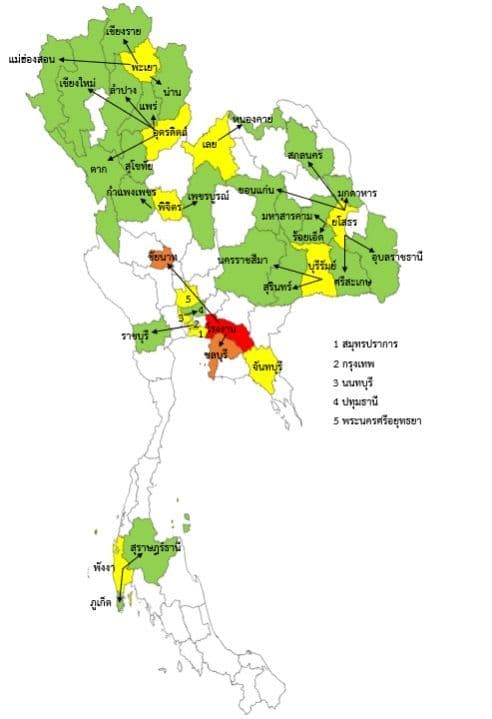
This research aims to select the location of the beverage distribution center of Thai Spirit Industry Co., Ltd. with the lowest total cost of transportation. using a mathematical model by considering the Muang districts of all 76 provinces, excluding Chachoengsao Province, where the factory is located. In the present study, four scenarios were divided: 1) when only one distribution center was required; 2) when more than one distribution center was established; 3) when it was divided into 4 regions. There can only be one distribution center in one region, and 4) when it is divided into four regions, where more than one distribution center can be established in one region. When processed with the program IBM ILOG CPLEX Optimization Studio, the results are summarized as follows: Scenario 1, when only one distribution center is assigned. The total transportation cost is 786,107.75 baht/month. Scenario 2, when more than one distribution center can be established. The total transportation cost is 252,338.98 baht/month. Scenario 3, when divided into 4 regions by requiring only one distribution center in one region. The total transportation cost is 401,499.61 baht/month. Scenario 4, when divided into 4 regions by requiring that there is more than one distribution center in each region. The total transportation cost is 258,666.22 baht/month.
ในปี พ.ศ. 2562 ต้นทุนการขนส่งสินค้ายังคงเป็นองค์ประกอบใหญ่ที่สุดของโครงสร้างต้นทุนโลจิสติกส์คิดเป็นสัดส่วนร้อยละ 49.7 ของต้นทุนโลจิสติกส์รวม (รายงานโลจิสติกส์ของประเทศไทยประจำปี, 2562) โดยในปี พ.ศ. 2560 และ พ.ศ. 2561 จะเห็นได้ว่าสัดส่วนต้นทุนการขนส่งสินค้าสูงเกินครึ่งของต้นทุนโลจิสติกส์รวม สัดส่วนรองลงมาที่มีค่าใกล้เคียงกับต้นทุนการขนส่งสินค้าคือสัดส่วนต้นทุนการเก็บรักษาสินค้าคงคลัง และสุดท้ายคือต้นทุนการบริหารจัดการ ดังนั้นจากสัดส่วนข้างต้นแสดงให้เห็นว่าควรให้ความสำคัญกับการวางแผนการขนส่งสินค้าเป็นอันดับแรก กล่าวคือ ถ้าหากผู้ประกอบการสามารถลดต้นทุนในการขนส่งสินค้าลงได้จะทำให้สามารถลดต้นทุนโลจิสติกส์รวมได้เช่นกัน การสร้างโครงข่ายการขนส่งเป็นหนึ่งในวิธีการที่ช่วยลดต้นทุนในการขนส่งและเพิ่มประสิทธิภาพในการขนส่งด้วย ซึ่งประกอบไปด้วยหลายวิธีการ โดยการสร้างศูนย์กระจายสินค้า (Distribution Center: DC) เป็นหนึ่งในวิธีการสร้างโครงข่ายการขนส่ง เพื่อเป็นแนวทางบริหารจัดการการขนส่งสินค้าในอนาคต อีกทั้งยังช่วยลดต้นทุนในการขนส่งสินค้าอีกด้วย การเลือกทำเลที่ตั้งโรงงานอุตสาหกรรม โกดังหรือคลังสินค้าย่อมมีบทบาทสำคัญในการตัดสินใจเชิงกลยุทธ์ที่มีผลต่อความสำเร็จขององค์การธุรกิจ หากเลือกทำเลที่ไม่เหมาะสมจะมีผลกระทบอื่นๆ ตามมา ได้แก่ ค่าใช้จ่ายและระยะเวลาที่ใช้ในการขนส่งมากหากอยู่ห่างไกลแหล่งวัตถุดิบ การเลือกที่ดินในเขตเมืองเป็นทำเลจะมีราคาสูงและค่าใช้จ่ายอื่นๆ ที่ตามมาก็จะสูงตามไปด้วย นอกจากนี้อาจขาดแคลนแรงงานที่มีคุณภาพ ขาดแคลนวัตถุดิบ รวมไปถึงปัจจัยอื่นที่เป็นอุปสรรคต่อองค์การธุรกิจ บริษัท ไทย สพิริท อินดัสทรี จำกัด เป็นผู้ผลิตเครื่องดื่มหลายประเภท ที่เชี่ยวชาญในผลิตภัณฑ์ไวน์จากผลไม้ที่รู้จักกันในชื่อ RTD ภายใต้แบรนด์ TSI ด้วยกำลังการผลิตผลิตภัณฑ์ไวน์ผลไม้ 60 ล้านลิตรทุกปี โดยปัจจุบันมีจำนวนโรงงานอยู่ 1 แห่งตั้งอยู่ในนิคมอุตสาหกรรมบางปะกง จังหวัดฉะเชิงเทรา เนื่องจากมีการขยายตัวทางเศรษฐกิจทำให้ความต้องการในกลุ่มธุรกิจไวน์จากผลไม้เพิ่มสูงขึ้น ซึ่งบริษัท ไทย สพิริท อินดัสทรี จำกัด ได้มองหาแนวทางในการเพิ่มขีดความสามารถของการให้บริการที่ครอบคลุมและครบวงจรมากขึ้น ยกระดับความสามารถด้านการจัดเก็บและการกระจายสินค้าให้กับลูกค้าได้อย่างทันเวลาและมีประสิทธิภาพ ซึ่งมุ่งเน้นกลุ่มลูกค้าการตลาดแบบดั้งเดิม (Traditional Trade) ได้แก่ตัวแทนจำหน่ายในแต่ละจังหวัด โดยใช้บริการจากภายนอกองค์กร(Outsource) ในการขนส่งสินค้าจากโรงงานเต็มคันรถตรงไปให้ลูกค้าแต่ละราย (Full Truck Load: FTL) ทางบริษัทจึงมีแนวคิดที่จะวิเคราะห์ความเหมาะสมของที่ตั้งโดยพิจารณาจากค่าใช้จ่ายเป็นหลักพร้อมทั้งพิจารณาทำเลที่ตั้งที่เหมาะสมสำหรับศูนย์กระจายสินค้า อย่างไรก็ตามการเลือกทำเลที่ตั้งสถานที่สำหรับประกอบธุรกิจให้มีประสิทธิภาพสูงสุด ผู้ประกอบการต้องคำนึงถึงยอดขายที่คาดว่าจะได้รับ ค่าใช้จ่ายในการขนส่ง พนักงาน รวมทั้งเวลา ลักษณะและสภาพของเส้นทาง การจราจร ตลอดจนความสัมพันธ์กับลูกค้า (พอพันธ์, 2521) โดยจะพิจารณาลักษณะที่ดีของแต่ละทำเลนำมาประกอบการตัดสินใจในการเลือกใช้ ซึ่งส่งผลทำให้ธุรกิจประสบความสำเร็จได้ รวมทั้งปัจจุบันได้มีความก้าวหน้าทางเทคโนโลยีไมโครคอมพิวเตอร์มากขึ้น ทำให้การวิเคราะห์ข้อมูลทำได้ง่าย สะดวก ช่วยประหยัดค่าใช้จ่ายและประหยัดเวลา ทำให้การประมวลผลข้อมูลมีประสิทธิภาพมาก จึงมีผู้ผลิตโปรแกรมสำเร็จรูปทางสถิติสำหรับเครื่องไมโครคอมพิวเตอร์มากขึ้น (วรลักษณ์, 2560) ดังนั้นคณะผู้วิจัยได้ทำการศึกษาปัญหาการเลือกตำแหน่งที่ตั้งศูนย์กระจายสินค้าที่เหมาะสมที่มีต้นทุนรวมต่ำที่สุดโดยอาศัยข้อมูลของบริษัท ไทย สพิริท อินดัสทรี จำกัด เป็นกรณีศึกษา และพัฒนาตัวแบบทางคณิตศาสตร์และประมวลผลด้วยโปรแกรมสำเร็จรูป IBM ILOG CPLEX ทั้งนี้ทางบริษัทสามารถใช้เป็นแนวทางประกอบการตัดสินใจในการเลือกตำแหน่งที่ตั้งของศูนย์กระจายสินค้า หรือเป็นแนวทางในการปรับปรุง พัฒนาประสิทธิภาพในการดำเนินงานของบริษัทในอนาคต

คณะสถาปัตยกรรม ศิลปะและการออกแบบ
-
คณะวิศวกรรมศาสตร์
This research focuses on the design and development of a high-power converter to regulate energy supply from solar cells (Photovoltaic: PV) to a hydrogen production unit (Electrolyzer), which is a crucial component in advancing renewable energy in alignment with the RE100 initiative. Specifically, this study targets Green Hydrogen, which is generated through the water electrolysis process using clean energy from solar cells, ensuring zero emissions and environmental sustainability. The proposed converter includes of a Three-Level NPC Inverter, transformer, Full-Bridge Rectifier, and LC filter to enhance the power quality supplied to the electrolyzer. The system's design and simulation were conducted using MATLAB and Simulink to evaluate circuit performance and analyze operational efficiency. Simulation was conducted using MATLAB and Simulink to evaluate circuit performance and analyze operational efficiency. Additionally, a microcontroller-based control system is integrated with a gate driver circuit to optimize the electrolysis process by reducing power losses. This proposed converter effectively converts PV energy into suitable voltage and current levels for the electrolyzer while maintaining high hydrogen production efficiency.
คณะบริหารธุรกิจ
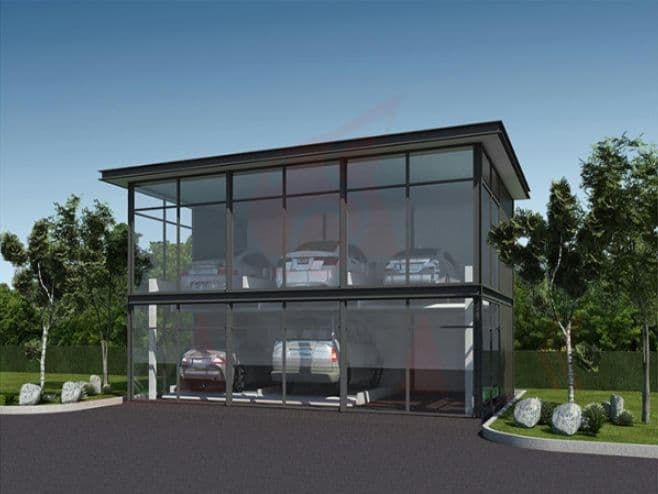
Parking space shortages in urban areas contribute to traffic congestion, inefficient land use, and environmental challenges. Automated Parking Systems (APS) provide an innovative solution by optimizing space utilization, reducing search times, and minimizing carbon emissions. This research investigates key factors influencing user adoption of APS technology using the UTAUT2 framework, focusing on variables such as Performance Expectancy, Effort Expectancy, Social Influence, Trust in Technology, and Environmental Consciousness. The APS Evolution project presents a smart parking solution that enhances efficiency, minimizes environmental impact, and improves user experience in urban settings. The initiative emphasizes technology-driven urban mobility and sustainable parking management to align with the evolving needs of modern cities.