

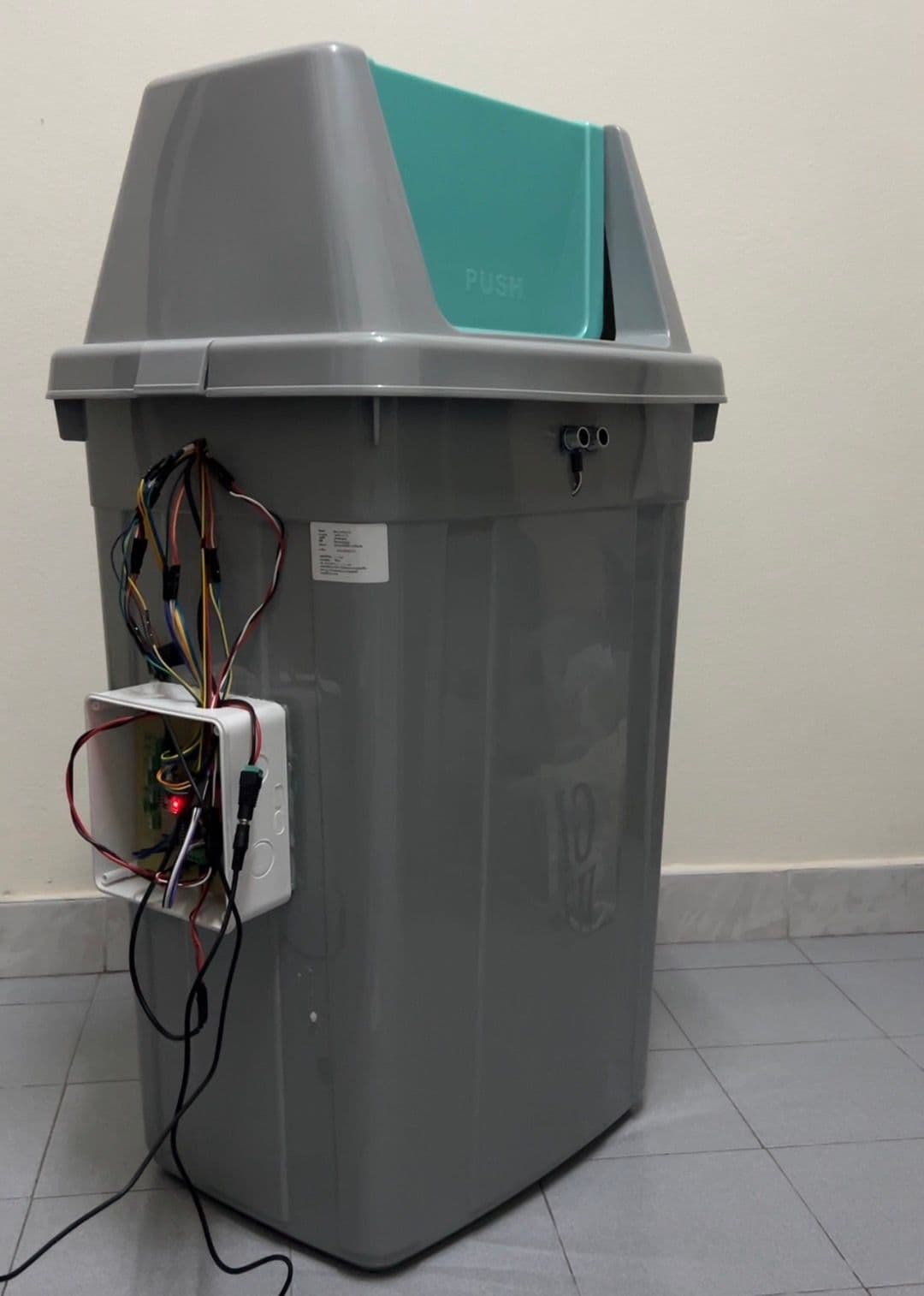
The presented project topic is Garbage Sorting Systems. The purpose is to study the operation and develop a waste sorting system that can automatically detect the type of waste using a proximity sensor to separate the types of metal and non-metal waste, as well as an ultrasonic sensor to check the amount of waste in the bin. If the amount of waste exceeds the specified amount, the system will send a notification to the communication device connected to the system, such as a smartphone or computer. The operation of the system is designed to increase the efficiency of waste management, reduce the burden of manual waste sorting, and promote recycling. This system can be applied in various places, such as educational institutions or public places, to help reduce the amount of waste that is not properly separated and increase the opportunity to reuse waste.
เนื่องจากทางภาควิชาวิศวกรรมอิเล็กทรอนิกส์ มีจุดมุ่งหมายให้นักศึกษาภายในภาควิชามีความรู้ความสามารถ ความเข้าใจ และประสบการณ์ในการปฏิบัติงานโดยมีวัตถุประสงค์เพื่อช่วยในการเสริมสร้างการเรียนรู้ควบคู่กับทฤษฎี และยังมีบทบาทสำคัญในชีวิตประจำวันอย่างมากเพื่ออำนวยความสะดวกต่างๆ เนื่องจากในปัจจุบันในกระบวนการผลิตทางอุตสาหกรรมได้มีการนำเอาอุปกรณ์ที่มีความทันสมัยเข้ามาใช้งานมากขึ้นโดยนำเอาเทคโนโลยีที่ทันสมัยเข้ามาประยุกต์ใช้ทางด้านอิเล็กทรอนิกส์ โครงงานนี้ประกอบไปด้วยเซ็นเซอร์ Proximity และเซ็นเซอร์ Ultrasonic ซึ่งเป็นอุปกรณ์ตรวจจับ คัดแยกวัตถุประเภทโลหะ อโลหะและวัดตรวจปริมาณขยะภายในถังขยะ เพื่อให้ชิ้นงานสามารถทำงานได้ตามขอบเขตที่กำหนด ซึ่งเครื่องคัดแยกขยะจะทำงานเมื่อมีการทิ้งขยะลงถัง เซ็นเซอร์จะทำการแยกประเภทของขยะตามที่ได้กำหนดไว้ จากนั้นจะมีการตรวจสอบปริมาณขยะภายในถัง หากปริมาณขยะเกินกำหนด ระบบจะส่งการแจ้งเตือนไปยังอุปกรณ์สื่อสารที่เชื่อมต่อกับระบบ
วิทยาลัยอุตสาหกรรมการบินนานาชาติ
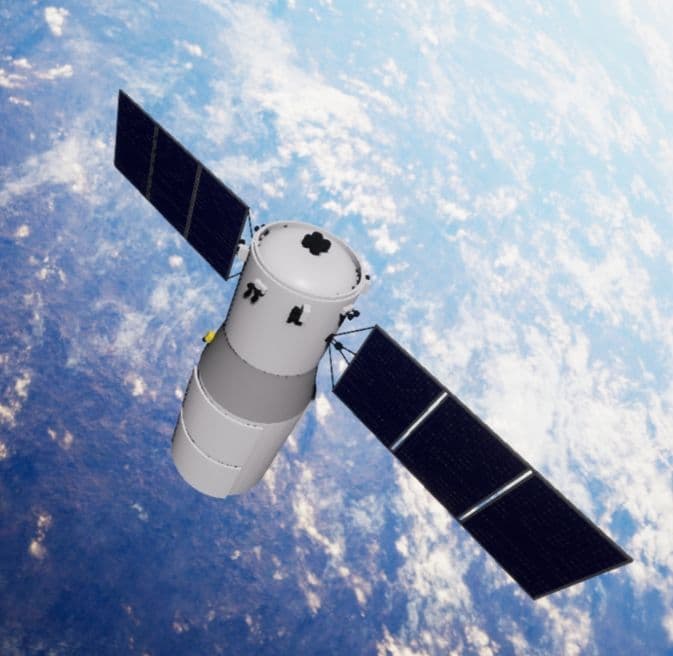
The capture of a target spacecraft by a chaser is an on-orbit docking operation that requires an accurate, reliable, and robust object recognition algorithm. Vision-based guided spacecraft relative motion during close-proximity maneuvers has been consecutively applied using dynamic modeling as a spacecraft on-orbit service system. This research constructs a vision-based pose estimation model that performs image processing via a deep convolutional neural network. The pose estimation model was constructed by repurposing a modified pretrained GoogLeNet model with the available Unreal Engine 4 rendered dataset of the Soyuz spacecraft. In the implementation, the convolutional neural network learns from the data samples to create correlations between the images and the spacecraft’s six degrees-of-freedom parameters. The experiment has compared an exponential-based loss function and a weighted Euclidean-based loss function. Using the weighted Euclidean-based loss function, the implemented pose estimation model achieved moderately high performance with a position accuracy of 92.53 percent and an error of 1.2 m. The in-attitude prediction accuracy can reach 87.93 percent, and the errors in the three Euler angles do not exceed 7.6 degrees. This research can contribute to spacecraft detection and tracking problems. Although the finished vision-based model is specific to the environment of synthetic dataset, the model could be trained further to address actual docking operations in the future.

คณะสถาปัตยกรรม ศิลปะและการออกแบบ
A natural representation of new beginnings.

คณะวิทยาศาสตร์
Cancer remains a major global health challenge as the second-leading cause of human death worldwide. The traditional treatments for cancer beyond surgical resection include radiation and chemotherapy; however, these therapies can cause serious adverse side effects due to their high killing potency but low tumor selectivity. The FDA approved monoclonal antibodies (mAbs) that target TIGIT/PVR (T-cell immunoglobulin and ITIM domain/poliovirus receptor) which is an emerging immune checkpoint molecules has been developed; however, the clinical translation of immune checkpoint inhibitors based on antibodies is hampered due to immunogenicity, immunological-related side effects, and high costs, even though these mAbs show promising therapeutic efficacy in clinical trials. To overcome these bottlenecks, small-molecule inhibitors may offer advantages such as better oral bioavailability and tumor penetration compared to mAbs due to their smaller size. Here, we performed structure-based virtual screening of FDA-approved drug repertoires. The 100 screened candidates were further narrowed down to 10 compounds using molecular docking, with binding affinities ranging from -9.152 to -7.643 kcal/mol. These compounds were subsequently evaluated for their pharmacokinetic properties using ADMET (Absorption, Distribution, Metabolism, Excretion, and Toxicity) analysis, which demonstrated favorable drug-like characteristics. The lead compounds will be further analyzed for conformational changes and binding stability against TIGIT through molecular dynamics (MD) simulations to ensure that no significant conformational changes occur in the protein structure. Collectively, this study represents the potential of computational methods and drug repurposing as effective strategies for drug discovery, facilitating the accelerated development of novel cancer treatments.