

This research investigates active packaging films made from polyvinyl alcohol (PVA) and nanocellulose fibers (NFC), incorporating silver nanoparticles (AgNPs) synthesized from Terminalia chebula extract, which possesses antibacterial and antifungal properties. The developed films were tested for their mechanical properties, microbial inhibition, and biodegradability. The results showed that the addition of AgNPs from Terminalia chebula enhanced product protection and effectively extended the shelf life of strawberries while being environmentally friendly.
บรรจุภัณฑ์แอคทีฟถูกพัฒนาเพื่อปกป้องผลิตภัณฑ์และยืดอายุการเก็บรักษา โดยสามารถแลกเปลี่ยนแก๊สได้อย่างมีประสิทธิภาพ ฟิล์มที่ผลิตจากพอลิไวนิลแอลกอฮอล์ (PVA) มีความยืดหยุ่น แข็งแรง และสามารถละลายน้ำได้ อีกทั้งยังสามารถเติมอนุภาคซิลเวอร์นาโน (AgNPs) เพื่อเพิ่มคุณสมบัติในการยับยั้งจุลินทรีย์ สมอไทย (Terminalia chebula) ซึ่งอุดมไปด้วยสารต้านเชื้อแบคทีเรียและเชื้อรา ถูกนำมาใช้ในการสังเคราะห์ AgNPs เพื่อนำไปประยุกต์ใช้กับฟิล์มบรรจุภัณฑ์แอคทีฟ งานวิจัยนี้จึงศึกษาคุณสมบัติของฟิล์มที่พัฒนาขึ้นสำหรับการเคลือบสตรอเบอร์รีเพื่อยืดอายุการเก็บรักษาอย่างมีประสิทธิภาพ
คณะอุตสาหกรรมอาหาร
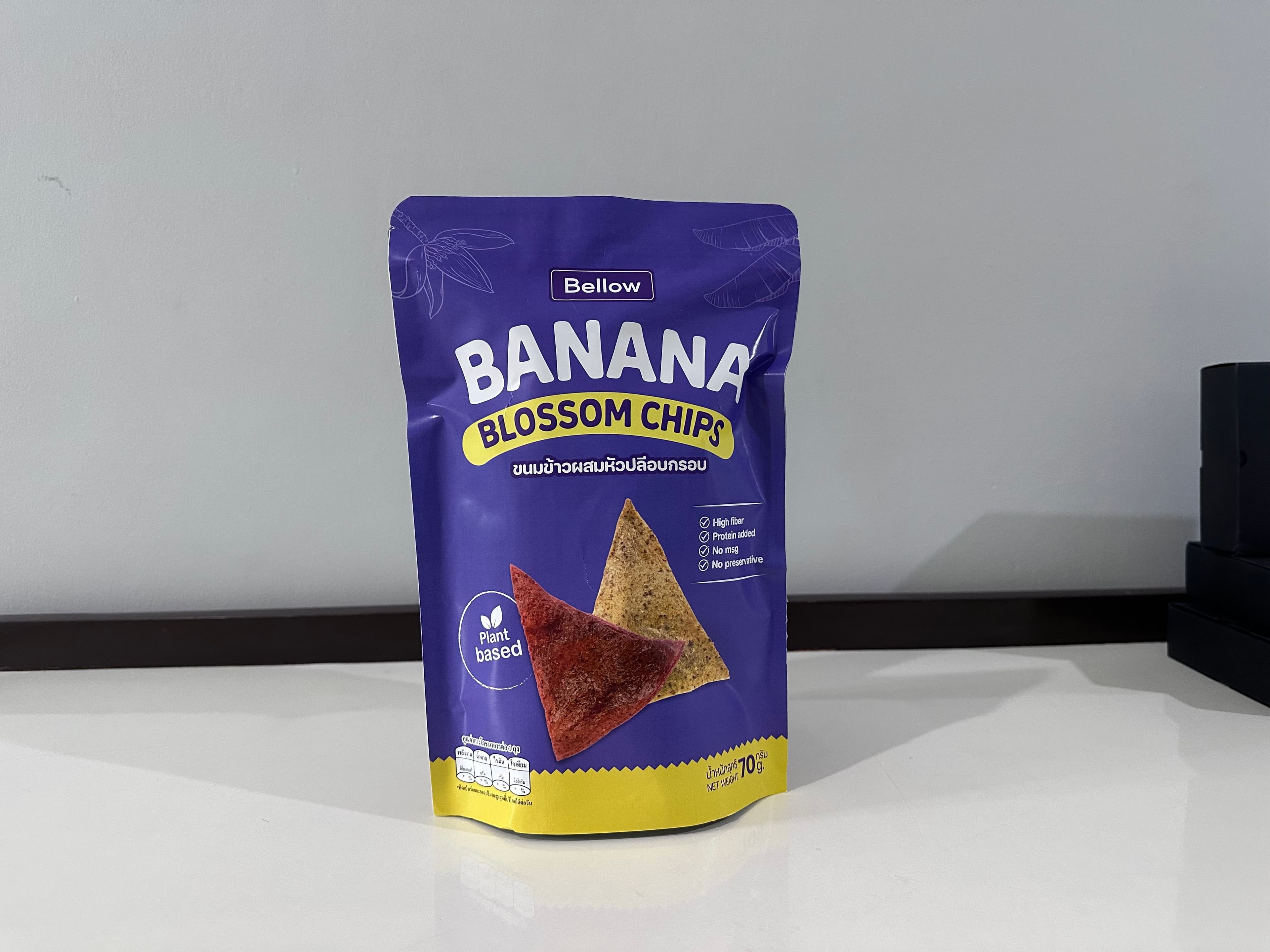
Banana Blossom Chips is a healthy snack rich in dietary fiber, antioxidants, and plant-based protein. It is a result of combining local Thai ingredients: banana blossoms, which are high in dietary fiber and antioxidants, chickpea flour, a source of plant-based protein, and red jasmine brown rice, which has a low GI value and high antioxidants. It is processed to create crispiness and a unique shape, reduces fat, is gluten-free, and helps maintain nutritional value. Therefore, it is a new alternative for health-conscious consumers and adds value to Thai agricultural products.

คณะบริหารธุรกิจ
This project aims to develop seafood dipping sauce and Jaew sauce in solid cube form to address the limitations of liquid sauces, which can be difficult to carry and prone to spillage, as well as powdered sauces, which may lose their texture and authentic flavor. The research and development process focuses on utilizing distinct ingredients and innovative production techniques to enhance the quality and functionality of the product. The primary objective of this project is to introduce an innovative solution that improves the convenience of consumption and transportation while preserving the original taste and quality of traditional dipping sauces. The expected outcome is a novel dipping sauce product in solid cube form that is easy to carry, minimizes the risk of spillage, and holds potential for commercial development in the food industry.
คณะเทคโนโลยีการเกษตร
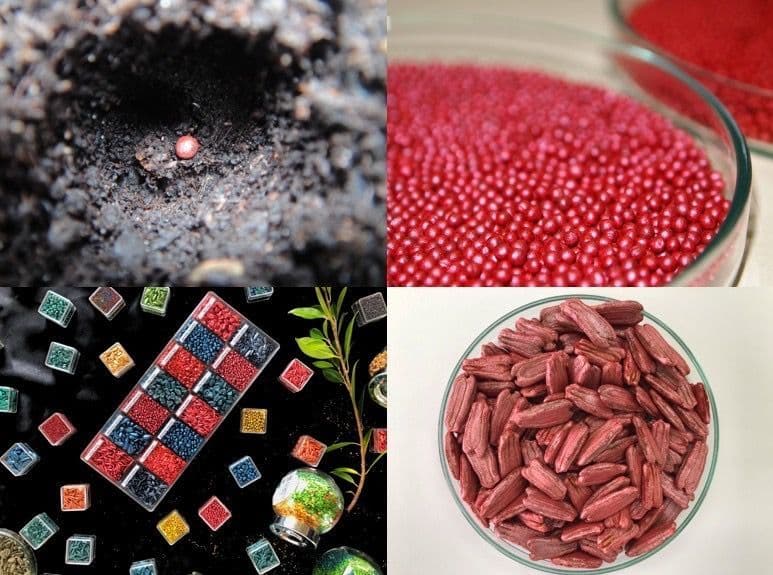
This experiment aimed to study the suitable types of polymers for coating with chlorophyll extract and the quality of cucumber seeds after coating. The experiment was planned using a Completely Randomized Design (CRD) with four replications, consisting of five methods involving seeds coated with different types of polymers: Polyvinylpyrrolidone, Sodium Alginate, Carboxy Methyl Cellulose, and Hydroxypropyl Methylcellulose, each polymer being coated alongside chlorophyll, with uncoated seeds serving as the control method. The coating substance was prepared by extracting chlorophyll from mango leaves, then mixed with each type of polymer at a concentration of 1%, using an 8% concentration of chlorophyll extract. The properties of each coating method, such as pH and viscosity of the coating substance, were examined before coating the cucumber seeds with a rotary disk coater model RRC150 at a coating rate of 1,100 milliliters per 1 kilogram of seeds. Subsequently, the seeds were dried to reach the initial moisture level using a hot air blower, and seed quality was assessed in various aspects, including seed moisture, germination rate under laboratory conditions, germination index, and seed fluorescence under a portable ultraviolet light illuminator, as well as light emission spectrum analysis using a Spectrophotometer. The experiment found that each type of polymer could be used to form a film together with chlorophyll, which had appropriate pH and viscosity for the coating without affecting seed quality and showed fluorescence on the seed surface both under portable ultraviolet light and spectral emission analysis with a Spectrophotometer. Using HPMC as the film-forming agent with chlorophyll was the most suitable method, enhancing seed fluorescence efficiency.