

Threadfin breams is an economically important fish that can be found in fisheries in both the Gulf of Thailand and Andaman Sea and is cheap. In addition, the consumption of raw fish as sashimi is increasingly popular in Thailand. Therefore, it is necessary to promote its consumption to increase its value. This study investigated the preservation of threadfin breams (N. furcosus) for raw or sashimi consumption. The preservation of threadfin breams consisted of Ikejime (K) and cold seawater (S) methods, and the preservation of the fish by Gutting (G) and whole (W) and storing for 3 days on ice (I) or in a refrigerator (F). The freshness quality of threadfin breams was evaluated by sensory, physicochemical (TVB-N, TMA-N and pH), freshness index (Ki-value) and microbiological methods. It was found that after being stored for 3 days, the KGF group of threadfin breams had the highest overall sensory score, which was 8.36±0.80 points, and the KWI, SWI and SWF groups of threadfin breams had the lowest overall sensory scores, which were 8.13±0.77, 8.13±0.77 and 8.13±0.81 points, respectively. And the overall sensory scores of all experimental groups of fish increased significantly (p<0.05). The TVB-N value of threadfin breams in KGF group had the lowest TVB-N value, which was 1.37±0.93 mg nitrogen/100 g sample. The threadfin breams in SGI group had the highest TVB-N value, which was 2.36±1.15 mg nitrogen/100 g sample. The TVB-N of fish in all experimental groups increased significantly (p<0.05). The TMA-N value of threadfin breams in KGF group had the lowest TMA-N value, which was 1.56±0.88 mg nitrogen/100 g sample. The threadfin breams in SWF group had the highest TMA-N value, which was 2.17±1.22 mg nitrogen/100 g sample. The TMA-N of fish in all experimental groups increased significantly (p<0.05). The pH value of threadfin breams in KGF group had the lowest pH value, which was 6.40±0.12. The threadfin breams in SWF group had the highest pH value, which was 6.78±0.25. The pH of fish in all experimental groups increased significantly (p<0.05). Ki value The threadfin breams in KGF group had the lowest Ki value, which was 9.05±0.73%. The threadfin breams in KWI group had the highest Ki value, which was 12.88±4.19%. The Ki value of all experimental groups of fish increased without statistical significance (p>0.05). In terms of freshness quality in microbiology, it was found that in all experimental groups, Salmonella spp., S. aureus, B. cereus, C. perfringens and E. coli were found in all experimental groups of threadfin breams. All types of microorganisms in all groups of threadfin breams increased with statistical significance (p<0.05). When compared with the freshness quality criteria in terms of sensory, chemical, physical, freshness index and microbiology, it was found that all groups of threadfin breams were very fresh and suitable for raw consumption during the preservation and storage for 3 days. After 3 days of storage, the threadfin breams should be consumed cooked because the freshness quality of the fish is not suitable for raw consumption due to the increase in various parameters. The increase in various parameters is due to the deterioration of the fish and the activities of microorganisms. Therefore, threadfin breams is suitable to promote raw consumption within 3 days of storage. In addition, fish preservation, especially by Ikejime method, then cutting open the belly and storing in the refrigerator, can help improve the freshness of the fish. The results of this study can be used to develop techniques for preserving fish after capture for fishermen and can promote the increase in the value of threadfin breams in the future.
อาหารทะเลเป็นอาหารที่ได้รับความนิยมจากผู้บริโภคทั่วโลก เช่นเดียวกันกับในประเทศไทย อาหารทะเลถือว่ามีความสำคัญต่อเศรษฐกิจเป็นอย่างมาก เนื่องจากประเทศไทยมีภูมิประเทศติดชายฝั่งทะเลทั้งฝั่งอันดามันและอ่าวไทยยาวรวมทั้งสิ้นประมาณ 3,148 กิโลเมตร (กรมทรัพยากรทางทะเลและชายฝั่ง, 2566) ทำให้มีการประกอบอาชีพการทำประมงทั้งประมงพื้นบ้านและประมงพาณิชย์ มีการผลิตและแปรรูปสินค้ามากกว่า 2 ล้านตันต่อปี (กลุ่มสถิติการประมง, 2567) ซึ่งถือได้ว่าอาชีพการทำประมงชายฝั่งเป็นอีกอาชีพที่มีความสำคัญต่อเศรษฐกิจของประเทศไทย ทั้งในด้านการจ้างงาน การสร้างรายได้ และเป็นแหล่งอาหารให้กับคนในประเทศ โดยเฉพาะปลาทะเลที่ได้รับความนิยมอย่างมากทั้งผู้บริโภคโดยตรงและอุตสาหกรรมแปรรูปอาหาร ปลาทะเลเป็นอาหารทะเลที่ดีต่อสุขภาพ เนื่องจากเป็นแหล่งโปรตีนที่มีไขมันต่ำ และมีสารอาหารต่างๆที่สำคัญต่อร่างกาย โดยเฉพาะ โอเมก้า 3 ที่มีส่วนช่วยในการพัฒนาสมองและลดความเสี่ยงในโรคหลอดเลือดหัวใจ ซึ่งโอเมก้า 3 ร่างกายไม่สามารถผลิตเองได้ จึงมีคำแนะนำทางการแพทย์ว่าควรบริโภคปลาทะเลอย่างน้อย สัปดาห์ละ 2 ครั้ง เพื่อสุขภาพที่ดี (Skulas-Ray et al., 2012; Tilami and Samples, 2017; Rimm al., 2018)ปลาทรายแดง Nemipterus เป็นปลาทะเล ที่อาศัยอยู่หน้าดิน พบที่ระดับความลึก 8-110 เมตร พบมากในมหาสมุทรอินเดียและมหาสมุทรแปซิฟิก ตามพื้นโคลนหรือพื้นทราย ส่วนใหญ่กินปลาขนาดเล็กและครัสเตเชียนเป็นอาหารหลัก มีลักษณะเด่นคือ สีของลำตัวมีสีชมพู ส่วนท้องมีสีเงิน และมีเส้นสีเหลืองทองอ่อนพาดตามลำตัวตั้งแต่ศีรษะจนถึงโคนหาง (Anderson et al., 1998; Russell, 2001; Paul et al., 2018) ปลาทรายแดงนิยมบริโภคแบบยังสดโดยการนำไปประกอบอาหารและบริโภคแบบแปรรูป ปลาทรายแดงเป็นที่นิยมเพิ่มมากขึ้นในประเทศไทย จากสถิติการจับของกรมประมงปี 2562-2566 พบว่ามีการจับปลาทรายแดงเฉลี่ยปีละ 32,560 ตันต่อปีและมีมูลค่าทางเศรษฐกิจ รวมทั้งสิ้น 1,367.56 ล้านบาท (กองนโยบายและแผนพัฒนาการประมง, 2567) แสดงให้เห็นว่าปลาทรายแดงเป็นสัตว์น้ำที่มีความสำคัญต่อเศรษฐกิจ ในขณะที่ราคาของปลาทรายแดงในตลาดซื้อขายสัตว์น้ำของผู้บริโภคมีราคาถูก ซึ่งข้อมูลจากองค์กรสะพานปลาเมื่อวันที่ 1 มิถุนายน 2566 พบว่าราคาของปลาทรายแดงที่ซื้อขายมีราคาเพียง 70 บาทต่อกิโลกรัม (องค์กรสะพานปลา, 2566) ในปัจจุบันร้านอาหารญี่ปุ่นที่นิยมเสิร์ฟปลาดิบทั้งในรูปแบบซูชิและซาชิมิมีจำนวนเพิ่มมากขึ้นในประเทศไทย ซึ่งแสดงให้เห็นได้ว่าคนไทยมีค่านิยมในการหันมาบริโภคปลาดิบแบบซาชิมิที่เป็นวัฒนธรรมการกินแบบญี่ปุ่นเพิ่มมากขึ้น (JETRO Bangkok, 2567) ด้วยเหตุนี้จึงควรมีการส่งเสริมให้ชาวประมงสามารถจำหน่ายปลาทรายแดงสำหรับการบริโภคแบบดิบเพื่อเพิ่มมูลค่าให้ปลาทรายแดง และสร้างรายได้ให้กับชาวประมงให้เพิ่มมากยิ่งขึ้น การเสื่อมสภาพของปลาเกิดขึ้นตั้งแต่หลังการจับ โดยระยะเวลาในการเสื่อมสภาพขึ้นอยู่กับ ชนิดของปลา วิธีการจัดการหลังการจับ อุณหภูมิที่ใช้ในการเก็บรักษาและวิธีการเก็บรักษา (มัทนา แสงจินดาวงษ์, 2527) ซึ่งในปัจจุบันผู้บริโภคนิยมบริโภคอาหารญี่ปุ่นโดยเฉพาะปลาดิบหรือซาชิมิเพิ่มมากขึ้น จึงต้องการบริโภคปลาที่มีความสดมาก แต่ในประเทศไทยผู้บริโภคและชาวประมงมีข้อมูลในการเก็บรักษาความสดของปลาทรายแดงเพื่อให้มีคุณภาพที่เหมาะสมต่อการบริโภคแบบดิบอยู่น้อย จึงได้ศึกษาเกี่ยวกับวิธีการเก็บรักษาและตรวจสอบคุณภาพความสดของปลาทรายแดงเพื่อให้เหมาะสมต่อการบริโภคแบบดิบหรือซาชิมิโดยใช้วิธีทางประสาทสัมผัส ทางเคมีกายภาพ ทางดัชนีความสดและทางจุลชีววิทยาและศึกษาวิธีการเก็บรักษาปลาเพื่อยืดอายุการเก็บรักษาปลาให้สดได้นานที่สุด เพื่อพัฒนาเทคนิคการเก็บรักษาความสดของปลาให้เหมาะสมและมีคุณภาพในการบริโภคแบบดิบให้ดีมากยิ่งขึ้น อีกทั้งยังสามารถเพิ่มความรู้ทางด้านเทคนิคในการเก็บรักษาปลาให้กับชาวประมงและผู้บริโภคเพื่อพัฒนาและยกระดับคุณภาพและเพิ่มมูลค่าปลาทะเลไทยให้มากยิ่งขึ้น

คณะแพทยศาสตร์
Migraine, a prevalent neurological disorder, is the third most common disease globally, causing significant health and financial burdens. It has four stages: prodrome, aura, headache, and postdrome. The prodrome (also known as premonitory) stage is crucial as it precedes the headache by up to 72 hours. Taking medication during the premonitory peroid has shown to prevent the headache phase . However, the symptoms of premonitory period lack specificity, making it difficult for patients to know if they’re experiencing premonitory symptoms. Calcitonin-gene related peptide (cGRP),is a protein that plays a key role in migraine pathogenesis and studies found that salivary cGRP levels increase during the premonitory stage. This study aims to develop and evaluate a lateral flow immunoassay kit for detecting salivary cGRP levels in migraine patients during the prodrome stage. It can serve as a confirmation tool for premonitory symptoms.
คณะบริหารธุรกิจ
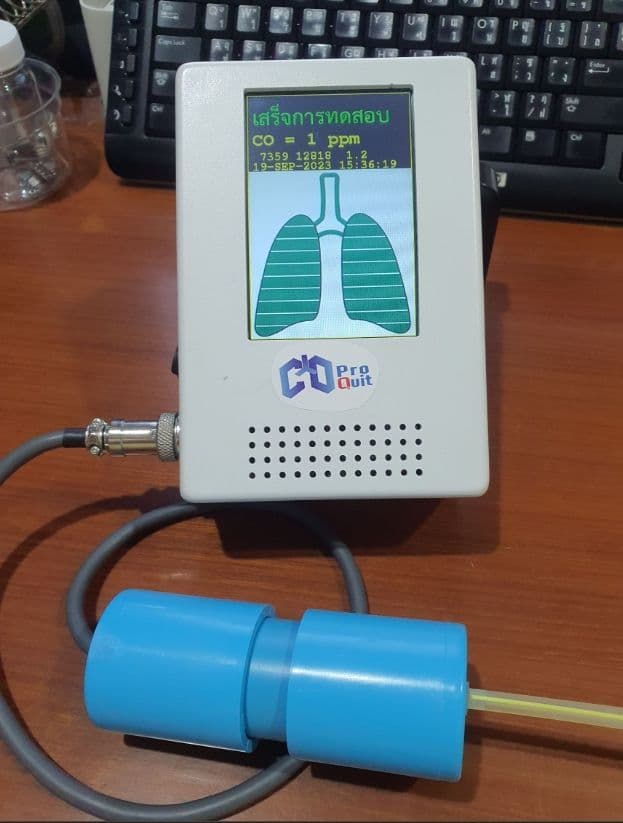
CO Breathalyzer with Voice Response is the device to measured the level of CO residual in a person's lung who consume tobacco. Measuring residual CO in human breath can identify the tobacco addiction level instead of measuring nicotine in blood.
คณะวิศวกรรมศาสตร์
The Diabetes Meal Management Application is a digital health tool designed to empower Type 2 diabetic patients in managing their diet and blood sugar levels more effectively. With features like personalized meal recommendations, nutrient tracking, and seamless integration with wearable blood glucose monitors via Blood sugar measuring device (CGM), the application enables users to monitor glucose fluctuations in real time and adjust dietary choices accordingly. Built with the Flutter framework and supported by a backend of Express.js and MongoDB, the application prioritizes a user-friendly interface, ensuring easy navigation and encouraging consistent engagement with meal planning and health tracking. Preliminary user trials show that the application contributes to more stable blood sugar levels and improved adherence to dietary recommendations, helping users reduce health risks associated with diabetes complications. By offering a proactive approach to diabetes management, the application reduces the need for frequent clinical interventions, thus potentially lowering medical costs over time. This project highlights the promising role of digital health solutions in supporting personalized diabetes care, emphasizing the potential for scalable, user-centered interventions that foster long-term health improvements for diabetic patients.