

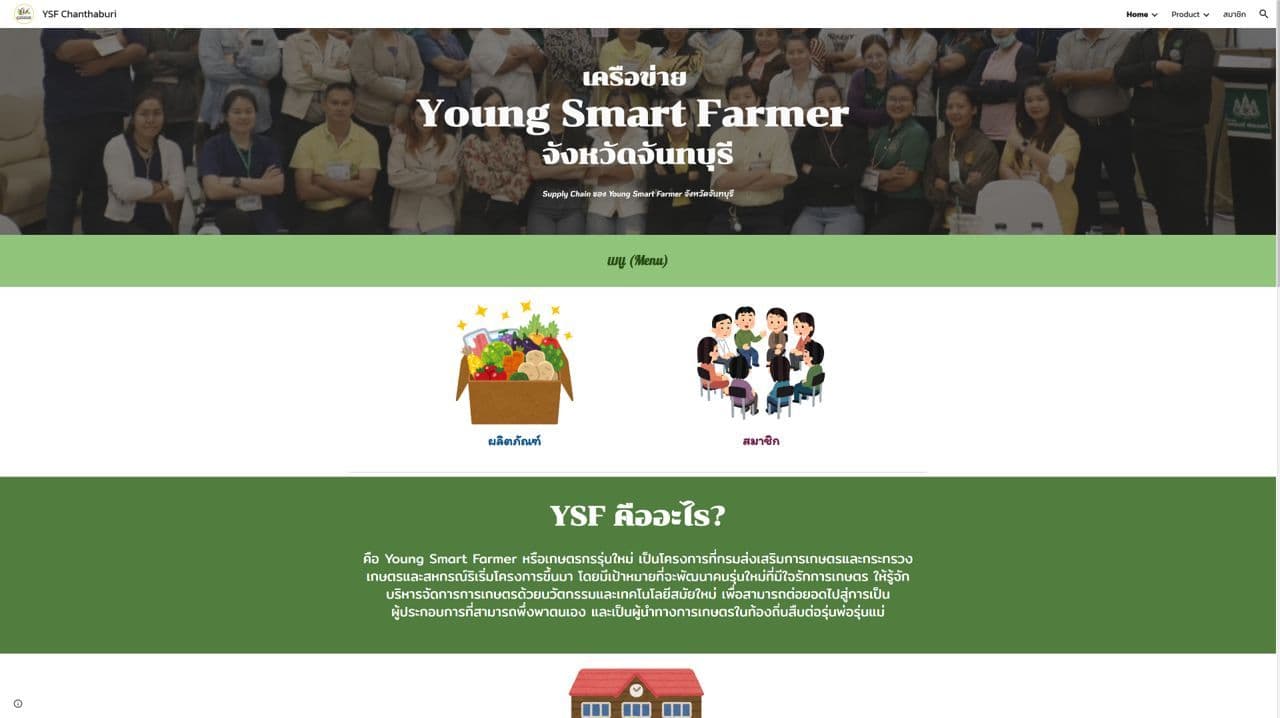
This study aimed to develop a website for collecting and organizing data on Young Smart Farmers in Chanthaburi Province. Data were collected through structured interviews with a sample of 30 participants. The information obtained was categorized and utilized to develop the website, which was subsequently disseminated to farmers and other stakeholders. The study also assessed user satisfaction with the website through a questionnaire, with data analyzed using descriptive statistics, including frequency, percentage, mean, and standard deviation.The results indicated that the sample comprised an equal proportion of male and female participants, with the majority (50.00%) aged between 36 and 40 years. Most respondents were Young Smart Farmers from the districts of Khlung, Laem Sing, and Kaeng Hang Maeo, each representing 13.33% of the sample. The majority of participants had attained a bachelor’s degree or equivalent (60.00%) and were primarily engaged in agricultural occupations (73.33%). The findings on user satisfaction with the website revealed a high level of satisfaction across all dimensions, ranked as follows 1) Website usability (Mean 4.97), 2) Overall satisfaction (Mean 4.93), 3) Content quality (Mean 4.91), 4) Practical benefits and applicability (Mean 4.87), and 5) Design and layout (Mean 4.85).
ภาคการเกษตรมีบทบาทสำคัญในการพัฒนาประเทศไทย จากรายงานพบว่า ในปี 2566 ประเทศไทยได้ส่งออกสินค้าเกษตรมูลค่ากว่า 284,561.80 ล้านเหรียญสหรัฐ คิดเป็น 17.30% ของรายการสินค้าส่งออกทั้งหมด (Office of Trade Policy and Strategy, 2024) ประเทศไทยมีพื้นที่เกษตรกรรม 149.25 ล้านไร่ คิดเป็น 32.60% ของพื้นที่ทั้งหมด ซึ่งสร้างงานและสร้างรายได้ให้กับเกษตรกรและผู้ประกอบการ อีกทั้งมีบทบาทสำคัญต่อการพัฒนาเศรษฐกิจโดยรวมของประเทศ อย่างไรก็ตามปัจจุบันภาคการเกษตรของไทยต้องเผชิญปัญหาหลากหลายรูปแบบ หนึ่งในนั้นคือ เกษตรไม่สามารถเข้าถึงข้อมูลข่าวสารที่จำเป็นในการทำการเกษตร (Ministry of Agriculture and Cooperatives, 2017) ทำให้เกษตรกรขาดความรู้ในการพัฒนาการผลิต ขาดความรู้ทางช่องทางการตลาด การสร้างมูลค่าเพิ่มของสินค้าเกษตร และปัญหาคนรุ่นใหม่ที่สนใจการทำเกษตรน้อยลง ส่งผลให้แรงงานภาคการเกษตรลดน้อยลง จากข้อมูลจากการสำมะโนการเกษตร พบว่าผู้ถือครองทำการเกษตรส่วนใหญ่มีอายุตั้งแต่ 35.00 ปีขึ้นไป และผู้ถือครองในช่วงอายุ 35.00-44.00 ปี มีแนวโน้มลดลงอย่างต่อเนื่อง จากร้อยละ 26.80 ในปี 2546 เป็นร้อยละ 18.40 ในปี 2556 ส่วนในกลุ่มผู้สูงอายุ 65.00 ปีขึ้นไป กลับมีแนวโน้มเพิ่มขึ้น จากร้อยละ 13.10 เป็นร้อยละ 18.50 ในปี 2556 (National Farmers Council, 2018) กรมส่งเสริมการเกษตรจึงมีแนวทางในการแก้ไขปัญหาโดยได้จัดทำแผนยุทธศาสตร์ส่งเสริมการเกษตร ระยะ 20 ปี (พ.ศ. 2560-2579) และแผนปฏิบัติงาน ระยะ 5 ปี (พ.ศ. 2560 - 2564) เพื่อเป็นการวางรากฐานการพัฒนาระยะยาวอันนำไปสู่การพัฒนาและแก้ไขปัญหาอย่างเป็นระบบ กรมส่งเสริมการเกษตรจึงมีการกำหนดประเด็นยุทธศาสตร์เพื่อส่งเสริมความมั่นคงในอาชีพของเกษตรกรและองค์กรเกษตรกร โดยการส่งเสริมและพัฒนาเกษตรกรรุ่นใหม่ให้เป็น Young Smart Farmer เริ่มตั้งแต่ พ.ศ. 2557 มีเป้าหมายหลักในการพัฒนาเกษตรกรให้มีความสามารถด้านการเกษตร ทดแทนเกษตรกรผู้สูงอายุและสร้างแรงจูงใจให้คนรุ่นใหม่หันมาประกอบอาชีพ 2 เกษตรกรรม (Department of Agricultural Extension, 2017) โดยการขับเคลื่อนพัฒนาเกษตรกรรุ่นใหม่ในปี 2564 โดยใช้งบประมาณ 15.16 ล้านบาท และได้กำหนดการพัฒนาเกษตรกรรุ่นใหม่ในปี 2565 โดยใช้งบประมาณ 21.39 ล้านบาท (Office of the Secretary of the Department of Agricultural Extension, 2020) ซึ่งปัจจุบันมีเกษตรกรรุ่นใหม่เข้าร่วมโครงการและผ่านการประเมินเป็น Young Smart Farmer ทั่วประเทศ จำนวน 23,411 ราย (Khao Khitchakut District Agriculture Office Chanthaburi Province, 2023) ซึ่งในจังหวัดจันทบุรีมี Young Smart Farmer ที่มีความสามารถและความรู้ในด้านต่างๆ ที่ไม่เพียงแต่มีทักษะในการทำการเกษตรเท่านั้น แต่ยังได้รับการยอมรับจากทั้งภาครัฐและเอกชนในระดับประเทศ เนื่องจากการทำงานที่มีความตั้งใจในการสร้างความยั่งยืนให้กับการเกษตรในท้องถิ่น Young Smart Farmer หลายรายได้พัฒนาผลิตภัณฑ์ที่มีคุณภาพสูง และเป็นสินค้าที่มีเอกลักษณ์ของตนเอง เช่น ผลไม้ที่ปลูกด้วยวิธีการเกษตรอินทรีย์หรือผลิตภัณฑ์จากการแปรรูปทางการเกษตรที่ได้รับการยอมรับในตลาด แต่สิ่งที่ยังขาดอยู่ในขณะนี้คือการรวบรวมข้อมูลต่าง ๆ ของ Young Smart Farmer แต่ละรายเข้าด้วยกัน เนื่องจากเกษตรกรแต่ละรายต่างก็มีการดำเนินงานและพัฒนาผลผลิตของตนเองอย่างเป็นอิสระและแยกจากกัน โดยไม่มีการเชื่อมโยงหรือแบ่งปันข้อมูลในระดับกว้าง จากสภาพปัญหาและประเด็นยุทธศาสตร์ดังกล่าว การมีแพลตฟอร์มกลางหรือฐานข้อมูลที่รวบรวมข้อมูลของ Young Smart Farmer ในจังหวัดจันทบุรีจึงมีความสำคัญอย่างยิ่ง เพื่อให้เกษตรกรได้เข้าถึงข้อมูลข่าวสารต่าง ๆ มากยิ่งขึ้น ดังนั้นผู้วิจัยจึงได้พัฒนาเว็บไซต์ Young Smart Farmer Chanthaburi ขึ้นมาเพื่อรวบรวมและนำเสนอข้อมูลเกี่ยวกับเกษตรกร Young Smart Farmer จังหวัดจันทบุรี เพื่อให้การส่งเสริมและประชาสัมพันธ์ข้อมูลเกี่ยวกับ Young Smart Farmer จังหวัดจันทบุรี เป็นไปได้อย่างมีประสิทธิภาพมากยิ่งขึ้น ซึ่งเว็บไซต์ที่พัฒนาขึ้นสามารถนำไปใช้เป็นต้นแบบในการนำไปพัฒนาเว็บไซต์ในการส่งเสริมกิจกรรมทางการเกษตรในพื้นที่อื่น ๆ เพื่อให้เกิดประโยชน์ต่อเกษตรกรและงานส่งเสริมการเกษตรต่อไปในอนาคต

คณะวิทยาศาสตร์
Listeriosis is a severe foodborne illness characterized by a fatality rate exceeding 30%, attributed to the pathogen Listeria monocytogenes. This study evaluated 160 lactic acid bacteria (LAB) isolated from Thai pickled crabs for their potential as agents against L. monocytogenes and for their probiotic properties and probiogenomic characteristics. Among these strains, strain DRC3-2 exhibited activity through the synthesis of bacteriocin DRC3-2, which significantly inhibited L. monocytogenes ATCC 19115 in spot-on-lawn assays. Phenotypic and whole-genome analyses revealed that strain DRC3-2 thrived in environments with 2-6% NaCl, pH values ranging from 3 to 9, and temperatures between 25 and 45°C. Based on average nucleotide identity (ANI) and digital DNA‒DNA hybridization (dDDH) values, strain DRC3-2 was taxonomically classified as Lactococcus lactis subsp. hordinae. The production of bacteriocin DRC3-2 peaked during the late stationary phase, following its synthesis in the early exponential growth phase. BAGEL4 analysis identified the putative novel bacteriocin DRC3-2 as lactococcin A and B, with respective bit-scores of 40.05 and 36.58. In silico safety assessments confirmed the nonpathogenic nature of strain DRC3-2 in humans, highlighting its absence of antibiotic resistance genes. Finally, this investigation underscores the novel bacteriocin DRC3-2 for application in the prevention and treatment of L. monocytogenes infections.
คณะวิศวกรรมศาสตร์
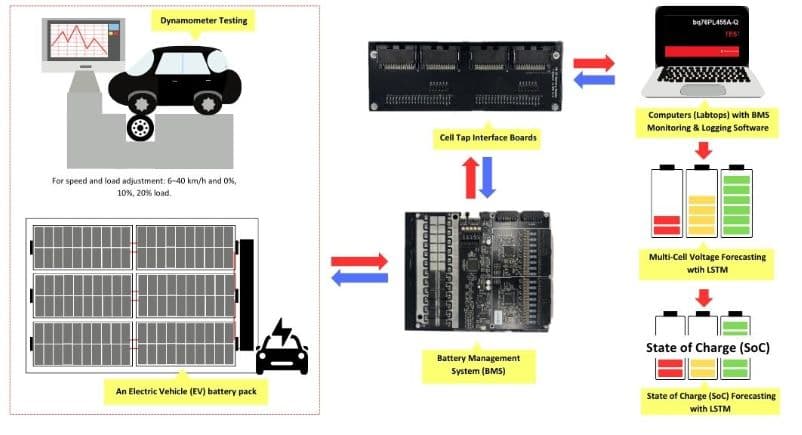
This research develops a "Smart Battery Management System (BMS) Demonstration Kit for Electric Vehicles" — a scaled-down prototype that measures battery cell voltage, current, and temperature while precisely controlling cell balancing and charge-discharge processes, supported by a real-time dashboard. The kit integrates LSTM and GRU AI models for accurate prediction of battery voltage and State of Charge (SoC) under varying load conditions, enabling early anomaly detection and predictive maintenance. Designed for exhibition displays and as a teaching resource for higher education and vocational institutions, this demonstration kit delivers meaningful impact across education, research, and innovation development in Thailand's electric vehicle industry.
คณะเทคโนโลยีการเกษตร
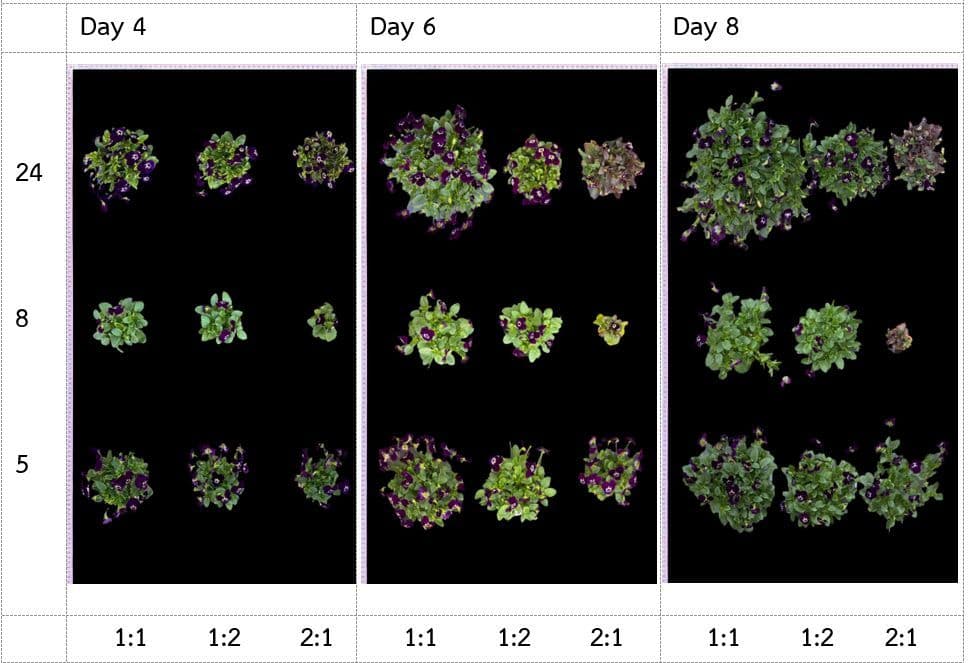
The objective of this experiment was to determine the effect of nitrogen and potassium concentration combination with photoperiod on the growth of Viola in a plant factory to increase the quality of the products, reduce the production time and increase the production cycle throughout the year. The experimental plan was 3x3 Factorial in CRD with nine treatments and three replications (six plants per replication). The factor of this study was two factors; the first factor was three different concentrations of nitrogen and potassium in ratios of 1:1, 1:2 and 2:1. The second factor was the application of different photoperiods. There were 1) 24-hours photoperiod, 2) 8-hours light/16-hours dark photoperiod (Induced flowering state: 13-hours light/11-hours dark photoperiod) and 3) 5-hours light/3-hours dark photoperiod. Controlled temperature at 25 °C, the EC=1.5-2.0 mS/cm and the pH=5.8-6.5 in all treatment. The result showed that the concentration of N: K in the ratio of 1:1 combined with 24-hour photoperiod was the most vegetative growth and also maximizes reproductive growth. The overall great sensory evaluation was an acceptable level and suitable for cooking or decorating dishes. Therefore, the concentration of N: K in the ratio of 1:1 combined with 24-hour photoperiod is the best treatment to increase the quality of the product, reduce the production time of viola flowers in each cycle from 90-100 days down to 43-45 days which is good for farmers.