
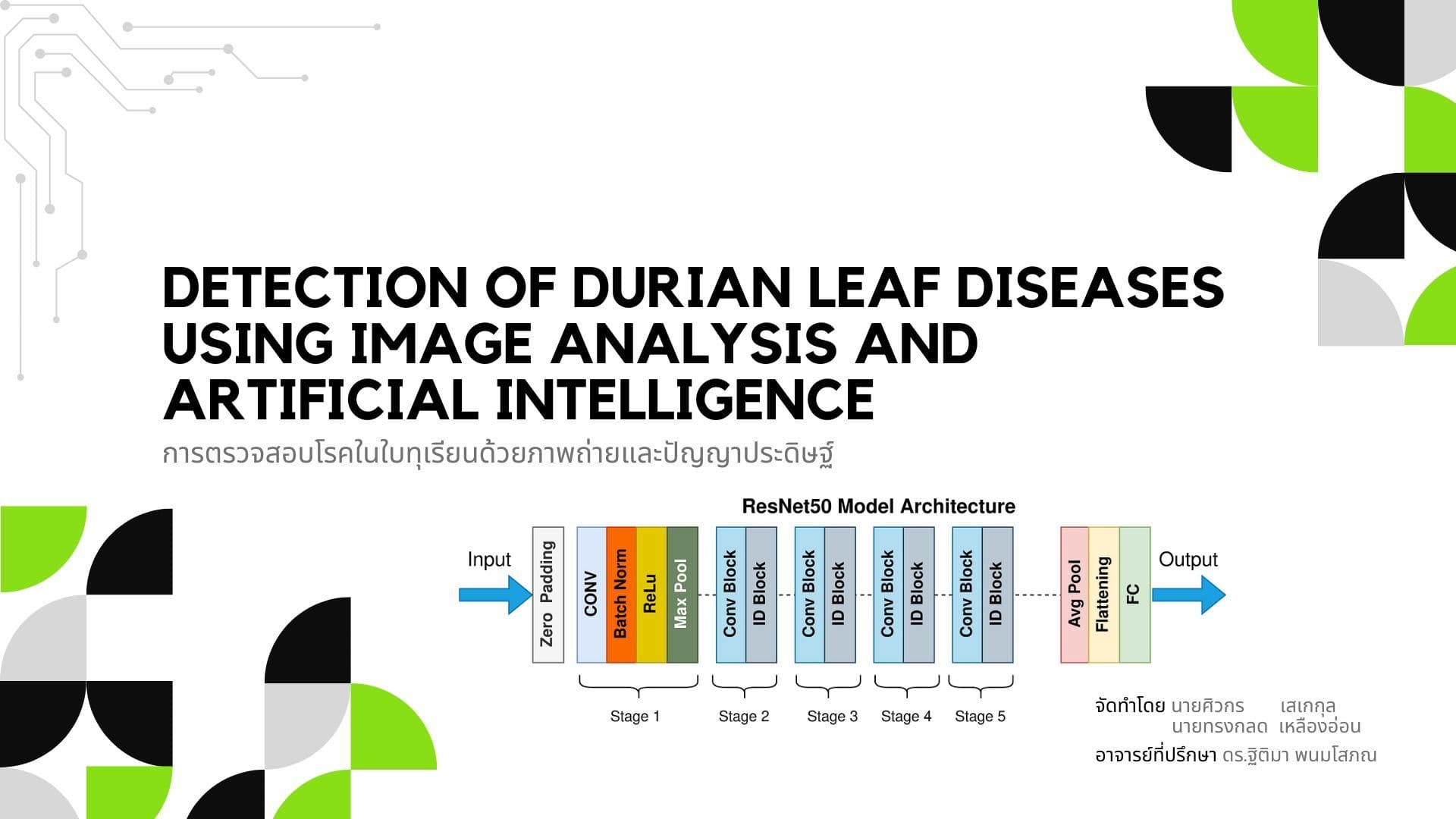
Durian is a crucial economic crop of Thailand and one of the most exported agricultural products in the world. However, producing high-quality durian requires maintaining the health of durian trees, ensuring they remain strong and disease-free to optimize productivity and minimize potential damage to both the tree and its fruit. Among the various diseases affecting durian, foliar diseases are among the most common and rapidly spreading, directly impacting tree growth and fruit quality. Therefore, monitoring and controlling leaf diseases is essential for preserving durian quality. This study aims to apply image analysis technology combined with artificial intelligence (AI) to classify diseases in durian leaves, enabling farmers to diagnose diseases independently without relying on experts. The classification includes three categories: healthy leaves (H), leaves infected with anthracnose (A), and leaves affected by algal spot (S). To develop the classification model, convolutional neural network (CNN) algorithms—ResNet-50, GoogleNet, and AlexNet—were employed. Experimental results indicate that the classification accuracy of ResNet-50, GoogleNet, and AlexNet is 93.57%, 93.95%, and 68.69%, respectively.
ทุเรียนเป็นพืชเศรษฐกิจที่มีบทบาทสำคัญต่อประเทศไทยในหลายมิติ ทั้งในด้านเศรษฐกิจ การเกษตร และการท่องเที่ยว โดยประเทศไทยเป็นหนึ่งในผู้ผลิตและส่งออกทุเรียนรายใหญ่ของโลก การรักษาคุณภาพของทุเรียนจึงเป็นปัจจัยสำคัญในการรักษาความสามารถในการแข่งขันในตลาดโลก อย่างไรก็ตาม การผลิตทุเรียนให้มีคุณภาพสูงและให้ผลผลิตที่ดีนั้น จำเป็นต้องอาศัยการดูแลรักษาต้นทุเรียนให้แข็งแรงและมีความต้านทานต่อโรคได้อย่างมีประสิทธิภาพ โรคพืชเป็นหนึ่งในปัจจัยสำคัญที่ส่งผลกระทบต่อผลผลิตของทุเรียน ซึ่งอาจเกิดจากปัจจัยแวดล้อม เช่น สภาพดิน น้ำ อากาศ รวมถึงการติดเชื้อจากเชื้อรา แบคทีเรีย และไวรัส โรคโลกที่เกิดได้ง่ายและพบเห็นได้มากที่สุดคือโรคทางใบ เนื่องจากใบมีบทบาทสำคัญต่อกระบวนการสังเคราะห์แสง ซึ่งมีผลต่อการเจริญเติบโตของต้นและคุณภาพของผลผลิต หากไม่มีการตรวจสอบและควบคุมโรคทางใบอย่างเหมาะสม อาจส่งผลให้ผลผลิตลดลง ต้นทุเรียนอ่อนแอ และเพิ่มความเสี่ยงต่อการระบาดของโรคในสวน ปัจจุบันการตรวจสอบและวินิจฉัยโรคในใบทุเรียนยังคงต้องอาศัยผู้เชี่ยวชาญด้านพืช ซึ่งอาจมีข้อจำกัดทั้งในด้านจำนวนบุคลากรและเวลาในการตรวจสอบแปลงปลูกขนาดใหญ่ การนำเทคโนโลยีภาพถ่ายและปัญญาประดิษฐ์ (Artificial Intelligence: AI) มาประยุกต์ใช้ในการจำแนกและวินิจฉัยโรคทางใบ จึงเป็นแนวทางในการช่วยเกษตรกรให้สามารถวิเคราะห์และวินิจฉัยโรคได้ด้วยตนเอง ลดความจำเป็นในการพึ่งพาผู้เชี่ยวชาญ และสามารถดำเนินการควบคุมโรคได้อย่างทันท่วงที ด้วยเหตุนี้งานวิจัยนี้จึงมุ่งเน้นไปที่การพัฒนาแบบจำลองการตรวจสอบโรคในใบทุเรียนโดยใช้เทคโนโลยีปัญญาประดิษฐ์ร่วมกับอัลกอริทึมการเรียนรู้เชิงลึก (Deep Learning) เพื่อจำแนกประเภทของโรคที่เกิดขึ้นในใบ โดยมีเป้าหมายเพื่อช่วยเพิ่มประสิทธิภาพในการตรวจสอบโรค ลดต้นทุนและเวลาในการวินิจฉัยโรค และสนับสนุนเกษตรกรให้สามารถบริหารจัดการสวนทุเรียนได้อย่างมีประสิทธิภาพและยั่งยืน

วิทยาเขตชุมพรเขตรอุดมศักดิ์
Cooling suit with two-phase flow heat-exchange system is a state-of-the-art heat sink, designed for thermal dissipation in fire fighter, racing driver and worker who needs to wear Personal Protective Equipment (PPE). The liquid cooling system with gas injection can enhance heat transfer performance and continuously maintain the temperature at 18-20 degree Celsius.
คณะสถาปัตยกรรม ศิลปะและการออกแบบ
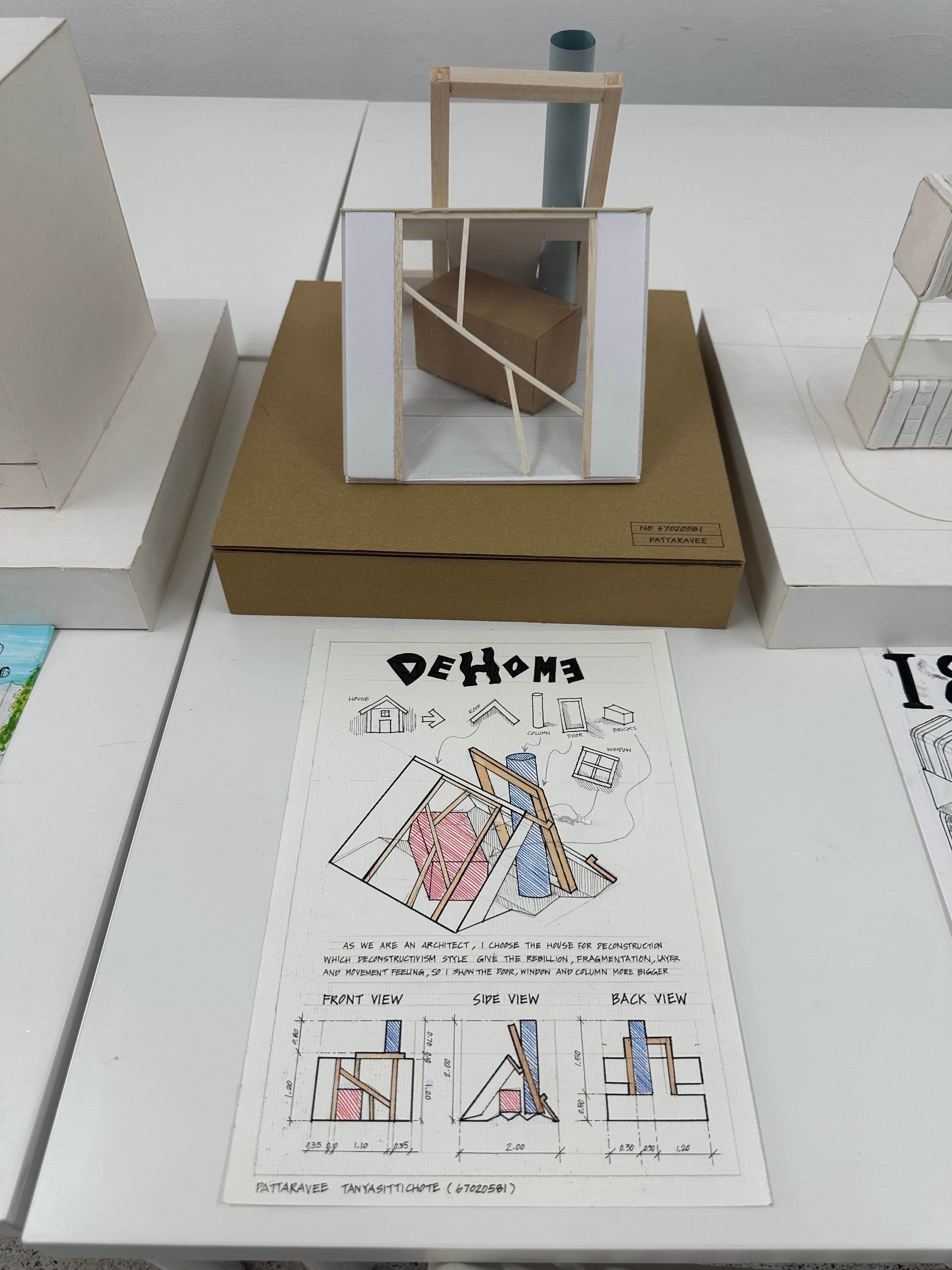
This conceptual model, titled "DeHome", incorporates the principles of Deconstructivism in architectural design. It deconstructs the fundamental elements of a house—roof, columns, doors, windows, and bricks—separating them and reassembling them in a way that conveys fragmentation, contradiction, and movement. This design challenges the traditional concept of structural stability by enlarging key elements such as doors, windows, and columns, emphasizing distortion and the dynamic force of transformation. Beyond merely dismantling the physical structure of a house, this project reinterprets the very concept of "home" within the context of contemporary architecture.
คณะวิศวกรรมศาสตร์
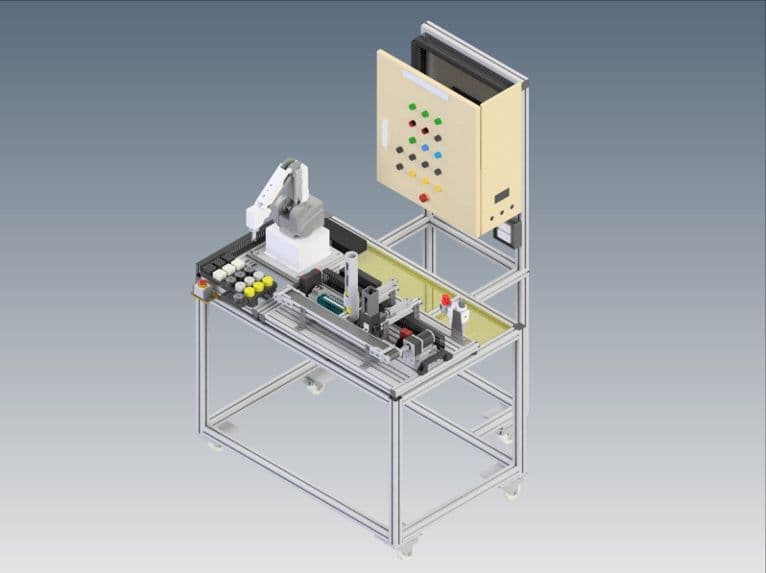
This Project has been undertaken to address the need for skill development and knowledge enhancement in pneumatic systems and automation control, which are crucial in today’s manufacturing industry. Pneumatic systems play a vital role in various production processes, including machine control, automated devices, and assembly lines. However, the Department of Measurement and Control Engineering currently lacks a laboratory dedicated to the study and experimentation of pneumatic systems due to the deterioration and lack of maintenance of the previously used equipment. This has resulted in students missing the opportunity to practice essential skills required in the industrial sector. The authors of this thesis recognize the necessity of reviving and developing a pneumatic laboratory that can effectively support teaching, learning, and research activities. This project focuses on studying and developing industrial robotic arm control systems and pneumatic systems, integrating modern technologies such as Programmable Logic Controllers (PLC) and AI Vision. These systems are intended to be applicable to real-world industrial contexts. The outcomes of this project are expected to not only enhance the understanding of relevant technologies but also aim to transform the laboratory into a vital learning hub for current and future students. Furthermore, this initiative seeks to improve the competitiveness of students in the job market and support the development of innovations in the manufacturing industry in the years to come.