

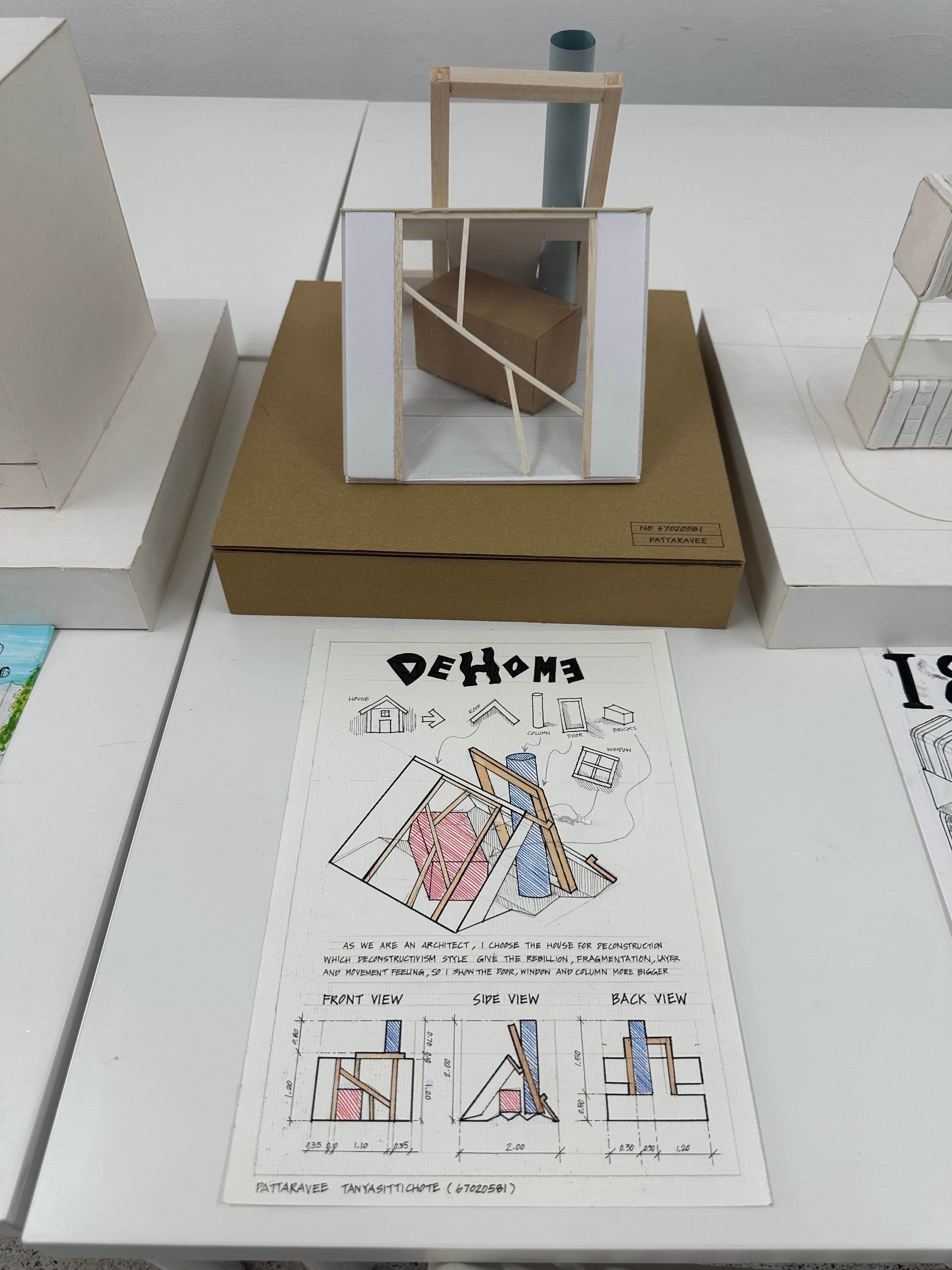
This conceptual model, titled "DeHome", incorporates the principles of Deconstructivism in architectural design. It deconstructs the fundamental elements of a house—roof, columns, doors, windows, and bricks—separating them and reassembling them in a way that conveys fragmentation, contradiction, and movement. This design challenges the traditional concept of structural stability by enlarging key elements such as doors, windows, and columns, emphasizing distortion and the dynamic force of transformation. Beyond merely dismantling the physical structure of a house, this project reinterprets the very concept of "home" within the context of contemporary architecture.
ต้องการประยุกต์ความรู้ที่ได้เรียนเข้ากับการออกแบบ และท้าทายความคิดโดยการตีความแนวคิดของ "บ้าน" ใหม่ในบริบทของสถาปัตยกรรมร่วมสมัย
คณะวิศวกรรมศาสตร์
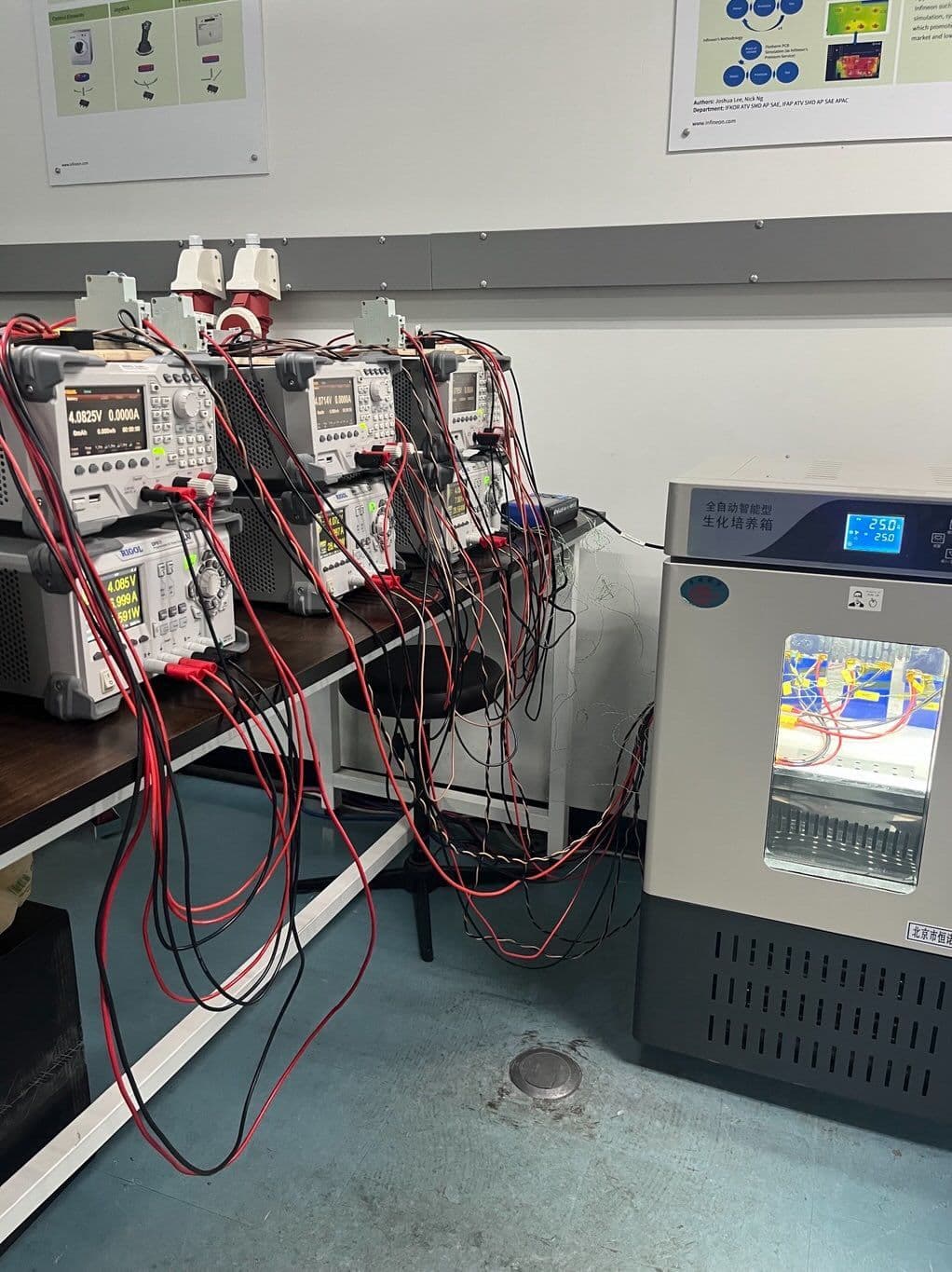
Currently, lithium batteries are widely used in electronic devices and electric vehicles, making the estimation of their State of Health (SOH) crucial. Accurate SOH estimation helps extend battery lifespan, reduce maintenance costs, and prevent safety issues such as overheating or explosions. This project aims to study and analyze mathematical models of batteries and develop SOH estimation techniques using Neural Networks to enhance accuracy and evaluation speed. The experiment involved collecting charge and discharge data from three lithium battery cells under controlled temperature conditions while maintaining a constant current. The current, voltage, and time data were recorded and analyzed to determine the battery capacity for each cycle. These data were then used to train a Neural Network model. The results demonstrated an effective method for predicting battery health status. The outcomes of this project can contribute to the development of a Battery Management System (BMS) that improves battery efficiency and longevity. Additionally, it provides a foundation for applying artificial intelligence techniques in the energy sector effectively.

คณะเทคโนโลยีการเกษตร
Public Park Project: Coastal folk Park is a design park in the area of Ang Sila Subdistrict, Chonburi Province. In an area of 22 acre, it is intended to be a place of rest, recreation, and also a source of learning and conservation of the seashore and the traditional way of life of the area.
วิทยาลัยนวัตกรรมการผลิตขั้นสูง
Ultrasonic cleaning tank is a machine that many factories widely used to clean objects. At one factory, a problem occurred in the cleaning process, resulting in the factory not being able to clean objects, but cracks also appeared on some objects. It was anticipated that these were caused by uneven acoustics pressure distribution which resulted in unsuitable cavitation This directly affected cleaning performance within the tank. In order to improve the tank's efficacy, in this research, we use Harmonic Response Analysis in ANSYS simulate simulate the occurrence of acoustic pressure in the tank to find the appropriate conditions of factors affected the intensity and the distribution pattern of acoustic pressure in ultrasonic tank, including the position of object, power, ultrasonic frequency and a suitable type and placing position of the transducer for the tank. Reliability of the simulate results was validate by the actual result from the foil corrosion test and the ultrasonic power probe. We found that objects receive different pattern of corrosion at each location. When temperature increasing the intensity of cavitation was increased. When we increase the ultrasonic frequency, acoustic pressure that is evenly dispersed throughout the tank.