

This project studies how to design a portable, sound-confining space that allows users to practice using their voices without disturbing the surroundings.
เนื่องจากในปัจจุบันบางครั้งนักร้องจำเป็นต้องฝึกซ้อมระหว่างการเดินทาง เราจึงคิดค้นอุปกรณ์ที่จะข่วยให้สามารถฝึกซ้อมได้อย่างสะดวกมากขึ้นในสถานที่ต่างๆ

คณะแพทยศาสตร์
This research studies the effect of CBD on the excitability of mice nociceptive trigeminal ganglion neurons. The electrophysiological parameters of the mouse trigeminal ganglion cells are measured using a Whole Cell Current Clamp Model on a primary cell culture treated with 0.5 uM CBD for 24 hours compared to a control group. After obtaining the results statistical analysis is done using a Mann Whitney-U test.
คณะวิศวกรรมศาสตร์
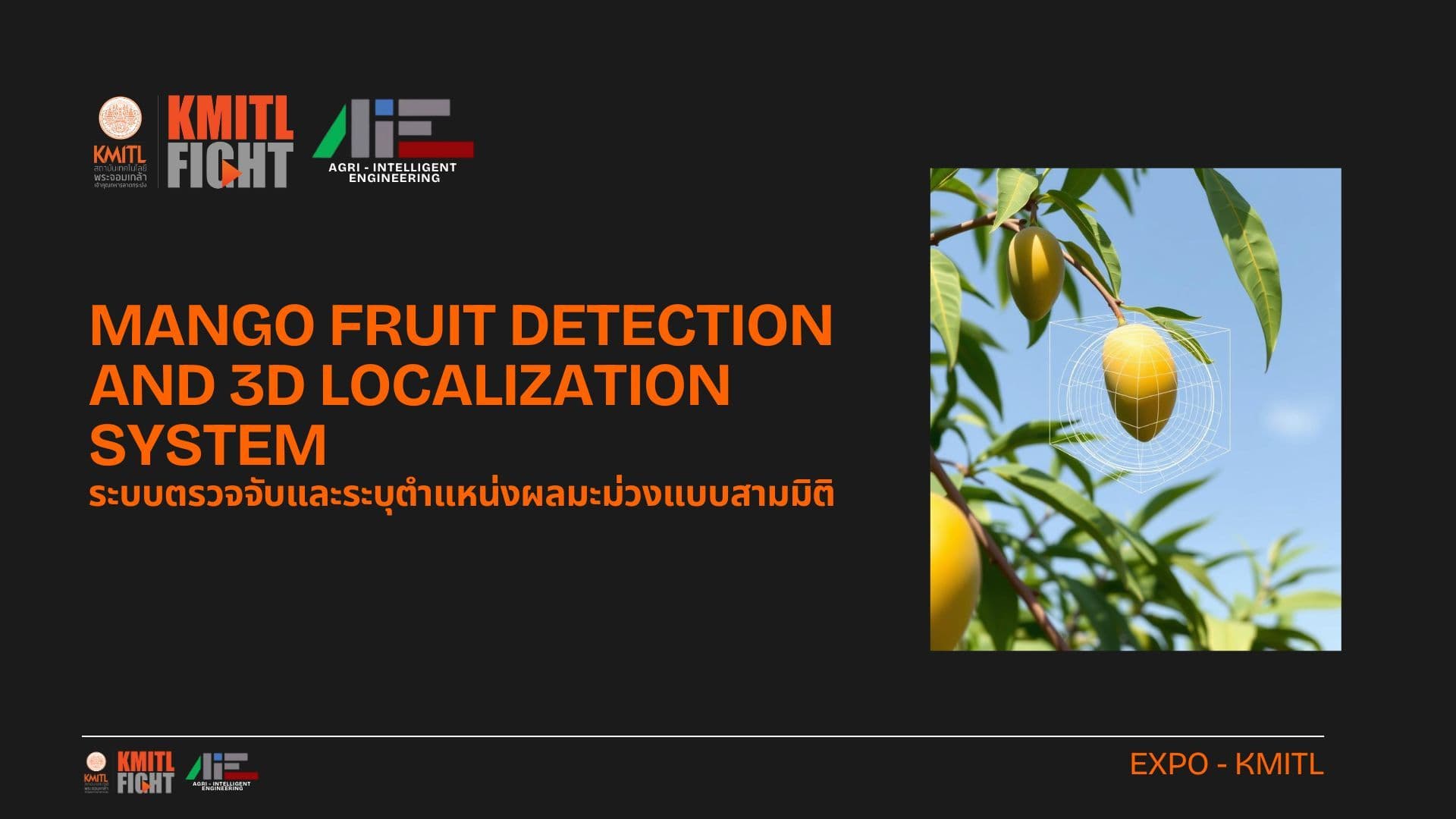
The evaluation of mango yield and consumer behavior reflects an increasing awareness of product origins, with a growing demand for traceability to understand how the produce has been cultivated and managed. This study explores the relationship between mango characteristics and cultivation practices before harvest, using location identification to provide insights into these processes. To achieve this, a model was developed to detect and locate mangoes using 2D images via a Deep Learning approach. The study also investigates techniques to determine the real-world coordinates of mangoes from 2D images. The YOLOv8 model was employed for object detection, integrated with camera calibration and triangulation techniques to estimate the 3D positions of detected mangoes. Experiments involved 125 trials with randomized mango positions and camera placements at varying yaw and pitch angles. Parameters extracted from sequential images were compared to derive the actual 3D positions of the mangoes. The YOLOv8 model demonstrated high performance with prediction metrics of Precision (0.928), Recall (0.901), mAP50 (0.965), mAP50-95 (0.785), and F1-Score (0.914). These results indicate sufficient accuracy for predicting mango positions, with an average positional error of approximately 38 centimeters.
คณะวิทยาศาสตร์
Listeriosis is a severe foodborne illness characterized by a fatality rate exceeding 30%, attributed to the pathogen Listeria monocytogenes. This study evaluated 160 lactic acid bacteria (LAB) isolated from Thai pickled crabs for their potential as agents against L. monocytogenes and for their probiotic properties and probiogenomic characteristics. Among these strains, strain DRC3-2 exhibited activity through the synthesis of bacteriocin DRC3-2, which significantly inhibited L. monocytogenes ATCC 19115 in spot-on-lawn assays. Phenotypic and whole-genome analyses revealed that strain DRC3-2 thrived in environments with 2-6% NaCl, pH values ranging from 3 to 9, and temperatures between 25 and 45°C. Based on average nucleotide identity (ANI) and digital DNA‒DNA hybridization (dDDH) values, strain DRC3-2 was taxonomically classified as Lactococcus lactis subsp. hordinae. The production of bacteriocin DRC3-2 peaked during the late stationary phase, following its synthesis in the early exponential growth phase. BAGEL4 analysis identified the putative novel bacteriocin DRC3-2 as lactococcin A and B, with respective bit-scores of 40.05 and 36.58. In silico safety assessments confirmed the nonpathogenic nature of strain DRC3-2 in humans, highlighting its absence of antibiotic resistance genes. Finally, this investigation underscores the novel bacteriocin DRC3-2 for application in the prevention and treatment of L. monocytogenes infections.