

Currently, climate change and human activities are causing rapid deterioration of coral reefs worldwide. Monitoring coral health is essential for marine ecosystem conservation. This project focuses on developing an Artificial Intelligence (AI) model to classify coral health into four categories: Healthy, Bleached, Pale, and Dead using Deep Learning techniques. With pre-trained convolutional neural network (CNN) for image classification. To improve accuracy and mitigate overfitting, 5-fold Cross-Validation is employed during training, and the best-performing model is saved. The results of this project can be applied to monitor coral reef conditions and assist marine scientists in analyzing coral health more efficiently and accurately. This contributes to better conservation planning for marine ecosystems in the future.
ปะการังเป็นองค์ประกอบสำคัญของระบบนิเวศทางทะเล แต่กำลังเผชิญกับภาวะเสื่อมโทรมจากภาวะโลกร้อนและกิจกรรมของมนุษย์ การตรวจสอบสุขภาพของปะการังในปัจจุบันอาศัยการสำรวจภาคสนาม ซึ่งใช้เวลานานและอาจเกิดข้อผิดพลาด โครงการนี้จึงนำเทคโนโลยีปัญญาประดิษฐ์มาใช้ในการวิเคราะห์ภาพถ่ายปะการัง ช่วยให้การจำแนกสุขภาพของปะการังมีความรวดเร็วและแม่นยำยิ่งขึ้น
วิทยาลัยการจัดการนวัตกรรมและอุตสาหกรรม
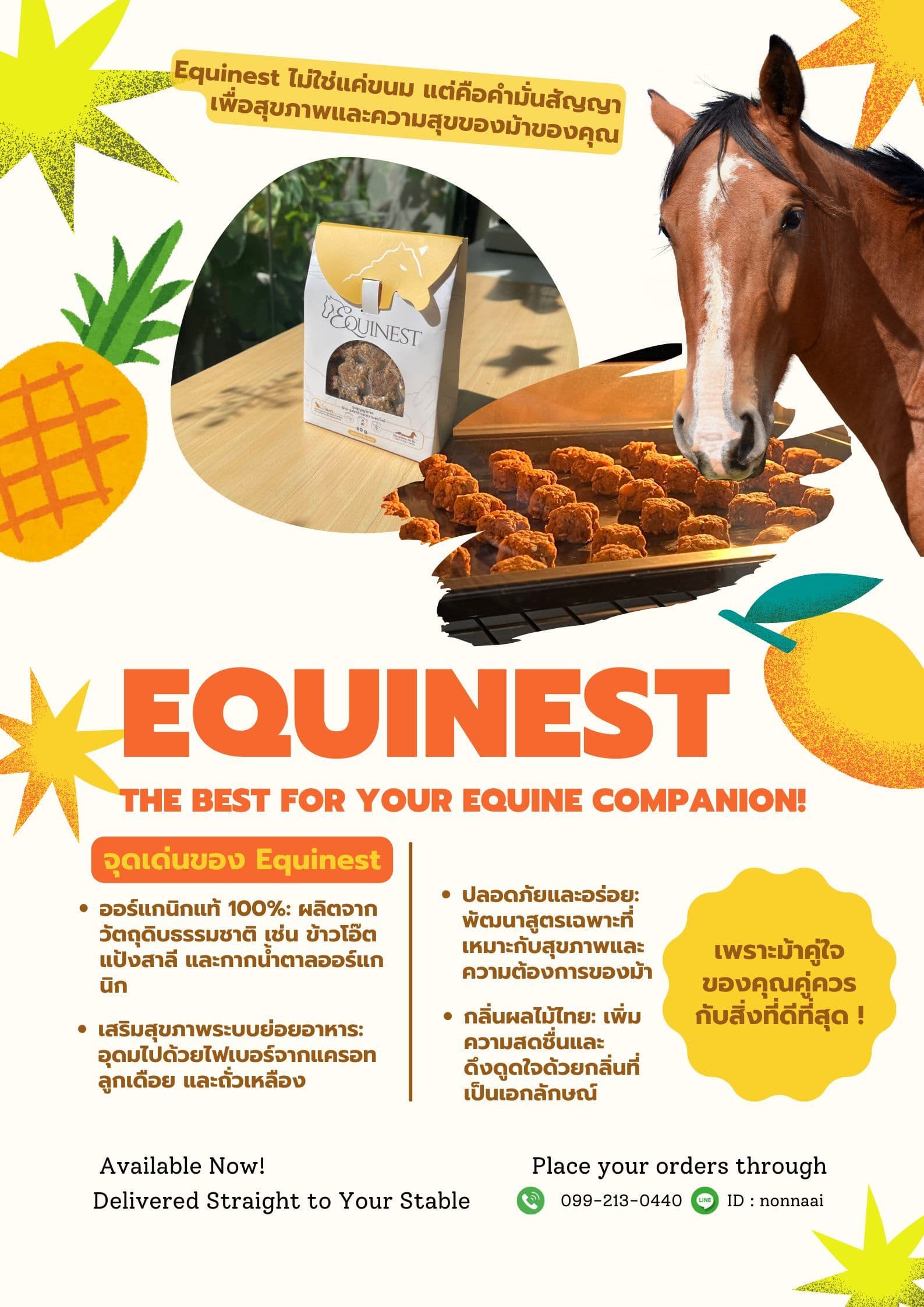
This research aims to develop a horse treat product that meets the nutritional and health needs of horses by using natural ingredients with beneficial properties, such as oats, wheat flour, corn flour, and organic molasses. These ingredients are rich in fiber, vitamins, and essential minerals for horses, while also enhancing digestive efficiency, reducing the risk of colic, and providing an appropriate energy source. The treat is designed with a shape suitable for a horse’s chewing behavior and is infused with Thai fruit flavors, such as pineapple and ripe mango, to attract horses and make consumption easier. The production process emphasizes cleanliness and safety by selecting organic ingredients and avoiding harmful preservatives. The packaging is designed to maintain product quality for an extended period, prevent moisture, and be convenient for horse owners to use. Additionally, the treat can be used as a reward during horse training, helping to strengthen the bond between the horse and its owner while reducing equine stress. This product serves as both a health-boosting snack and an effective training tool, making it suitable for horses that require highly nutritious supplements. It also provides a new option for horse owners seeking a safe and beneficial product for their horse’s overall well-being.
วิทยาลัยอุตสาหกรรมการบินนานาชาติ
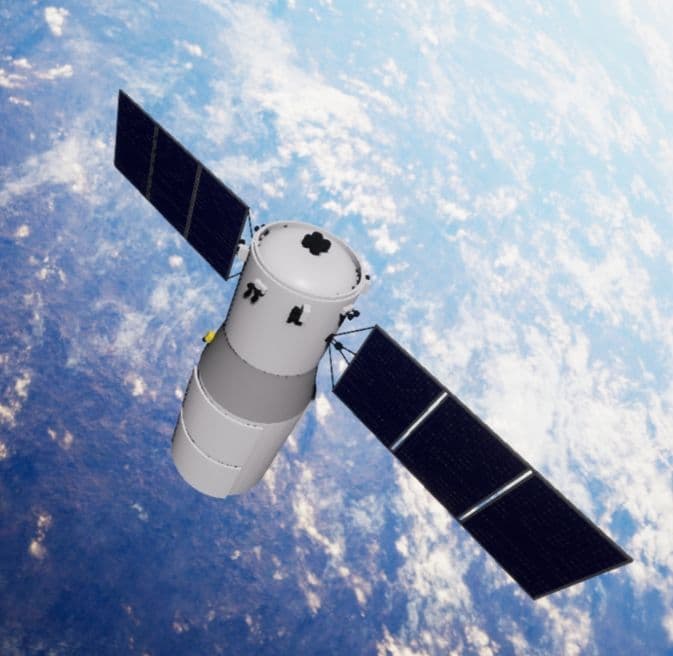
The capture of a target spacecraft by a chaser is an on-orbit docking operation that requires an accurate, reliable, and robust object recognition algorithm. Vision-based guided spacecraft relative motion during close-proximity maneuvers has been consecutively applied using dynamic modeling as a spacecraft on-orbit service system. This research constructs a vision-based pose estimation model that performs image processing via a deep convolutional neural network. The pose estimation model was constructed by repurposing a modified pretrained GoogLeNet model with the available Unreal Engine 4 rendered dataset of the Soyuz spacecraft. In the implementation, the convolutional neural network learns from the data samples to create correlations between the images and the spacecraft’s six degrees-of-freedom parameters. The experiment has compared an exponential-based loss function and a weighted Euclidean-based loss function. Using the weighted Euclidean-based loss function, the implemented pose estimation model achieved moderately high performance with a position accuracy of 92.53 percent and an error of 1.2 m. The in-attitude prediction accuracy can reach 87.93 percent, and the errors in the three Euler angles do not exceed 7.6 degrees. This research can contribute to spacecraft detection and tracking problems. Although the finished vision-based model is specific to the environment of synthetic dataset, the model could be trained further to address actual docking operations in the future.

คณะวิศวกรรมศาสตร์
This project objectives are 1) investigate the utilization of coconut husk and rubber latex in construction applications, 2) determine the optimal ratio of coconut husk and rubber latex mixtures, and 3) test the properties of ceiling panels made from coconut husk and rubber latex composite under Thai Industrial Standard (TIS) 219-2552 for gypsum ceiling boards. The methodology involves the following steps: 1) planning the project, 2) designing the mixture for the coconut husk and rubber latex composite ceiling panels, 3) producing the composite ceiling panels, 4) testing the product for properties according to TIS 219-2552 for gypsum ceiling boards, and 5) summarizing the test results.