

This project objectives are 1) investigate the utilization of coconut husk and rubber latex in construction applications, 2) determine the optimal ratio of coconut husk and rubber latex mixtures, and 3) test the properties of ceiling panels made from coconut husk and rubber latex composite under Thai Industrial Standard (TIS) 219-2552 for gypsum ceiling boards. The methodology involves the following steps: 1) planning the project, 2) designing the mixture for the coconut husk and rubber latex composite ceiling panels, 3) producing the composite ceiling panels, 4) testing the product for properties according to TIS 219-2552 for gypsum ceiling boards, and 5) summarizing the test results.
ประเทศไทยเป็นประเทศเกษตรกรรมที่มีการปลูกมะพร้าวและยางพาราอย่างแพร่หลาย ส่งผลให้มีเศษวัสดุเหลือทิ้งจากการแปรรูปมะพร้าว เช่น ขุยมะพร้าว และน้ำยางธรรมชาติที่สามารถนำมาใช้ประโยชน์ได้ ขุยมะพร้าวเป็นวัสดุธรรมชาติที่ไม่มีสารพิษ มีน้ำหนักเบา ทนทานต่อสภาพอากาศ และมีค่าการนำความร้อนต่ำ ส่วนน้ำยางธรรมชาติเป็นวัสดุที่มีความยืดหยุ่นและเป็นมิตรต่อสิ่งแวดล้อม การนำวัสดุเหล่านี้มาผสมผสานเพื่อผลิตแผ่นฝ้าเพดานที่มีสมบัติเป็นฉนวนป้องกันความร้อน จึงเป็นแนวทางที่สามารถช่วยลดขยะทางการเกษตร และพัฒนาเป็นวัสดุก่อสร้างที่มีคุณสมบัติเป็นฉนวนกันความร้อน ซึ่งสามารถช่วยลดอุณหภูมิภายในอาคารได้ ปัจจุบันวัสดุที่ใช้ในการผลิตแผ่นฝ้าเพดานมักเป็นเส้นใยสังเคราะห์หรือวัสดุที่นำเข้าจากต่างประเทศ ซึ่งมีต้นทุนสูงและอาจมีผลกระทบต่อสุขภาพของผู้ใช้งาน การพัฒนาแผ่นฝ้าเพดานจากขุยมะพร้าวผสมน้ำยางธรรมชาติ ไม่เพียงแต่ช่วยลดปริมาณขยะจากการเกษตร แต่ยังเป็นการใช้ทรัพยากรที่มีอยู่ในประเทศอย่างคุ้มค่า นอกจากนี้ การใช้วัสดุธรรมชาติยังช่วยลดการพึ่งพาวัสดุนำเข้า ลดต้นทุนการผลิต และส่งเสริมการใช้วัสดุที่เป็นมิตรต่อสิ่งแวดล้อม ซึ่งสอดคล้องกับแนวคิดการพัฒนาที่ยั่งยืนและการอนุรักษ์สิ่งแวดล้อม ดังนั้น การศึกษาวิจัยและพัฒนาแผ่นฝ้าผสมขุยมะพร้าวและน้ำยางพาราที่มีสมบัติเป็นฉนวนป้องกันความร้อน จึงมีความสำคัญทั้งในด้านการอนุรักษ์สิ่งแวดล้อม การใช้ทรัพยากรอย่างคุ้มค่า และการพัฒนาอุตสาหกรรมก่อสร้างที่ยั่งยืนในอนาคต
วิทยาลัยเทคโนโลยีและนวัตกรรมวัสดุ
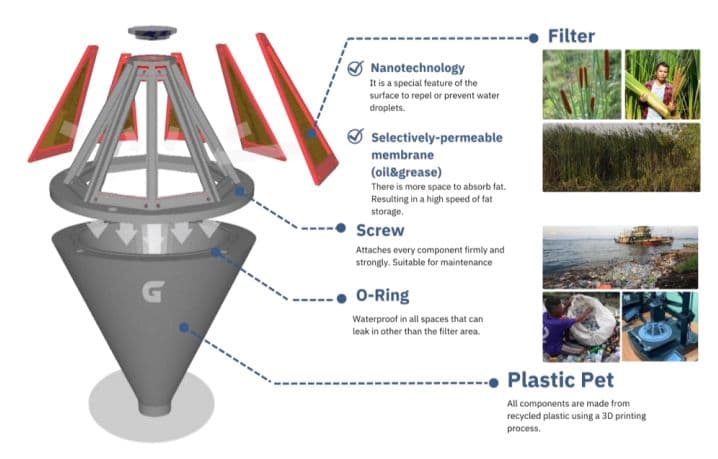
Oil and grease pollution is an urgent environmental problem severely affecting aquatic ecosystems and mangrove forests, particularly in the Mani Rat Canal area, Samut Sakhon Province, where no effective solution currently exists. This research aims to develop a "high-efficiency oil-trapping buoy using superhydrophobic membrane technology" by synthesizing cattail flowers into Carbon Nanofiber material for capturing oil and grease, combined with waste PET plastic collected from mangrove areas as the primary structural material. This approach not only addresses water pollution but also enables the recovered oil to be further processed and utilized, representing an environmentally friendly solution that promotes sustainable resource management.
คณะเทคโนโลยีการเกษตร
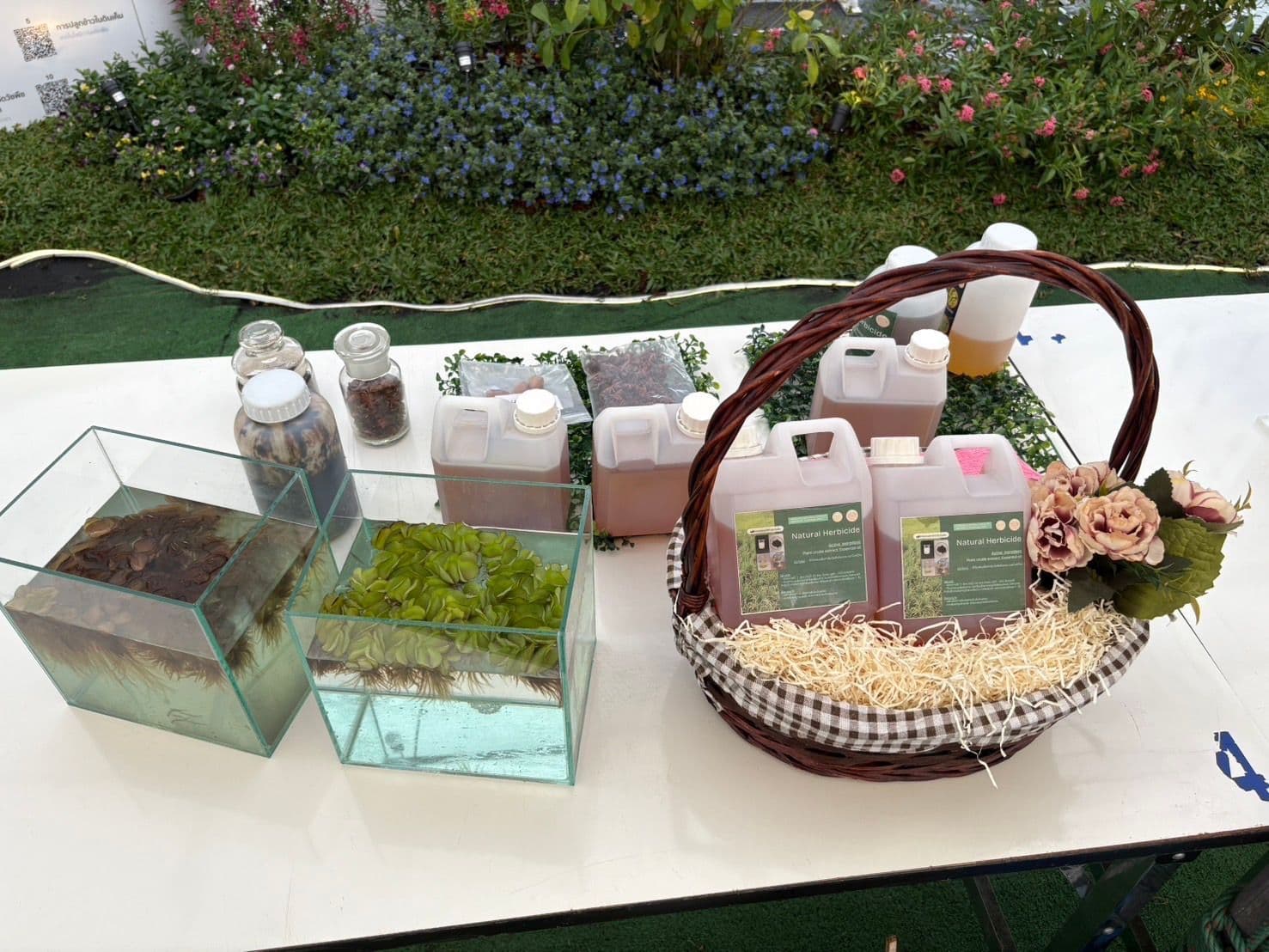
The use of chemical herbicides in agriculture has raised concerns due to its adverse effects on farmers' health, environmental sustainability, and consumer safety. Paraquat, a widely used herbicide, has been banned in Thailand. In response to this issue, this research focused on the development of natural herbicide products as an alternative to conventional chemical herbicides. The study involved the extraction of bioactive compounds from selected plants with potential herbicidal properties and evaluating their effectiveness in controlling target weeds. The results indicated that the developed natural herbicide demonstrates significant weed control efficiency. Additionally, this product can be applied to organic farming systems, reducing reliance on hazardous chemicals and promoting sustainable agricultural practices. The development of this natural herbicide served as an essential step toward environmentally friendly and safe agricultural solutions.
คณะบริหารธุรกิจ
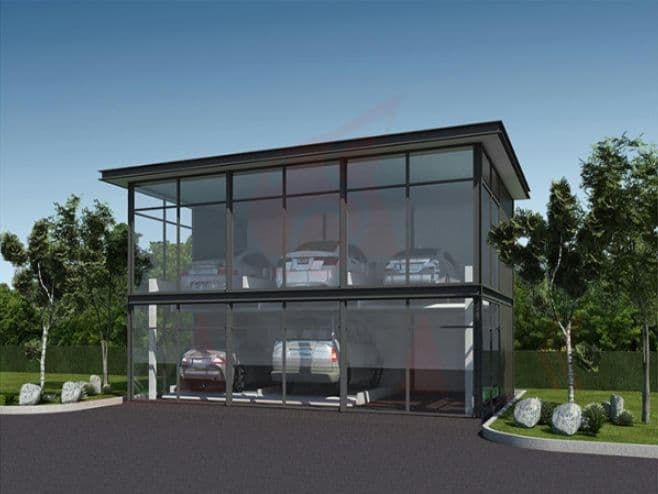
Parking space shortages in urban areas contribute to traffic congestion, inefficient land use, and environmental challenges. Automated Parking Systems (APS) provide an innovative solution by optimizing space utilization, reducing search times, and minimizing carbon emissions. This research investigates key factors influencing user adoption of APS technology using the UTAUT2 framework, focusing on variables such as Performance Expectancy, Effort Expectancy, Social Influence, Trust in Technology, and Environmental Consciousness. The APS Evolution project presents a smart parking solution that enhances efficiency, minimizes environmental impact, and improves user experience in urban settings. The initiative emphasizes technology-driven urban mobility and sustainable parking management to align with the evolving needs of modern cities.