

In today’s rapidly expanding e-commerce environment, the massive volume of product reviews makes it crucial to summarize user opinions in a way that is both comprehensible and practically applicable. This research presents a system for analyzing product reviews using Aspect-Based Sentiment Analysis (ABSA), a Natural Language Processing (NLP) technique that identifies key aspects of a review (such as shipping, product quality, and packaging) and evaluates the sentiment (positive, negative, or neutral) associated with each aspect, allowing both consumers and merchants to gain more efficient access to in-depth insights. This project focuses on developing AI for Thai-language ABSA by utilizing WangchanBERTa, a model trained on Thai data, and comparing it with various standard approaches such as TF-IDF + Logistic Regression, Word2Vec + BiLSTM, and Multilingual BERT (mBERT/XLM-R) to assess their performance in terms of accuracy, speed, and resource usage. Additionally, a dashboard visualization is provided to help users quickly grasp review trends. The expected outcome is to create an AI tool that can be practically employed in the e-commerce industry, enabling consumers to make easier purchasing decisions and assisting merchants in effectively improving their products and services.
ปัจจุบันการซื้อขายสินค้าออนไลน์เติบโตขึ้นอย่างรวดเร็ว ทำให้ข้อมูลรีวิวสินค้าจากผู้บริโภคมีปริมาณเพิ่มขึ้นเป็นจำนวนมาก รีวิวเหล่านี้มีบทบาทสำคัญในการตัดสินใจซื้อของลูกค้าและการปรับปรุงคุณภาพสินค้าของร้านค้า อย่างไรก็ตาม ปริมาณข้อมูลที่มากเกินไปและความหลากหลายของรูปแบบการแสดงความคิดเห็นทำให้การสรุปและวิเคราะห์ข้อมูลเหล่านี้เป็นไปได้ยาก ผู้บริโภคต้องใช้เวลามากในการอ่านรีวิวจำนวนมากเพื่อสรุปแนวโน้มความคิดเห็น ในขณะที่ร้านค้าประสบปัญหาในการวิเคราะห์ข้อมูลรีวิวเพื่อปรับปรุงผลิตภัณฑ์และบริการ เพื่อแก้ไขปัญหานี้ งานวิจัยนี้นำเสนอการประยุกต์ใช้ Aspect-Based Sentiment Analysis (ABSA) ซึ่งเป็นเทคนิคใน Natural Language Processing (NLP) ที่สามารถแยกแยะ แง่มุมสำคัญของรีวิวสินค้า (Aspects) และวิเคราะห์ อารมณ์ของแต่ละแง่มุม (Sentiments) โดยอัตโนมัติ การนำเทคนิคนี้มาใช้จะช่วยให้ผู้บริโภคสามารถรับข้อมูลเชิงลึกจากรีวิวได้ง่ายขึ้น และช่วยให้ร้านค้าสามารถใช้ข้อมูลรีวิวเพื่อปรับปรุงสินค้าและบริการอย่างมีประสิทธิภาพ โครงงานนี้ยังมุ่งเน้นการศึกษาว่า แนวทาง AI แบบใดมีประสิทธิภาพสูงสุดในการทำ ABSA สำหรับภาษาไทย โดยเปรียบเทียบ วิธีการประมวลผลภาษาธรรมชาติแบบดั้งเดิม กับเทคนิคการเรียนรู้เชิงลึกที่ทันสมัย เพื่อให้ได้แนวทางที่เหมาะสมที่สุด พร้อมทั้งพัฒนา Dashboard Visualization ที่ช่วยให้ข้อมูลรีวิวถูกนำเสนอในรูปแบบที่เข้าใจง่ายและสามารถนำไปใช้งานจริงในอุตสาหกรรมอีคอมเมิร์ซ

คณะศิลปศาสตร์
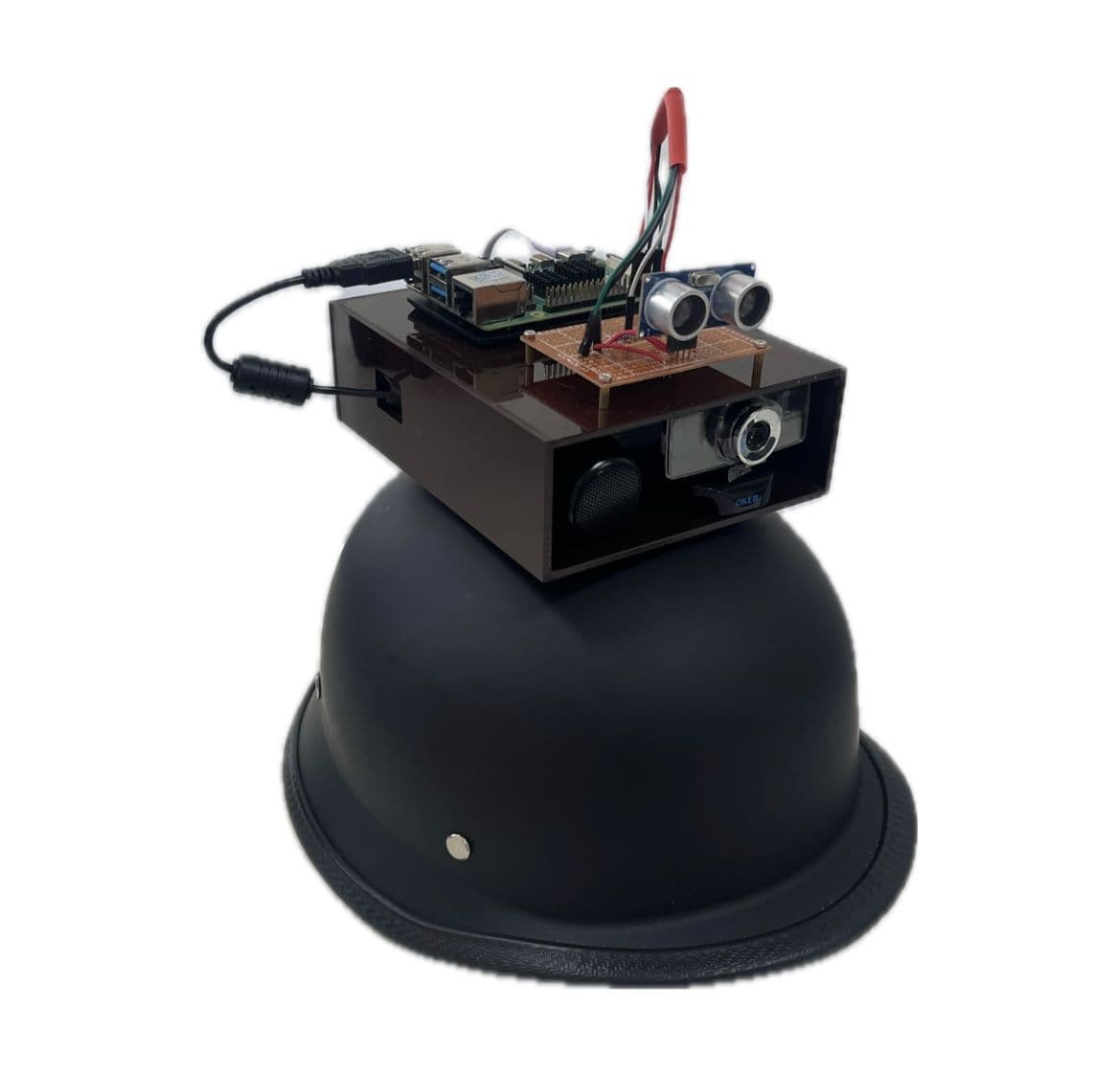
Layla, the hotel robot, is responsible for carrying guests’ luggage and guiding them to their accommodations. It is equipped with an internal map of the hotel, allowing it to navigate various locations efficiently. Additionally, it features an AI-powered system that enables interactive conversations in three major languages: Thai, English, and Chinese.
คณะวิศวกรรมศาสตร์
This thesis presents the application of deep learning for object classification. The selected deep learning architectures studied include Convolutional Neural Networks (CNN) and ResNet18. It covers data preparation, feature extraction, parameter tuning for accuracy comparison, and performance evaluation of the selected models. The aim is to propose an efficient model for use in devices that assist visually impaired individuals in classifying indoor objects and providing sound alerts.
คณะเทคโนโลยีการเกษตร
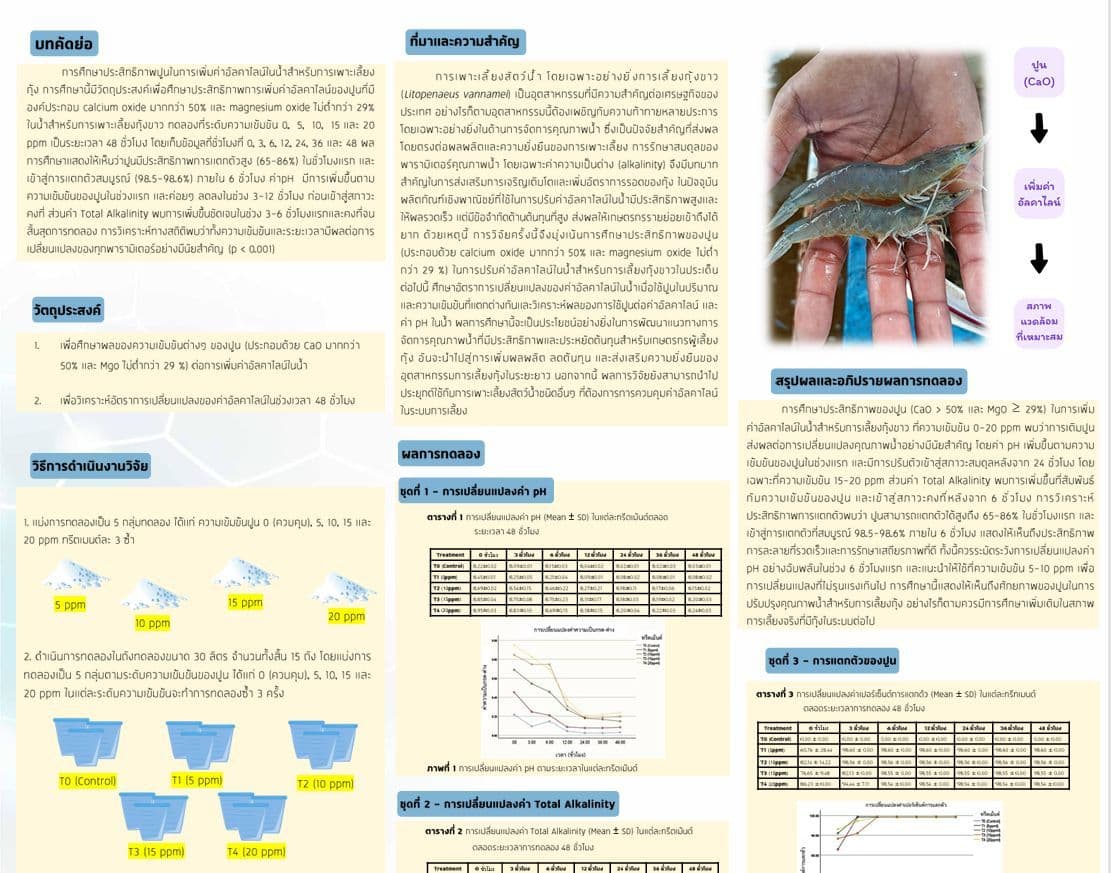
This study aimed to investigate the efficacy of lime containing more than 50% calcium oxide and not less than 29% magnesium oxide in enhancing water alkalinity for Pacific White Shrimp (Litopenaeus vannamei) aquaculture. The experiment was conducted at concentrations of 0, 5, 10, 15, and 20 ppm over a 48-hour period, with data collected at 0, 3, 6, 12, 24, 36, and 48 hours. Results demonstrated that lime exhibited high dissolution efficiency (65-86%) within the first hour and reached complete dissolution (98.5-98.6%) within 6 hours. The pH values initially increased proportionally with lime concentration, gradually decreased during 3-12 hours, before stabilizing. Total alkalinity showed significant increase during the first 3-6 hours and remained stable until the end of the experiment. Statistical analysis revealed that both concentration and time significantly affected all parameters (p < 0.001)