

Photocatalytic materials decorated with bi-metallic nanoparticles (Bi-Metallic NPs/ photocatalyst) was synthesized for the degradation of aflatoxin B1. Bi-metallic NPs/ photocatalyst were synthesized by ultrasonic irradiation. The as-synthesized was characterized the chemical characteristics by the transmission electron microscope (TEM), X-ray photoelectron spectroscopy (XPS), X-ray diffraction analysis (XRD), Fourier transform infrared spectrometer (FT-IR), zeta potential analyzer, and UV-visible spectrophotometer. Bi-metallic NPs/photocatalyst was used to evaluate the degradation efficiency of AFB1 in household wastewater under visible light. The degradation process was analyzed using high-performance liquid chromatography (HPLC) at a wavelength of 365 nm, revealing that AFB1 was completely degraded 100% within 2 minutes. This superior performance is attributed to its highly porous structure, increased specific surface area, and reduced electron-hole recombination rate, which demonstrate that the developed nanomaterial has successfully achieved AFB1 degradation.
เนื่องจาก อะฟลาท็อกซินเป็นสารพิษที่ผลิตจากเชื้อราที่สร้างสารพิษในภาวะที่อาหารมีความชื้นสูง สามารถพบได้ทั่วไปในอาหารและผลผลิตทางการเกษตร ได้แก่ ข้าวโพด มันสำปะหลัง ผักและผลไม้อบแห้ง ธัญพืช หัวหอมแห้ง กระเทียมแห้ง เป็นต้นสารอะฟลาทอกซินมีหลายชนิด เช่น AFB1, AFB2, AFG1, AFG2 โดยเฉพาะ AFB1 ที่มีพิษสูงและสามารถทำลายตับ ทำให้เกิดอาการ อาเจียน ท้องเดิน และในระยะยาวอาจพัฒนาเป็น ตับแข็ง หรือ มะเร็งตับ ดังนั้นหากมีการปนเปื้อนของ AFB1 จากครัวเรือนลงสู่แหล่งน้ำที่มีสภาพแวดล้อมเอื้อต่อการสะสมของสารพิษ เช่น บ่อน้ำ หรือแหล่งน้ำธรรมชาติที่มีการไหลเวียนต่ำ อาจส่งผลกระทบต่อสิ่งแวดล้อมและระบบนิเวศได้ สารอะฟลาท็อกซินสามารถคงอยู่ในสิ่งแวดล้อมเป็นเวลานานและอาจถูกดูดซึมเข้าสู่ห่วงโซ่อาหารผ่านสัตว์น้ำและพืชน้ำ ซึ่งอาจส่งผลกระทบต่อสุขภาพของมนุษย์และสัตว์ที่บริโภคอาหารจากแหล่งน้ำดังกล่าว เพื่อลดความเสี่ยงจากการปนเปื้อนของ AFB1 ในแหล่งน้ำ จึงได้มีการสังเคราะห์วัสดุตัวเร่งปฏิกิริยาเชิงแสงที่ตกแต่งด้วยวัสดุนาโนโลหะ ที่สามารถสลาย AFB1 ในน้ำเสียครัวเรือน สามารถช่วยลดปัญหาการปนเปื้อนของสารพิษในแหล่งน้ำและป้องกันผลกระทบต่อสุขภาพของมนุษย์และสิ่งแวดล้อมได้อย่างมีประสิทธิภาพ

คณะสถาปัตยกรรม ศิลปะและการออกแบบ
The purpose of this research aims to guidelines the identity design for high-speed rail stations, which are divided into four steps: 1) Survey and analysis of identity at the high-speed train stations, including subway in Japan and Taiwan. 2) Comparison the perception of the environment by the questionnaire at BTS, MRT BL, Airport Rail Link (AERA1), and MRT PPL in Bangkok from passengers 800 passengers. 3) Survey and analysis the perception of identity at the MRT Blue Line by questionnaires 800 passengers at Wat Mangkorn, Sam Yod, Sanam Chai, and Itsaraphap stations. 4) To analysis with the descriptive statistics and one-way ANOVA. Study and survey of the high-speed rail environment from Bangkok to Nong Khai, then synthesize the identity design guidelines by 12 experts with structured interviews to summarize the conceptual framework for identity design for high-speed rail stations. The results shown that the identity of train stations in Japan and Taiwan is designed based on architectural and historical concepts that align with the local environment, society, and lifestyle near the stations. This design approach is evident at stations serving as significant tourist attractions and in the surrounding environment, including external buildings and nearby public transportation connections, as well as entrance and exit doors to the station. In summary, four types of identities have been identified: 1) The Identity Historical and Architectural 2) The Identity of Culture 3) The Identity from Cartoons and 4) The Identity of Art and Design
คณะสถาปัตยกรรม ศิลปะและการออกแบบ
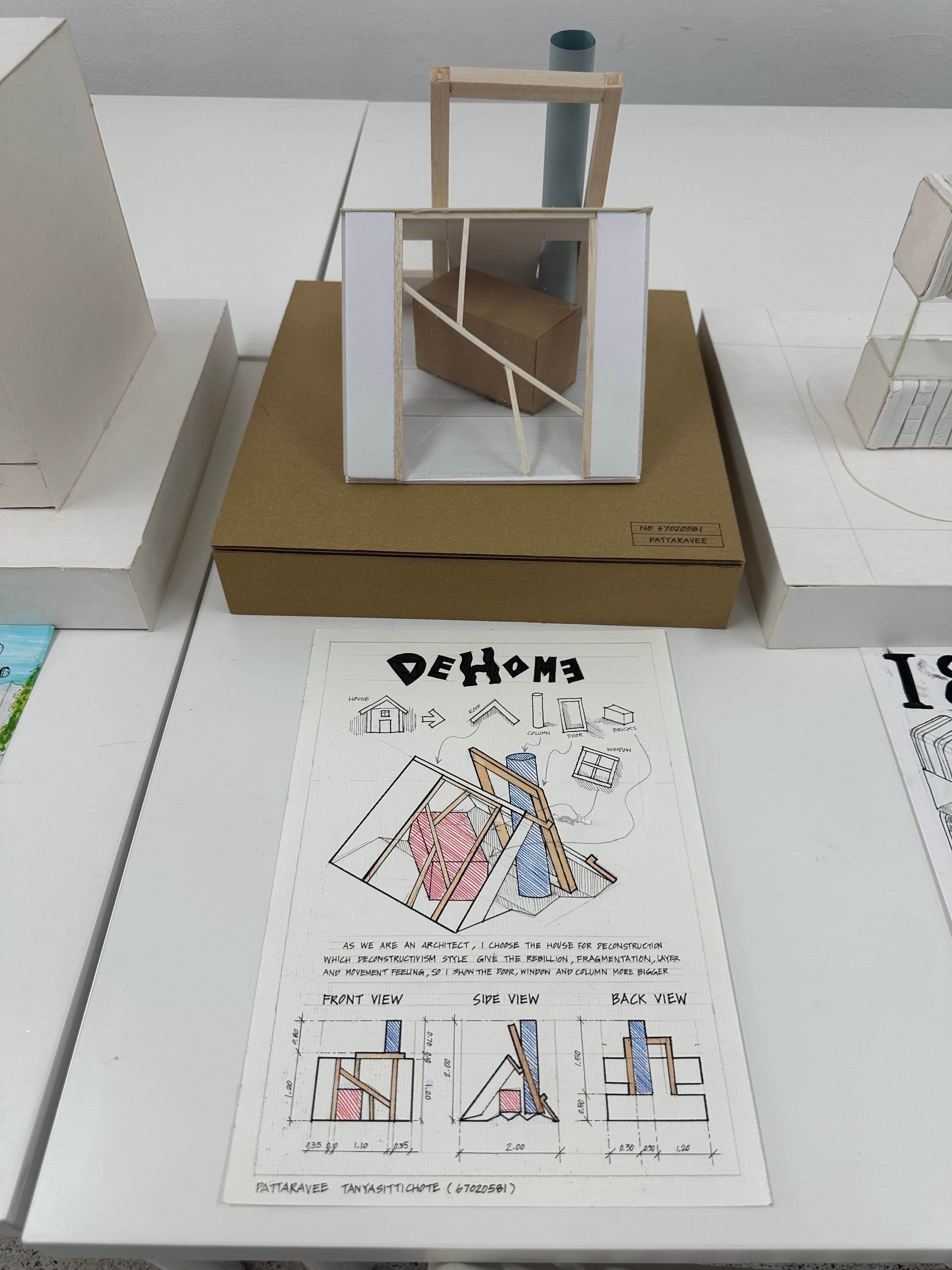
This conceptual model, titled "DeHome", incorporates the principles of Deconstructivism in architectural design. It deconstructs the fundamental elements of a house—roof, columns, doors, windows, and bricks—separating them and reassembling them in a way that conveys fragmentation, contradiction, and movement. This design challenges the traditional concept of structural stability by enlarging key elements such as doors, windows, and columns, emphasizing distortion and the dynamic force of transformation. Beyond merely dismantling the physical structure of a house, this project reinterprets the very concept of "home" within the context of contemporary architecture.
คณะเทคโนโลยีการเกษตร
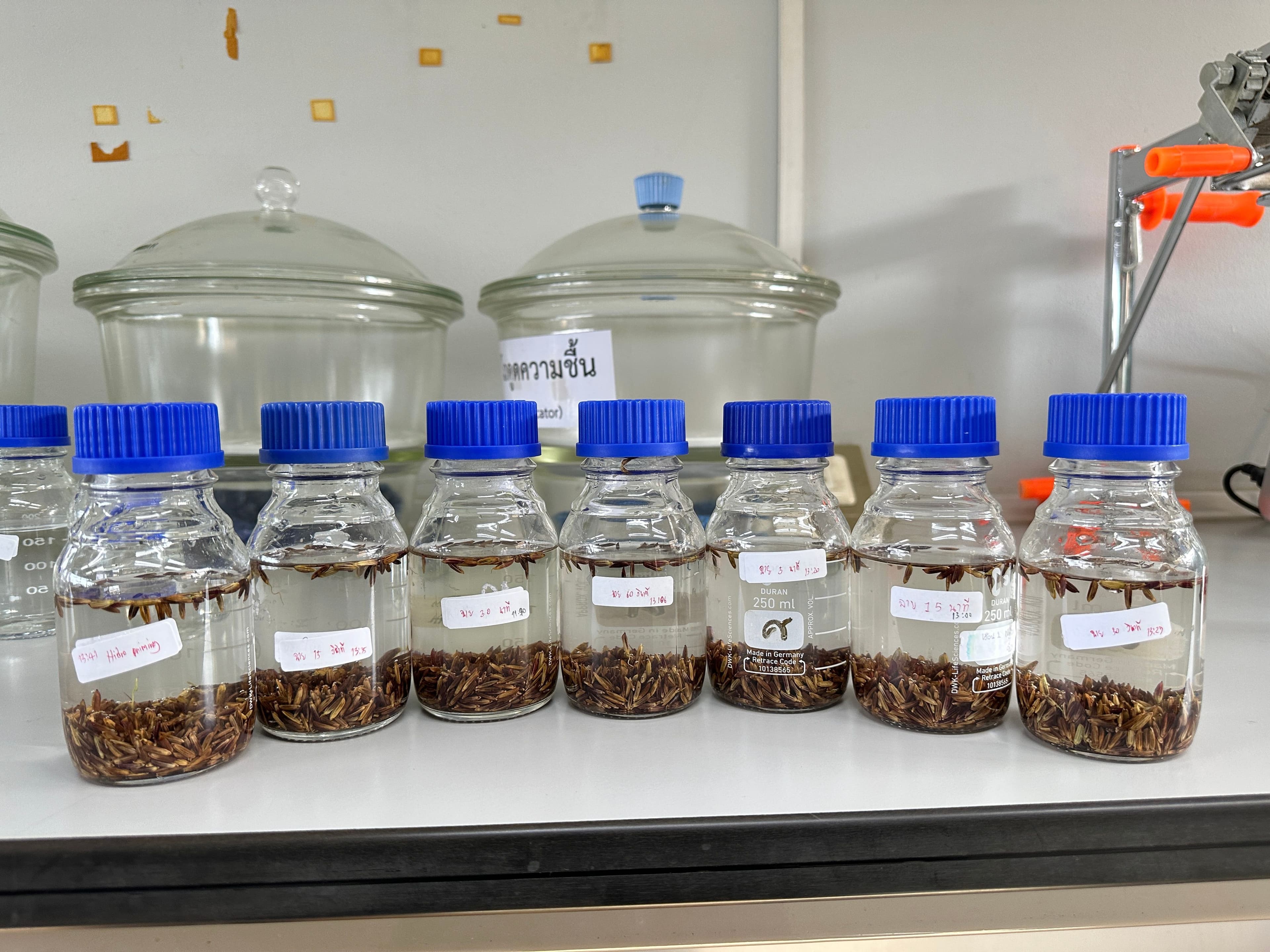
การทดลองนี้จึงมีวัตถุประสงค์เพื่อศึกษาผลของน้ำที่ผ่านการฉายพลาสมาในเวลาที่แตกต่างกันต่อคุณภาพการงอกของเมล็ดพันธุ์ข้าวไรซ์เบอรี่ เพื่อเป็นการยกระดับคุณภาพความงอกของเมล็ดพันธุ์ข้าวไรซ์เบอรี่