
KMITL Expo 2026 LogoKMITL 66th Anniversary Logo

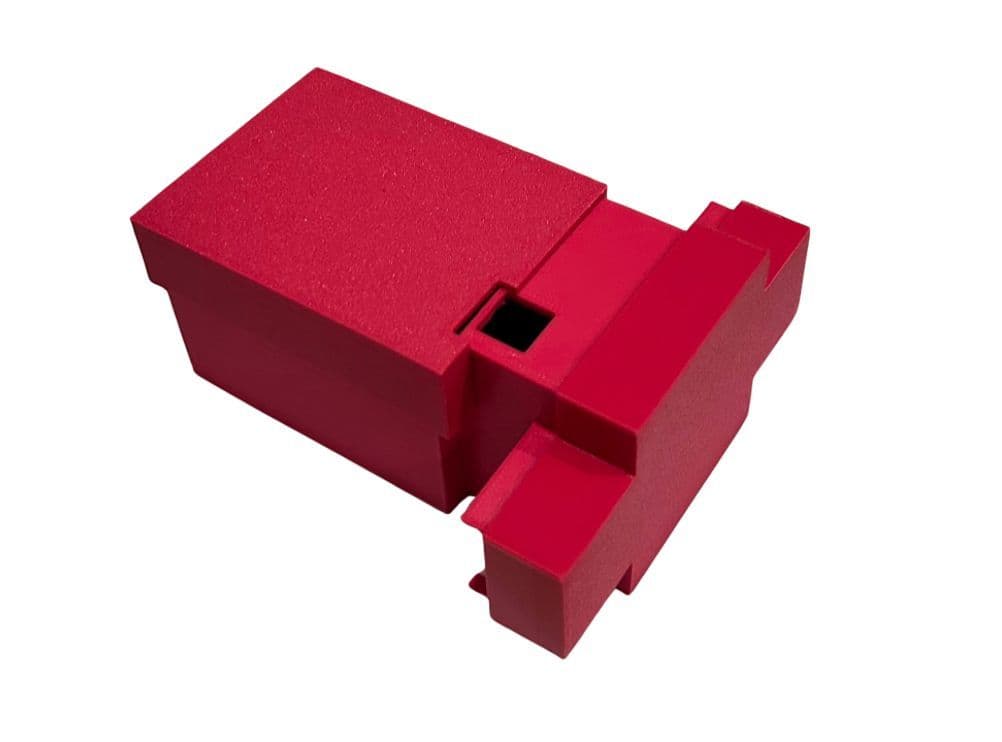
3D-Printed Spectrophotometer for Determination of Formaldehyde in Fresh Seafood

3D-Printed Spectrophotometer for Determination of Formaldehyde in Fresh Seafood

Abstract

This research focuses on the development of a 3D-printed spectrophotometer. The device was designed using AutoCAD, ensuring durability, low cost, and portability. It is intended for measuring the amount of formaldehyde in fresh seafood.

Objective

เทคนิคในการตรวจวัดความเข้มข้นฟอร์มาลดีไฮด์ในอาหารทะเลสด เช่น UV-Vis Spectrophotometry เป็นเทคนิคที่ใช้วัดค่าการดูดกลืนแสงของสารและใช้ในการวิเคราะห์ความเข้มข้นของสารในสารละลาย ข้อจำกัดของเทคนิคนี้คือราคาแพง และไม่สะดวกในการใช้งานภาคสนาม จึงมีการพัตนาและสร้างสเปกโตรโฟโตมิเตอร์แบบพิมพ์ 3 มิติ เพื่อตรวจวัดความเข้มข้นฟอร์มาลดีไฮด์ในอาหารทะเลสด ซึ่งมีความสำคัญในการลดต้นทุน พกพาสะดวก และใช้งานง่ายในภาคสนาม

Other Innovations

A Cold Cover for Raw Milk Transportation

คณะวิศวกรรมศาสตร์

A Cold Cover for Raw Milk Transportation

This study was conducted to develop a prototype cooling cover for transporting raw milk, aiming to provide a solution for maintaining the quality of raw milk during transportation to milk collection centers. The cooling cover is made using Phase Change Material (PCM), produced from water mixed with a gelling agent, in an amount of 5.6 kg, attached around an aluminum milk tank (with a capacity of 25 L). The cover is then covered with a UV-reflective fabric in two types: polyvinyl chloride (PVC) and high-density polyethylene (HDPE). The temperature reduction performance of both types of covers was evaluated by measuring water temperatures at various points along the radial and vertical directions of the milk tank at six points, using type-T thermocouples, under three environmental conditions: a constant temperature of 25 °C, 35 °C, and outdoor ambient temperature (average temperature 35.5 °C) for a minimum duration of 180 min. The experimental results revealed that at 120 min., the water in the tank covered with PCM-PVC and PCM-HDPE covers had temperatures lower than the ambient temperature by 12.6 °C and 12.9 °C, respectively, under a constant ambient temperature of 25 °C, and under a constant ambient temperature of 35 °C lower by 16.7 °C and 16.4 °C, respectively, and outdoor conditions. Since the temperature reduction performance of PCM-PVC and PCM-HDPE covers showed no significant difference, the performance of microbial quality preservation of raw milk was assessed only with PCM-PVC cover in comparison to a non-covered case (control), by measuring coliform and Escherichia coli counts using compact dry plates. Results indicated that after 120 min., milk in the tank covered with PCM-PVC had an average coliform count of 1.6 × 10^4 CFU/ml and E. coli count of 2 × 10^3 CFU/ml, which was lower than the non-covered control with an average coliform count of 1.5 × 10^4 CFU/ml and E. coli count of 1.1 × 10^4 CFU/ml. This study concludes that the temperature reduction achieved by the cooling cover can help inhibit coliform growth to levels below raw milk quality standards, demonstrating the potential of the cooling cover in maintaining the quality and safety of raw milk during transport, ultimately contributing to an improved quality of life for Thai dairy farmers.

Read more
Herbal inhaler Homyen

คณะศิลปศาสตร์

Herbal inhaler Homyen

The innovation of aromatic and cooling inhalers stems from the widespread use of inhalers in modern times. This innovation aims to elevate the product to suit contemporary lifestyles, incorporating Thai identity in a way that resonates with the younger generation. The development focuses on enhancing scents using locally sourced Thai ingredients, adding value to Thai flowers and fruits. Various extraction methods are employed to preserve the fragrance for a longer duration. Additionally, borneol, camphor, and menthol are blended to provide a refreshing and cooling sensation. For the packaging, polymer clay is used to create the container, which is hand-molded and then baked to harden. Instead of a traditional cap, a fabric covering is used to introduce a unique and innovative alternative to conventional inhalers.

Read more
SignGen: An LLM-Based Thai Sign Language Generator

คณะวิศวกรรมศาสตร์

SignGen: An LLM-Based Thai Sign Language Generator

The Thai Sign Language Generation System aims to create a comprehensive 3D modeling and animation platform that translates Thai sentences into dynamic and accurate representations of Thai Sign Language (TSL) gestures. This project enhances communication for the Thai deaf community by leveraging a landmark-based approach using a Vector Quantized Variational Autoencoder (VQVAE) and a Large Language Model (LLM) for sign language generation. The system first trains a VQVAE encoder using landmark data extracted from sign videos, allowing it to learn compact latent representations of TSL gestures. These encoded representations are then used to generate additional landmark-based sign sequences, effectively expanding the training dataset using the BigSign ThaiPBS dataset. Once the dataset is augmented, an LLM is trained to output accurate landmark sequences from Thai text inputs, which are then used to animate a 3D model in Blender, ensuring fluid and natural TSL gestures. The project is implemented using Python, incorporating MediaPipe for landmark extraction, OpenCV for real-time image processing, and Blender’s Python API for 3D animation. By integrating AI, VQVAE-based encoding, and LLM-driven landmark generation, this system aspires to bridge the communication gap between written Thai text and expressive TSL gestures, providing the Thai deaf community with an interactive, real-time sign language animation platform.

Read more