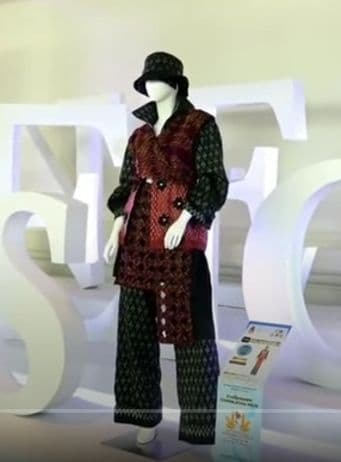
Industrial Education and Technology, King Mongkut's Institute of Technology Ladkrabang has a vision for sustainable excellence. The mission is to develop learners to be ready for the digital world, develop educational innovations using research as a base, strategic management with good governance, and academic services that benefit society. In this activity, the group of students joined with the Embassy of the Russian Federation in the Kingdom of Thailand, the working group of the Thai Silk and Culture Promotion Association, and the working group of the National Research Office (NRCT) to integrate knowledge to design a silk outfit that combines Thai and Russian cultures, create a network of cooperation in arts, culture, technology, innovation, and dissemination of knowledge and the beauty of Thai silk. The objective is to develop the potential of teachers and students in creative design, listen to the work guidelines from the working group of the Thai Silk and Culture Promotion Association, the working group of the National Research Office (NRCT) via an online meeting. The team of teachers and students from King Mongkut's Institute of Technology Ladkrabang under the name of the "Love Silk" group designed a Thai silk outfit that combines cultures with the identity of Thai silk and studying traditions and cultures of the Russian Federation's clothing. They studied related literature and research documents and integrated knowledge into the design process, inspired by the concept of the Rajapataen outfit. Since the reign of King Chulalongkorn (Rama V) in 1872, together with the clothing culture of the Russian Federation, emphasizing Thai silk, this concept has gone through the process of creating and selecting the design concept (Concept Generation and Selection). The concept received from the embassy was first submitted for feedback on July 25, 2024. There was a suggestion to add more uniqueness to Thai silk through a fashion show presentation by the wife and grandson of the Ambassador of the Russian Federation. Therefore, the designed outfits are 1 set of women's clothes and 1 set of boys' clothes. The women's set has an inner shirt adapted from the royal outfit using silk fabric, Kon Ka-ed pattern, with two separate pieces: 1 shirt and 1 skirt. The jacket is a modified long suit style, plain silk, dark pink and red. The boys' set has a long-sleeved shirt adapted from the contemporary royal style, tailored with cream silk, long slacks tailored with raw betel silk, and a collarless coat with blue silk and lotus pattern. Adapted from the Rajapattan suit with a long collar in an international style. On August 2, 2024, the designed suit and the prototype of the raw fabric suit were brought to the ambassador's wife and nephew to try on. On August 30, 2024, the ambassador was met for the 4th time to bring the silk suit that was cut into a real silk suit. The shirt was given to the ambassador's wife and nephew to try on. It was worn to join the fashion show in the 13th "Thai Silk to the World" Silk Festival at the Naval Auditorium, where lecturers and students from the Faculty of Industrial Education and Technology, King Mongkut's Institute of Technology Ladkrabang, joined the fashion show in the finale round, which proceeded smoothly. After the event, the working group of the Thai Silk and Culture Promotion Association brought the clothes designed and tailored by the "Rak Prae Mai" team to exhibit Thai Silk to the World Exhibition from September 1-8, 2024 at the Emsphere Shopping Mall. The team summarized the report and compiled a complete report. In the implementation of this project, the Faculty of Industrial Education and Technology, King Mongkut's Institute of Technology Ladkrabang has received support and facilitation throughout the project. The budget support from the National Research Council of Thailand (NRCT), the support of fabrics for sewing from the Thai Silk and Culture Promotion Association, and the information for designing valuable silk dresses from the Embassy of the Russian Federation in the Kingdom of Thailand are very important factors that made this operation a success. It is a very important experience for the team of teachers and students of Industrial Education and Technology, King Mongkut's Institute of Technology Ladkrabang. We sincerely hope to receive good cooperation in the future.
ตามสำนักงานการวิจัยแห่งชาติ ได้ดำเนินโครงการขับเคลื่อนกิจกรรมมหกรรมผ้าไหม “ไหมไทยสู่เส้นทางโลก” ปีที่ 13 จัดขึ้นเพื่อเทิดพระเกียรติ สมเด็จพระนางเจ้าสิริกิติ์ พระบรมราชินีนาถ พระบรมราชชนนีพันปีหลวง ที่ทรงทุ่มเทเป็นระยะเวลามากกว่า 50 ปี ในการส่งเสริม และให้ความสำคัญแก่ผ้าไหมไทย จนกลายเป็นเอกลักษณ์ของไทยที่เป็นที่นิยม และได้รับการยอมรับจากชาวต่างชาติอย่างกว้างขวาง เพื่อเป็นการส่งเสริม และเผยแพร่ความสวยงามของผ้าไหมไทยผ่านเส้นทางการทูต และสื่อมวลชนจากต่างประเทศ รวมถึงให้ศิลปวัฒนธรรมไทยเป็นที่ประจักษ์ของคนทั่วโลก ซึ่งได้เปิดโอกาสให้นิสิต นักศึกษา รวมถึงสถาบันการศึกษาด้านการออกแบบแฟชั่นสิ่งทอ และสาขาที่เกี่ยวข้องกันทั่วประเทศ เข้าร่วมโครงการดังกล่าว สถาบันเทคโนโลยีพระจอมเกล้าเจ้าคุณทหารลาดกระบัง หลักสูตรครุศาสตร์อุตสาหกรรมบัณฑิต คณะครุศาสตร์อุตสาหกรรมและเทคโนโลยี สาขาวิชาครุศาสตร์การออกแบบ ได้มีการเปิดโอกาสให้นักศึกษาในสาขาเข้าร่วมในการพัฒนาการออกแบบ โดยการผสมผสานศิลปวัฒนธรรมผ้าไหมไทยเข้ามาต่อยอดให้เข้ากับชุดประจำชาติของประเทศรัสเซีย จากข้อมูลข้างต้น สถาบันเทคโนโลยีพระจอมเกล้าเจ้าคุณทหารลาดกระบัง มีความพร้อมในการส่งเสริมพัฒนาเป็นการศักยภาพของนักศึกษา เพื่อการสร้างเครือข่ายความร่วมมือด้านศิลปวัฒนธรรม เทคโนโลยี นวัตกรรม และการเพิ่มศักยภาพ เพื่อยกระดับขีดความสามารถในการแข่งขัน โดยในการเผยแพร่องค์ความรู้ และความงามของผ้าไหมไทยผ่านสถานทูตหรือสถานกงสุลที่เข้าร่วมโครงการ รวมถึงคณะรัฐมนตรี เพื่อให้นักศึกษาได้เรียนรู้ศิลปวัฒนธรรมร่วมกับคณะเอกอัครราชทูต และการเรียนรู้ประวัติศาสตร์ เอกลักษณ์ เพื่อการออกแบบชุดผ้าไหมแบบร่วมสมัยที่สำคัญ และการส่งเสริมให้นักศึกษา ทราบถึงพระมหากรุณาธิคุณของสมเด็จพระนางเจ้าสิริกิติ์พระบรมราชินีนาถ พระบรมราชชนนีพันปีหลวง ซึ่งเป็นการอนุรักษ์ และสืบสานภูมิปัญญาการทอผ้าไหมให้เป็นเอกลักษณ์คู่ชาติไทย

คณะเทคโนโลยีสารสนเทศ
In the era where information technology plays a significant role in various fields, the use of website to support education has become essential. This case study focuses on the development of a website for the Object Oriented Programming (OOP) course at King Mongkut's Institute of Technology Ladkrabang (KMITL) to facilitate instructors and teaching assistants in grading, assessing student work, and tracking student progress. The developed system helps reduce grading errors, ensures accurate and timely assessments, and enables efficient monitoring of students' academic performance. Additionally, the platform allows students to schedule project submissions and track their grades, while providing statistical data on student performance. This development aims to modernize and enhance the quality of teaching and learning.
คณะวิทยาศาสตร์
The species Enterococcus lactis is closely related to E. faecium and is known for its beneficial and probiotic effects. In this study, strain RRS4 was isolated from Raphanus sativus Linn. and identified based on both phenotypic and genotypic characteristics. Strain RRS4 exhibited cell viability in environments with 2-8% NaCl, pH ranging from 4 to 9, and temperatures between 4°C and 45°C. Through comprehensive genomic analysis, strain RRS4 was confirmed to be E. lactis. E. lactis RRS4 demonstrated inhibitory effects against Vancomycin-resistant E. faecalis JCM 5803. Safety assessments via in silico methods, including KEGG annotation, indicated the absence of virulent and undesirable genes in E. lactis RRS4. VirulenceFinder analysis aligned virulence-related genes with those from three strains of E. lactis and four strains of E. faecium. While antibiotic resistance genes were found to be conserved, they did not correlate with key pathogenicity traits. Furthermore, safety evaluations highlighted that E. lactis RRS4 is generally safe, despite the presence of genes associated with antibiotic resistance. Lastly, we propose guidelines for assessing the safety of microbial strains using whole-genome analysis. These findings represent advancements in probiotic research.
คณะเทคโนโลยีการเกษตร
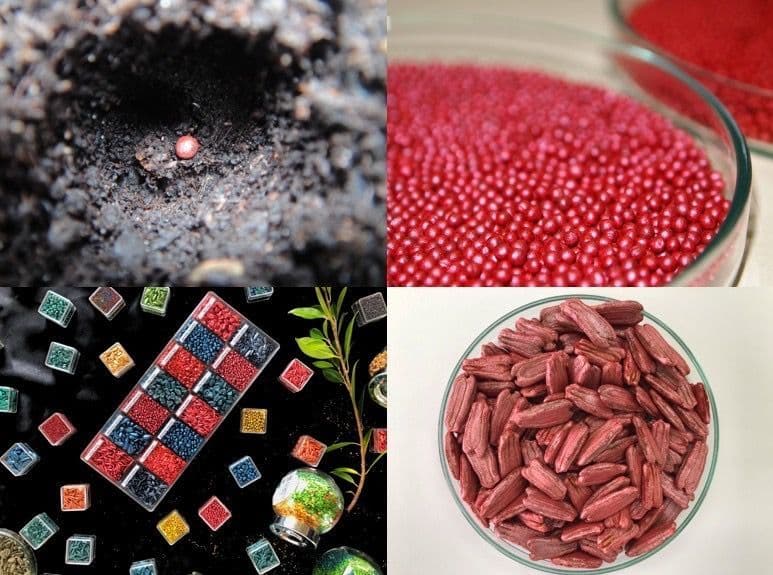
This experiment aimed to study the suitable types of polymers for coating with chlorophyll extract and the quality of cucumber seeds after coating. The experiment was planned using a Completely Randomized Design (CRD) with four replications, consisting of five methods involving seeds coated with different types of polymers: Polyvinylpyrrolidone, Sodium Alginate, Carboxy Methyl Cellulose, and Hydroxypropyl Methylcellulose, each polymer being coated alongside chlorophyll, with uncoated seeds serving as the control method. The coating substance was prepared by extracting chlorophyll from mango leaves, then mixed with each type of polymer at a concentration of 1%, using an 8% concentration of chlorophyll extract. The properties of each coating method, such as pH and viscosity of the coating substance, were examined before coating the cucumber seeds with a rotary disk coater model RRC150 at a coating rate of 1,100 milliliters per 1 kilogram of seeds. Subsequently, the seeds were dried to reach the initial moisture level using a hot air blower, and seed quality was assessed in various aspects, including seed moisture, germination rate under laboratory conditions, germination index, and seed fluorescence under a portable ultraviolet light illuminator, as well as light emission spectrum analysis using a Spectrophotometer. The experiment found that each type of polymer could be used to form a film together with chlorophyll, which had appropriate pH and viscosity for the coating without affecting seed quality and showed fluorescence on the seed surface both under portable ultraviolet light and spectral emission analysis with a Spectrophotometer. Using HPMC as the film-forming agent with chlorophyll was the most suitable method, enhancing seed fluorescence efficiency.