

Atopic dermatitis patients are the second largest number among skin disease patients. There is no cure for atopic dermatitis, and it can only be treated to relieve symptoms, causing chronic disease. There is a chance that opportunistic infections will enter and cause more disease from the patient's wound, causing the patient to have complications from other infections. This study is interested in studying the reduction of the chance of opportunistic infections in patients with atopic dermatitis using natural extracts. The interest is in Plu Kaow and long pepper because there is data supporting the inhibition of microorganisms. The leaves of both plants are crudely extracted, soaked in 95% ethanol for 7 days, filtered with a Buchner filter, and the extracts are tested for phytochemicals to analyze phenolic components, flavonoids, tannins, anthocyanin, DPPH, and tested for antimicrobial properties. The experiments consisted of 5 types of gram-positive and gram-negative bacteria: E. coli, Bacillus subtilis, Pseudomonas aeruginosa, Staphylococcus aureus, and Staphylococcus epidermidis. The researcher expects that this can be further developed and used to treat patients with atopic dermatitis.
โรคภูมิเเพ้ผิวหนังเป็นโรคเรื้อรังที่ส่งผลกระทบต่อผู้คนทั้งวัยทารกไปจนถึงวัยชรา โดยมีปัจจัยที่เกี่ยวข้องกับพันธุกรรม ระบบภูมิคุ้มกัน และสภาพแวดล้อม ผู้ป่วยโรคภูมิแพ้ผิวหนังจะมีอาการคัน ผิวหนังแห้งอักเสบ อาจมีตุ่มน้ำหรือหนองจากการอักเสบและมีการติดเชื้อร่วมด้วย จากข้อมูลด้านสถิติผู้ป่วยโรคผิวหนังตั้งแต่ปี พ.ศ.2559-2562 แสดงให้เห็นว่าผู้ป่วยโรคผิวหนังมีอัตราเพิ่มขึ้นในทุกๆปีและที่มีจำนวนมากเป็นอันดับสองคือ ผู้ป่วยโรคภูมิแพ้ผิวหนัง (สถาบันโรคผิวหนัง ,2564) ในกรณีที่ จะมีโอกาสที่เชื้อจุลินทรีย์ทั่วไปจะเปลี่ยนเป็นเชื้อฉวยโอกาส ซึ่งในปัจจุบันยังไม่มียารักษาโรคภูมิแพ้ผิวหนังโดยเฉพาะ การรักษาโรคภูมิแพ้ผิวหนังทางการแพทย์จะใช้ยาทากลุ่มสเตียรอยด์หรือยาทากลุ่ม Calcineurin inhibitors เพื่อบรรเทาอาการเท่านั้น แต่ตัวยาเหล่านี้อาจมีผลข้างเคียงต่อผู้ใช้ ในปัจจุบันนักวิจัยให้ความสนใจกับการใช้สารสกัดจากธรรมชาติในการรักษาโรคต่างๆ เนื่องจากเป็นวิธีการรักษาที่มีผลข้างเคียงน้อยกว่าการใช้ยากลุ่มอื่นรักษา เช่นเดียวกับโรคภูมิแพ้ผิวหนัง มีการวิจัยการใช้สารสกัดจากธรรมชาติเป็นทางเลือกในการบรรเทาโรคภูมิแพ้ผิวหนัง ซึ่งมีการใช้สารสกัดจากพืชหลายชนิดในการทดสอบการบรรเทาอาการโรคภูมิแพ้ผิวหนัง (Yi Peng ,2567). พลูคาวเป็นพืชที่สามารถพบได้ทั่วไปในประเทศไทย มีการนำมาใช้ในการรักษาโรคตามภูมิปัญญาพื้นบ้าน มีฤทธิ์ในการยับยั้งแบคทีเรียแกรมบวกและมีฤทธิ์เสริมฤทธิ์ในการเป็นสารต้านอนุมูลอิสระของเบต้าแคโรทีนอีกด้วย (สุทธิจิต ,2562) เช่นเดียวกับดีปลีที่เป็นพืชวงศ์ Piperaceae มีฤทธิ์ที่สามารถต้านเชื้อราและแบคทีเรียที่เป็นตัวแทนของเชื้อก่อโรคได้ (ปาจรีย์ ,2557) ดังนั้นในการศึกษาครั้งนี้ เป็นการนำสารสกัดจากใบพลูคาวและใบดีปลีมาทดสอบการยับยั้งเชื้อฉวยโอกาสที่พบทั่วไปบนร่างกายและสภาพแวดล้อมเพื่อลดโอกาสการติดเชื้อเพิ่มในผู้ป่วยที่เป็นโรคภูมิแพ้ผัวหนังและช่วยบรรเทาอาการของโรคภูมิแพ้ผิวหนัง

คณะวิทยาศาสตร์
With the urgent need for rapid screening of Aflatoxin B1 (AFB1) due to its association with increased liver cirrhosis and hepatocellular carcinoma cases from contaminated agricultural foods, we propose a novel electrochemical aptasensor. This aptasensor is based on trimetallic nanoparticles AuPt-Ru supported by reduced graphene oxide (AuPt-Ru/RGO) modified on a low-cost and disposable goldleaf electrode (GLEAuPt-Ru/RGO) for detection of AFB1. The trimetallic nanoparticle AuPt-Ru was synthesized using an ultrasonic-driven chemical reduction method. The synthesized AuPt-Ru exhibited a waxberry-like appearance, with AuPt core-shell structure and ruthenium dispersed over the particles. The average particle size was 57.35 ± 8.24 nm. The AuPt-Ru was integrated into RGO sheets (inner diameter of 0.5 to 1.6 µm) in order to enhance electron transfer efficiency and increase the specific immobilizing surface area of the thiol-5’-terminated modified aptamer (Apt) to target AFB1. With a large electrochemical surface area and low electrochemical impedance, GLEAuPt-Ru/RGO displays ultra-high sensitivity for AFB1 detection. Differential pulse voltammetry (DPV) measurements revealed a linear range for AFB1 detection range from 0.3 to 30.0 pg mL-1 (R2 = 0.9972), with a limit of detection (LOD, S/N = 3) and a limit of quantification (LOQ, S/N = 10) of 0.009 pg mL-1 and 0.031 pg mL-1, respectively. The developed aptasensor also demonstrated excellent accuracy in real agricultural products, including dried red chili, garlic, peanut, pepper, and Thai jasmine rice, achieving recovery rates between 94.6 and 107.9%. The fabricated aptamer-based GLEAuPt-Ru/RGO performance is comparable to that of a modified commercial electrode, which has great potential application prospects for detecting AFB1 in agricultural products.
คณะบริหารธุรกิจ
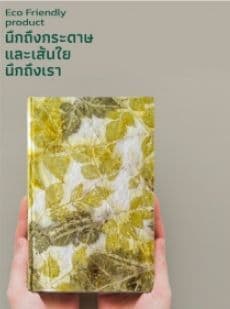
In an era where sustainability is at the heart of business operations, eco-friendly packaging is gaining increasing attention. This research explores sustainable business models for alternative packaging, focusing on the case of corn-based paper, an innovation that effectively replaces conventional plastic packaging. The study analyzes key factors that enable businesses using natural raw materials to remain competitive in the market, as well as the growth potential of sustainable packaging compared to plastic-based alternatives. Additionally, it examines the factors influencing consumer behavior in choosing eco-friendly products and evaluates the impact on profitability and social responsibility. This research employs both qualitative and quantitative methods, including case studies of businesses utilizing alternative materials, in-depth interviews with industry experts, and consumer behavior surveys. The findings are expected to provide insights into the business potential of corn-based packaging, strategies for market expansion, and approaches for long-term sustainability. The results of this study will serve as a valuable reference for entrepreneurs seeking to develop green businesses and policymakers aiming to promote sustainable packaging in the market.
คณะวิทยาศาสตร์
Agricultural products and by-products are important raw materials in various industries including cosmetics and pharmaceuticals. Agro-based fibers have the composition, properties and structure that make them suitable for uses as composite-cosmetic industry. Upon microwave digestion, cellulose have been successfully synthesized into nanocrystalline cellulose (NCC) with lengths from 50-1000 nm, widths between 5-70 nm. Nanocrystalline cellulose was grafted with cosmetic active ingredients such as glycerin), sodium hyaluronate), glycolic acid, and nicotinamide. The beauty active ingredients attached nanocelluloses can penetrate through the skin to enhance beauty and youth.