

The researcher aims to develop bagasse mixed with molasses as a smoking material for meat, enhancing its unique aroma and flavor. This innovation caters to the food industry and consumer demand while adding value to sugar mill byproducts, reducing waste, and promoting efficient resource utilization.
กากชานอ้อยเป็นผลพลอยได้จากกระบวนการผลิตน้ำตาลของโรงงานน้ำตาลทราย โดยปกติมักเป็นวัสดุเหลือทิ้ง ผู้วิจัยเล็งเห็นโอกาสในการเพิ่มมูลค่าด้วยการนำมาใช้เป็นวัสดุรมควันเนื้อสัตว์ ซึ่งเป็นที่นิยมในอุตสาหกรรมอาหาร เนื่องจากช่วยเพิ่มกลิ่นและรสชาติให้ผลิตภัณฑ์ อย่างไรก็ตาม กากชานอ้อยจากโรงงานมีความหวานและกลิ่นหอมน้อย ผู้วิจัยจึงเสนอแนวทางการเติมโมลาส ซึ่งเป็นของเหลวข้นจากการเคี่ยวน้ำอ้อย เพื่อเพิ่มคุณภาพของวัสดุรมควัน ทั้งนี้ยังไม่มีรายงานการศึกษาการใช้โมลาสร่วมกับกากชานอ้อยในลักษณะนี้มาก่อน การพัฒนาวัสดุรมควันจากกากชานอ้อยผสมโมลาสจึงช่วยตอบโจทย์ตลาดอาหารรมควัน เพิ่มมูลค่าของวัสดุเหลือใช้ และลดของเสียในอุตสาหกรรมการผลิตน้ำตาล

คณะเทคโนโลยีการเกษตร
Public Park Project: Coastal folk Park is a design park in the area of Ang Sila Subdistrict, Chonburi Province. In an area of 22 acre, it is intended to be a place of rest, recreation, and also a source of learning and conservation of the seashore and the traditional way of life of the area.
วิทยาลัยนวัตกรรมการผลิตขั้นสูง
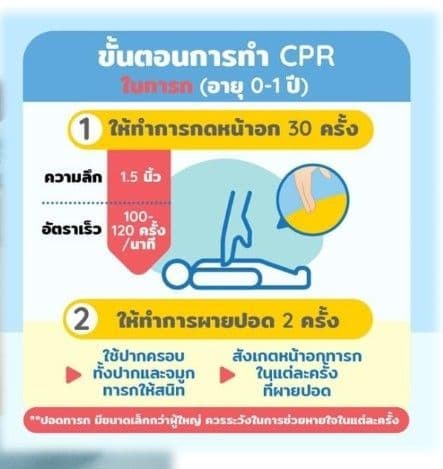
A child manikin for Cardiopulmonary Resuscitation (CPR) training includes the trachea mechanism, neck mechanism, lung mechanism, heart pump mechanism, artificial skin, and sensor system. All components work together to function similar to a real child. It can be used to practice heart pumping and resuscitation. The manikin has been designed and verified by resuscitation experts. It has a system to evaluate the accuracy of the training and display the results on the computer for real-time monitoring.
คณะวิทยาศาสตร์
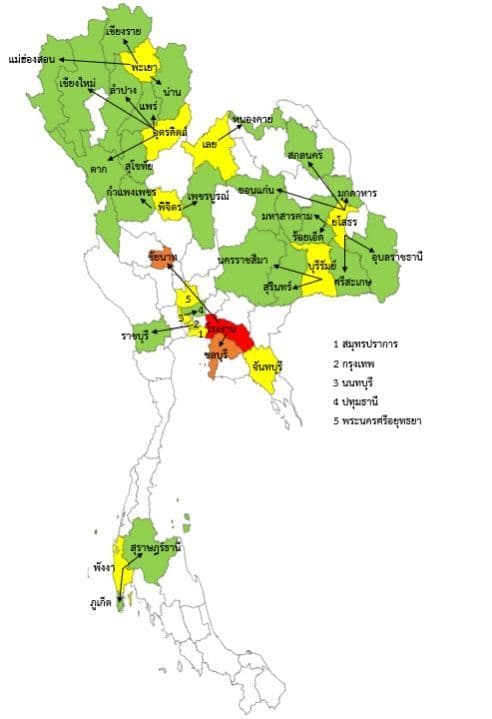
This research aims to select the location of the beverage distribution center of Thai Spirit Industry Co., Ltd. with the lowest total cost of transportation. using a mathematical model by considering the Muang districts of all 76 provinces, excluding Chachoengsao Province, where the factory is located. In the present study, four scenarios were divided: 1) when only one distribution center was required; 2) when more than one distribution center was established; 3) when it was divided into 4 regions. There can only be one distribution center in one region, and 4) when it is divided into four regions, where more than one distribution center can be established in one region. When processed with the program IBM ILOG CPLEX Optimization Studio, the results are summarized as follows: Scenario 1, when only one distribution center is assigned. The total transportation cost is 786,107.75 baht/month. Scenario 2, when more than one distribution center can be established. The total transportation cost is 252,338.98 baht/month. Scenario 3, when divided into 4 regions by requiring only one distribution center in one region. The total transportation cost is 401,499.61 baht/month. Scenario 4, when divided into 4 regions by requiring that there is more than one distribution center in each region. The total transportation cost is 258,666.22 baht/month.