
KMITL Expo 2026 LogoKMITL 66th Anniversary Logo

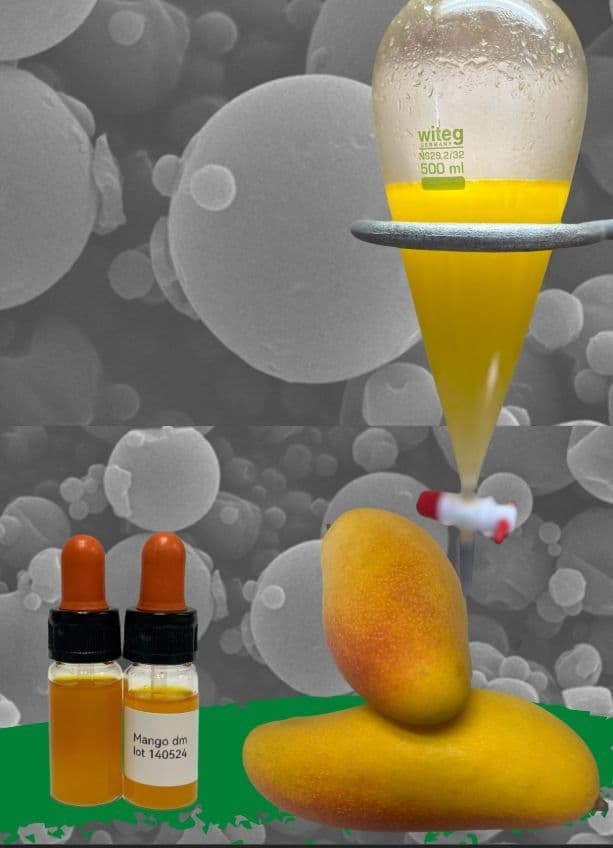
Investigation of the Optimal Ratio of Ginger, Banana Flower, and Roselle in Liposomal Encapsulation to Enhance Antioxidant Activity and Total Phenolic Content

Abstract

The growing interest in antioxidant-rich foods is driven by their potential to reduce the risk of chronic diseases such as cancer, cardiovascular conditions, and cellular degeneration. Ginger (Zingiber officinale), banana inflorescence (Musa paradisiaca L.), and roselle (Hibiscus sabdariffa L.) are herbal plants known for their high phenolic content, a crucial component in antioxidant activity. However, the bioactive compounds in these plants are often unstable when exposed to light, temperature, and oxygen, leading to a reduction in their efficacy. This study aims to investigate the optimal ratio of ginger, banana inflorescence, and roselle for encapsulation in liposomes—a technique designed to enhance the stability of bioactive compounds and improve their delivery efficacy. The research evaluates the antioxidant activity of the extracts using DPPH, ABTS, and FRAP methods, alongside total phenolic content (TPC) measurement. The most effective ratio for antioxidant activity will be selected for liposomal encapsulation, employing phospholipids as key structural components. The encapsulation efficiency (EE%) will be calculated to assess the effectiveness of the liposomal delivery system. The findings are expected to identify the optimal combination of ginger, banana inflorescence, and roselle that maximizes antioxidant potency and enhances the stability of bioactive compounds through liposomal encapsulation. This approach offers a promising strategy for developing herbal health supplements that maintain their biological properties over time.

Objective

การเสื่อมสภาพของเซลล์จากอนุมูลอิสระเป็นสาเหตุหลักที่นำไปสู่การเกิดโรคเรื้อรังต่าง ๆ เช่น โรคมะเร็ง โรคหัวใจ และการเสื่อมสภาพของเซลล์ในระบบต่าง ๆ ของร่างกาย ดังนั้นการใช้สารต้านอนุมูลอิสระจากธรรมชาติจึงเป็นวิธีหนึ่งในการลดความเสี่ยงจากการเกิดโรคเหล่านี้ ขิง ปลีกล้วย และกระเจี๊ยบ เป็นพืชที่มีสารต้านอนุมูลอิสระและสารฟีนอลิกที่มีคุณสมบัติในการป้องกันความเสื่อมของเซลล์ อย่างไรก็ตาม สารเหล่านี้อาจสูญเสียประสิทธิภาพเมื่อสัมผัสกับปัจจัยภายนอก เช่น แสง ความร้อน และออกซิเจน ดังนั้นการใช้เทคนิคการห่อหุ้มสารด้วยวิธีลิโพโซม จึงช่วยเพิ่มความเสถียรของสารสำคัญและเพิ่มประสิทธิภาพในการนำส่งสารไปยังจุดเป้าหมายจึงเป็นสิ่งสำคัญ
Other Innovations

A Human-engaging Robotic Interactive Assistant

คณะวิศวกรรมศาสตร์

A Human-engaging Robotic Interactive Assistant

The integration of intelligent robotic systems into human-centric environments, such as laboratories, hospitals, and educational institutions, has become increasingly important due to the growing demand for accessible and context-aware assistants. However, current solutions often lack scalability—for instance, relying on specialized personnel to repeatedly answer the same questions as administrators for specific departments—and adaptability to dynamic environments that require real-time situational responses. This study introduces a novel framework for an interactive robotic assistant (Beckerle et al. , 2017) designed to assist during laboratory tours and mitigate the challenges posed by limited human resources in providing comprehensive information to visitors. The proposed system operates through multiple modes, including standby mode and recognition mode, to ensure seamless interaction and adaptability in various contexts. In standby mode, the robot signals readiness with a smiling face animation while patrolling predefined paths or conserving energy when stationary. Advanced obstacle detection ensures safe navigation in dynamic environments. Recognition mode activates through gestures or wake words, using advanced computer vision and real-time speech recognition to identify users. Facial recognition further classifies individuals as known or unknown, providing personalized greetings or context-specific guidance to enhance user engagement. The proposed robot and its 3D design are shown in Figure 1. In interactive mode, the system integrates advanced technologies, including advanced speech recognition (ASR Whisper), natural language processing (NLP), and a large language model Ollama 3.2 (LLM Predictor, 2025), to provide a user-friendly, context-aware, and adaptable experience. Motivated by the need to engage students and promote interest in the RAI department, which receives over 1,000 visitors annually, it addresses accessibility gaps where human staff may be unavailable. With wake word detection, face and gesture recognition, and LiDAR-based obstacle detection, the robot ensures seamless communication in English, alongside safe and efficient navigation. The Retrieval-Augmented Generation (RAG) human interaction system communicates with the mobile robot, built on ROS1 Noetic, using the MQTT protocol over Ethernet. It publishes navigation goals to the move_base module in ROS, which autonomously handles navigation and obstacle avoidance. A diagram is explained in Figure 2. The framework includes a robust back-end architecture utilizing a combination of MongoDB for information storage and retrieval and a RAG mechanism (Thüs et al., 2024) to process program curriculum information in the form of PDFs. This ensures that the robot provides accurate and contextually relevant answers to user queries. Furthermore, the inclusion of smiling face animations and text-to-speech (TTS BotNoi) enhanced user engagement metrics were derived through a combination of observational studies and surveys, which highlighted significant improvements in user satisfaction and accessibility. This paper also discusses capability to operate in dynamic environments and human-centric spaces. For example, handling interruptions while navigating during a mission. The modular design allows for easy integration of additional features, such as gesture recognition and hardware upgrades, ensuring long-term scalability. However, limitations such as the need for high initial setup costs and dependency on specific hardware configurations are acknowledged. Future work will focus on enhancing the system’s adaptability to diverse languages, expanding its use cases, and exploring collaborative interactions between multiple robots. In conclusion, the proposed interactive robotic assistant represents a significant step forward in bridging the gap between human needs and technological advancements. By combining cutting-edge AI technologies with practical hardware solutions, this work offers a scalable, efficient, and user-friendly system that enhances accessibility and user engagement in human-centric spaces.

Read more
Genomic analysis, Bacteriocin dynamic production of putatively novel bacteriocin DCR3-2 inhibiting Listeria monocytogenes synthesized by Lactococcus lactis subsp. hordinae DCR3-2 isolated from Thai pickled crab (Pu-dong)

คณะวิทยาศาสตร์

Genomic analysis, Bacteriocin dynamic production of putatively novel bacteriocin DCR3-2 inhibiting Listeria monocytogenes synthesized by Lactococcus lactis subsp. hordinae DCR3-2 isolated from Thai pickled crab (Pu-dong)

Listeriosis is a severe foodborne illness characterized by a fatality rate exceeding 30%, attributed to the pathogen Listeria monocytogenes. This study evaluated 160 lactic acid bacteria (LAB) isolated from Thai pickled crabs for their potential as agents against L. monocytogenes and for their probiotic properties and probiogenomic characteristics. Among these strains, strain DRC3-2 exhibited activity through the synthesis of bacteriocin DRC3-2, which significantly inhibited L. monocytogenes ATCC 19115 in spot-on-lawn assays. Phenotypic and whole-genome analyses revealed that strain DRC3-2 thrived in environments with 2-6% NaCl, pH values ranging from 3 to 9, and temperatures between 25 and 45°C. Based on average nucleotide identity (ANI) and digital DNA‒DNA hybridization (dDDH) values, strain DRC3-2 was taxonomically classified as Lactococcus lactis subsp. hordinae. The production of bacteriocin DRC3-2 peaked during the late stationary phase, following its synthesis in the early exponential growth phase. BAGEL4 analysis identified the putative novel bacteriocin DRC3-2 as lactococcin A and B, with respective bit-scores of 40.05 and 36.58. In silico safety assessments confirmed the nonpathogenic nature of strain DRC3-2 in humans, highlighting its absence of antibiotic resistance genes. Finally, this investigation underscores the novel bacteriocin DRC3-2 for application in the prevention and treatment of L. monocytogenes infections.

Read more
-

คณะวิศวกรรมศาสตร์

-

-

Read more