
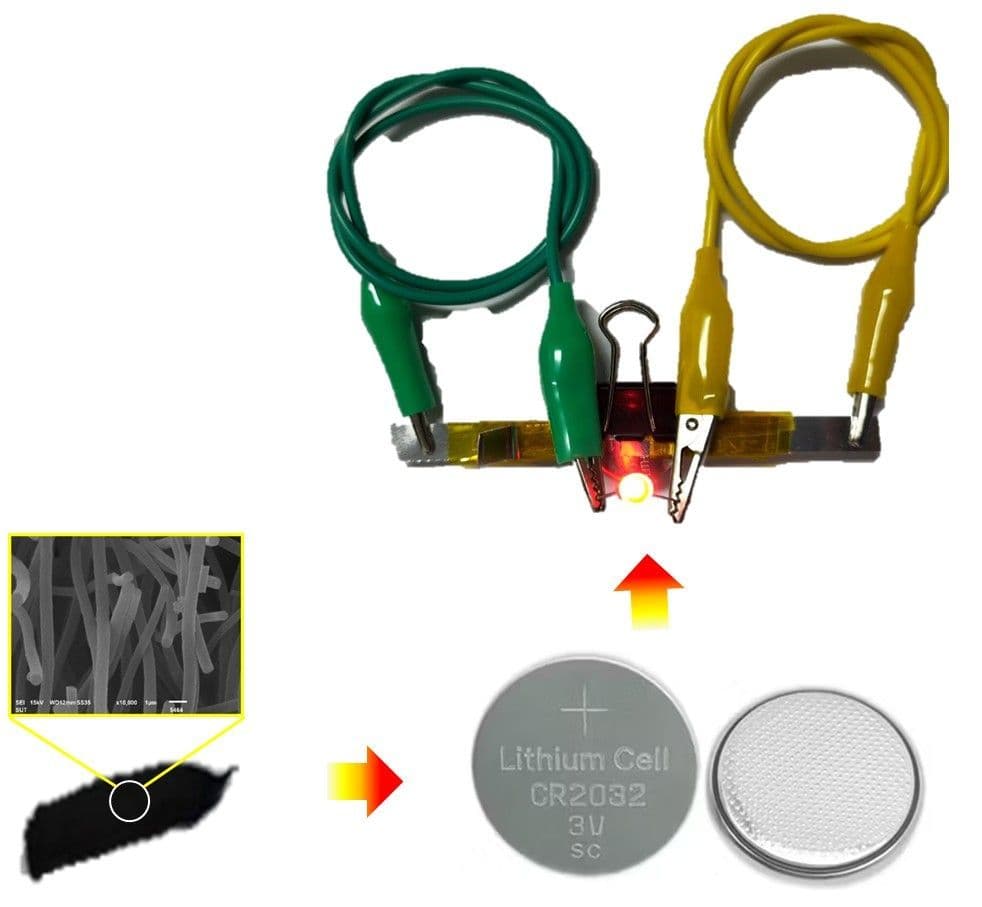
This study presents the development of carbon-based multiphase metal oxide nanocomposites (CNF@MOx; M = Ag, Mn, Bi, Fe) incorporating silver, manganese, bismuth, and iron nanoparticles within polyacrylonitrile (PAN)-derived carbon nanofibers. These nanocomposites were fabricated via the electrospinning technique followed by annealing in an argon atmosphere. The resulting nanofibers exhibited a uniform structure, with diameters ranging from 559 to 830 nm and embedded nanoparticles of 9-21 nm. Structural characterization confirmed the presence of various oxidation states of metal oxides, which play a crucial role in charge storage mechanisms. Electrochemical performance testing demonstrated that CNF@Ag/Mn/Bi/Fe-20 achieved the highest specific capacitance of 156 F g⁻¹ at a scan rate of 2 mV s⁻¹ and exhibited excellent cycling stability, retaining over 96% of its capacitance after 1400 charge-discharge cycles. The synergistic combination of electric double-layer capacitance and redox-based charge storage enhances the performance of these nanofibers as promising electrode materials for supercapacitor applications.
ในปัจจุบัน ความต้องการใช้พลังงานสะอาดและเทคโนโลยีการเก็บพลังงานที่มีประสิทธิภาพสูงเพิ่มขึ้นอย่างต่อเนื่อง เนื่องจากแหล่งพลังงานดั้งเดิม เช่น น้ำมันและถ่านหิน มีข้อจำกัดด้านทรัพยากรและก่อให้เกิดผลกระทบต่อสิ่งแวดล้อม ตัวเก็บประจุยิ่งยวด (Supercapacitor) ได้รับความสนใจอย่างมากในฐานะอุปกรณ์เก็บพลังงานที่มีความสามารถในการชาร์จ-คายประจุได้อย่างรวดเร็ว อายุการใช้งานยาวนาน และมีเสถียรภาพสูง อย่างไรก็ตาม ข้อจำกัดหลักของตัวเก็บประจุยิ่งยวดในปัจจุบันคือความสามารถในการเก็บพลังงานที่ต่ำเมื่อเทียบกับแบตเตอรี่ ทำให้เกิดความจำเป็นในการพัฒนาวัสดุอิเล็กโทรดที่มีประสิทธิภาพสูงขึ้น โครงงานนี้มุ่งเน้นการพัฒนา เส้นใยนาโนคาร์บอนผสมออกไซด์ของโลหะหลายเฟส (CNF@MOx; M = Ag, Mn, Bi, Fe) โดยใช้เทคนิคอิเล็กโทรสปินนิ่งและกระบวนการแคลไซน์ เพื่อเพิ่มความสามารถในการเก็บประจุของตัวเก็บประจุยิ่งยวด วัสดุที่ได้มีศักยภาพในการรวมกลไกการเก็บพลังงานแบบชั้นคู่ไฟฟ้า (Electric Double Layer Capacitance; EDLC) และกระบวนการรีดอกซ์ (Pseudocapacitance) ซึ่งช่วยเพิ่มค่าความจุจำเพาะและประสิทธิภาพของตัวเก็บประจุ เหตุผลที่ทำโครงการนี้ 1. ตอบสนองต่อความต้องการเทคโนโลยีการเก็บพลังงานที่มีประสิทธิภาพสูง – การพัฒนาตัวเก็บประจุยิ่งยวดที่สามารถเก็บพลังงานได้มากขึ้น จะช่วยให้สามารถนำไปใช้งานในอุปกรณ์อิเล็กทรอนิกส์และระบบพลังงานหมุนเวียนได้ดีขึ้น 2. การพัฒนาวัสดุอิเล็กโทรดที่มีต้นทุนต่ำและมีประสิทธิภาพสูง – วัสดุที่พัฒนาขึ้นในโครงการนี้ใช้เส้นใยนาโนคาร์บอนร่วมกับโลหะออกไซด์ ซึ่งเป็นวัสดุที่มีต้นทุนต่ำและสามารถผลิตได้ในปริมาณมาก 3. เพิ่มขีดความสามารถในการแข่งขันของเทคโนโลยีตัวเก็บประจุยิ่งยวด – การปรับปรุงคุณสมบัติของวัสดุอิเล็กโทรดจะช่วยให้ตัวเก็บประจุยิ่งยวดสามารถแข่งขันกับแบตเตอรี่ลิเธียมไอออนได้ดีขึ้นในแง่ของประสิทธิภาพและอายุการใช้งาน 4. มีศักยภาพในการประยุกต์ใช้ในอุตสาหกรรมพลังงานและอิเล็กทรอนิกส์ – วัสดุที่พัฒนาขึ้นสามารถนำไปใช้ในระบบกักเก็บพลังงาน หม้อแปลงไฟฟ้า อุปกรณ์อิเล็กทรอนิกส์ และยานยนต์ไฟฟ้า โครงการนี้จึงมีความสำคัญอย่างยิ่งในการช่วยพัฒนาเทคโนโลยีตัวเก็บประจุยิ่งยวดและส่งเสริมการใช้พลังงานสะอาดที่มีประสิทธิภาพมากขึ้น

คณะศิลปศาสตร์
**Innovative Walking Stick "Buddy Take Care"** The "Buddy Take Care" walking stick is designed to physically support the elderly or individuals recovering from injuries, enabling convenient mobility, reducing the risk of falls, and enhancing walking safety. It is crafted as a keychain-style walking stick with a one-touch open-close mechanism. Building upon existing market products, the Buddy walking stick incorporates additional functionalities such as a portable flashlight, a medicine compartment, and an AirTag slot to maximize utility. Its design prioritizes ease of use, convenience, and safety, specifically tailored for elderly users

คณะอุตสาหกรรมอาหาร
The reuse of cooking oil in food preparation leads to oil degradation and the formation of harmful compounds due to oxidation. This study focuses on enhancing the stability of used palm oil through ultrasound-assisted infusion with three varieties of banana blossoms: Kluai Khai, Kluai Hom, and Kluai Nam Wa, which are rich in phenolic compounds and antioxidants. The research investigates the restoration of used palm oil by infusing dried and powdered banana blossoms using ultrasonic treatment at different temperatures and durations. The quality of the infused oil was evaluated through physical (water activity, moisture content, and color), chemical (peroxide value, acid value, and Thio barbituric acid reactive substances), and antioxidant activity (DPPH, ABTS, and FRAP) analyses.
คณะสถาปัตยกรรม ศิลปะและการออกแบบ
This artwork was created based on the universal concepts of global warming and post-apocalyptic world, which has caused disturbances and chaos in ecosystems, leading to the extinction of many living beings on Earth due to human actions. Repairing and restoring this world may therefore be a false hope, connected to my personal experience of losing loved ones and the sorrow from setting high hope, through the artistic process using Animation Art and Sound Art.