
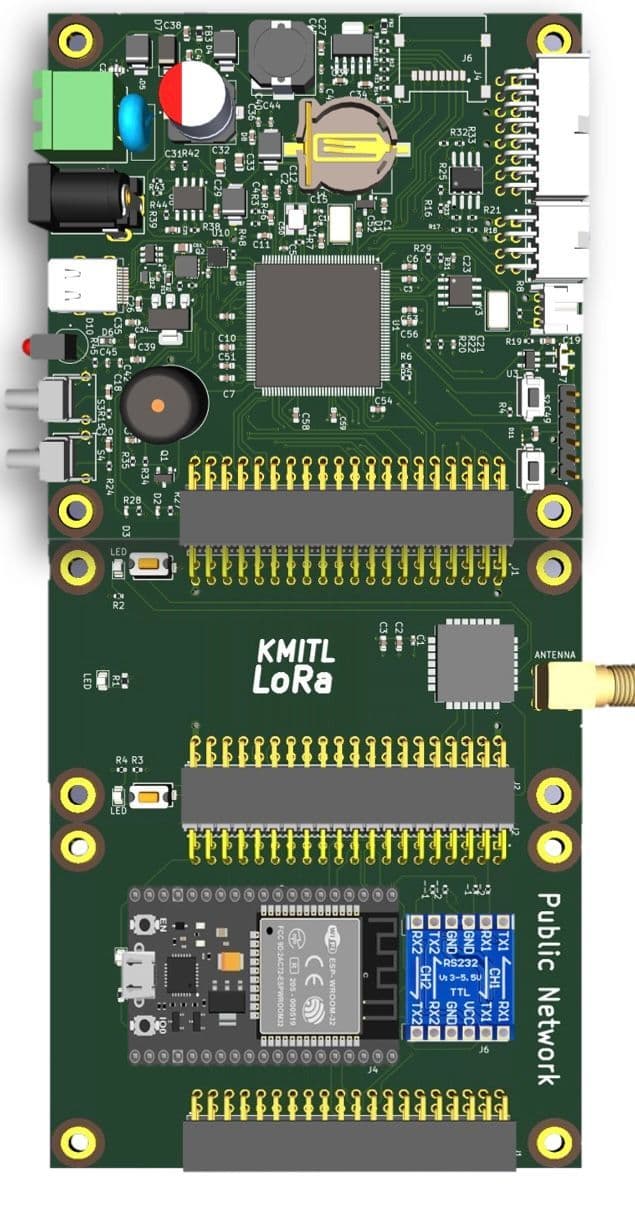
This thesis presents the development of an IoT system that integrates various communication standards to work together seamlessly. The Core Board serves as the IoT gateway, connecting LoRa, Wi-Fi, and BLE interfaces, and is powered by the STM32H563Zi microcontroller based on the ARM Cortex M33 architecture. The system is designed with slots to support additional communication standards and includes a web platform for data monitoring.
จากอดีตจนถึงปัจจุบัน การพัฒนาโปรโตคอลการสื่อสารไร้สาย สำหรับใช้งานร่วมกับ IoT เช่น Zigbee, Z-Wave, BLE (Bluetooth Low Energy), LoRa, NB-IoT, และ MQTT ซึ่งแต่ละชนิด มีลักษณะการใช้งานที่แตกต่างกันไป ตามสภาพแวดล้อมที่ใช้งาน ซึ่งอุปกรณ์ IoT Gateway แบบเดิม ที่ออกแบบมาในรูปแบบคงที่ (Fixed) มักรองรับโปรโตคอลได้เพียงบางชนิดเท่านั้น และขาดความยืดหยุ่นในการปรับเปลี่ยนหรืออัพเกรดเพื่อรองรับโปรโตคอลใหม่ๆ หากผู้ใช้งานต้องการรองรับโปรโตคอลที่พัฒนาใหม่หรือการเปลี่ยนแปลงทางเทคโนโลยีในอนาคต พวกเขาจำเป็นต้องเปลี่ยนอุปกรณ์ Gateway ทั้งหมด ซึ่งไม่เพียงแต่เพิ่มค่าใช้จ่าย แต่ยังทำให้เกิดข้อจำกัดในด้านการปรับปรุงประสิทธิภาพของระบบ จากปัญหาดังกล่าว ทางผู้จัดทำจึงเริ่มพัฒนา IoT Gateway เพื่อยกระดับมาตรฐาน โดยที่ออกแบบในลักษณะที่เป็นโมดูลาร์ (Modular) ซึ่งสามารถปรับเปลี่ยนหรือเพิ่มโมดูลที่รองรับโปรโตคอลการสื่อสารชนิดต่างๆ ได้อย่างยืดหยุ่น ผู้ใช้งานสามารถเลือกเพิ่มหรือเปลี่ยนโมดูลใหม่ตามโปรโตคอลที่ต้องการใช้งานได้อย่างสะดวก โดยไม่จำเป็นต้องเปลี่ยนอุปกรณ์ Gateway ทั้งชุด ซึ่งจะช่วยลดค่าใช้จ่ายในการอัพเกรดระบบ และเพิ่มความสามารถในการแข่งขันของโซลูชัน IoT ในอนาคต

คณะเทคโนโลยีการเกษตร
The development of a board game to enhance cooking skills focuses on a popular and well-known dish—burgers. This study integrates learning with interactive gameplay, allowing players to gain knowledge about burgers, including their ingredients, preparation methods, and even the basics of running a burger business. Through hands-on activities and engaging game mechanics, players can develop both their culinary skills and entrepreneurial mindset while enjoying the fun and immersive experience of the board game.
คณะวิทยาศาสตร์
This project focuses on the study and development of a short-term investment framework via gold trading in the foreign exchange market. Machine learning techniques are applied to analyze and forecast pricing trends. Moreover, we develop the system using a stochastic process to determine optimal stop-loss points, with the aim of maximizing expected returns. Additionally, we apply game theory to guide the decision-making process regarding order holding or closure. The system is implemented and tested on the MetaTrader 5 (MT5) platform. This project outlined the clear process that includes data preparation, machine learning model training, probabilistic modeling of gold price movements, stop-loss strategy formulation, strategic decision modeling based on game theory, the development of an automated trading program, and backtesting to evaluate system performance.
คณะวิศวกรรมศาสตร์
This project focuses on the development of an automatic license plate recognition system that supports both standard and special license plates in Thailand. By utilizing Machine Learning technology, the system enhances the efficiency of license plate reading. It can process data from both images and videos. Users can register and subscribe to the service, allowing them to send data for processing through RESTful API, WebSocket, and registered IP cameras.