


Under The National Broadcasting and Telecommunications Commission (NBTC), the Telecommunication Enforcement Bureau collects a lot of data on service quality by monitoring and controlling the quality of telecommunications services, mainly by assessing mobile network infrastructure. The NBTC used Microsoft Excel for data analysis but became ineffective and slow. We used Python programming for preparation, analysis, and data processing to address this. Raw data was obtained from the Syberiz program in CSV format, processed in Python, and displayed on a dashboard. The dashboard, developed using Power BI, meets NBTC's telecommunications quality standards. It features maps, test results, and graphical representations. This method enhances the dashboard's appearance and usability and speeds up data processing and visualization compared to Microsoft Excel. This project is primarily designed to help the Telecommunication Enforcement Bureau's operations by making data processing and display for telecommunications quality monitoring faster, more effective, and easier to use.
เนื่องจากสำนักงานดูแลกิจการโทรคมนาคม (ดท.) ของสำนักงานคณะกรรมการกิจการกระจายเสียง กิจการโทรทัศน์ และกิจการโทรคมนาคมแห่งชาติ (สำนักงาน กสทช.) มีหน้าที่กำกับดูและการควบคุมคุณภาพการให้บริการโทรคมนาคมตามมาตรากฎหมาย จึงมีการตรวจสอบคุณภาพการให้บริการโทรคมนาคมผ่านโครงข่ายโทรคมนาคมเคลื่อนที่ส่งผลให้ต้องเก็บข้อมูลของคุณภาพการให้บริการโทรคมนาคมจำนวนมหาศาล โดยโปรแกรม Microsoft Excel ซึ่งเป็นโปรแกรมหลักที่สำนักงานดูแลกิจการโทรคมนาคม (ดท.) ของสำนักงาน กสทช. ใช้ในการประมวลผลวิเคราะห์ข้อมูลในปัจจุบันนั้นประมวลผลได้ช้า ทางผู้พัฒนามีความเห็นว่าในปัจจุบันได้มีนวัตกรรมที่ดีกว่าในการใช้งานเพื่อวิเคราะห์ข้อมูล ผู้พัฒนาเลือกใช้ Python Programing ในการประมวลผล วิเคราะห์ และจัดเตรียมข้อมูล จากนั้นนำไฟล์ที่ได้ไปทำการแสดงผลในรูปแบบของหน้าจอแสดงผล (Dashboard) ซึ่งประกอบไปด้วยส่วนของ กราฟ ตารางสรุปผล และแผนที่ในการแสดงผลค่าพารามิเตอร์ต่างๆ โดยใช้โปรแกรม Power BI ในการออกแบบส่วนของการแสดงผล ส่งผลให้หน้าจอแสดงผล (Dashboard) ที่ได้นั้นมีความสวยงาม ง่ายต่อการใช้งาน และที่สำคัญคือความเร็วในการแสดงผลที่ดีกว่า Microsoft Excel โดยโครงงานได้ออกแบบเฉพาะเจาะจงเพื่อใช้งานในส่วนของสำนักงานดูแลกิจการโทรคมนาคม (ดท.) ของสำนักงาน กสทช.เท่านั้น
คณะอุตสาหกรรมอาหาร
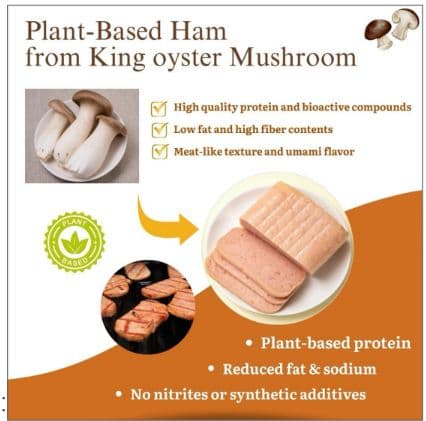
This project therefore aims to develop a "Plant-based Ham Product Prototype" using king oyster mushrooms (Pleurotus eryngii) as the primary ingredient — a natural raw material with strong potential in terms of nutritional value and meat-like texture. The project also seeks to improve the production process to achieve a product with satisfactory textural and flavor characteristics, meeting the needs of a new generation of health- and environmentally-conscious consumers, while providing a foundation for further commercial development within the alternative protein market.
คณะเทคโนโลยีการเกษตร
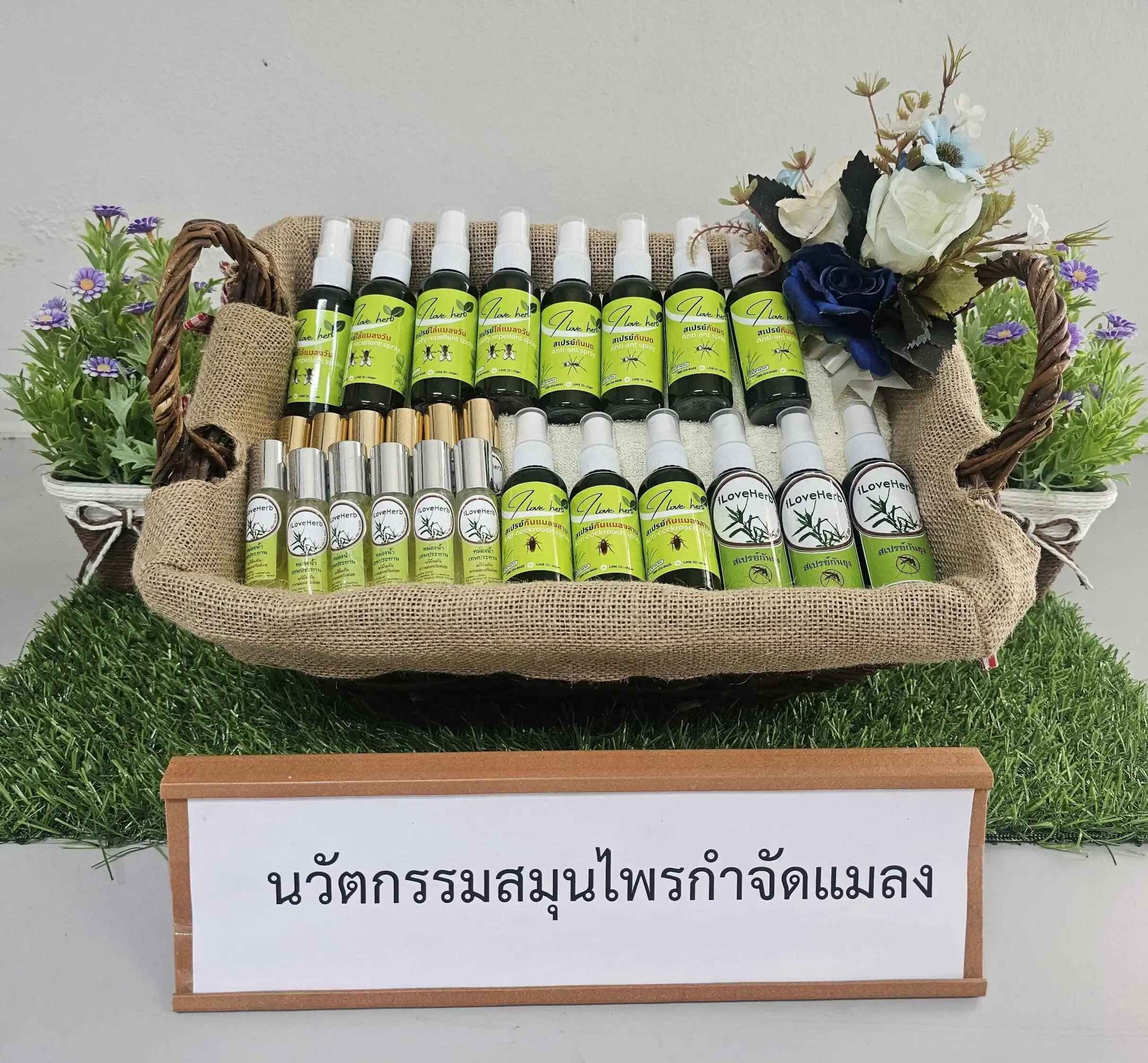
Major medical and veterinary pests including the mosquitoes, houseflies and cockroaches pose health problems for humans and mammals and create more visual obstruction. Therefore, this research discovered a formula of essential oils and active ingredients from herbal plants that are highly effective in controlling and eliminating these insects compared to chemical insecticides, are safe for non-target organisms living in the environment, and are stable and maintain the active properties of the compounds. These formulas can be developed into environmentally friendly natural products to replace or reduce the use of chemical insecticides.

คณะวิทยาศาสตร์
Agricultural products and by-products are important raw materials in various industries including cosmetics and pharmaceuticals. Agro-based fibers have the composition, properties and structure that make them suitable for uses as composite-cosmetic industry. Upon microwave digestion, cellulose have been successfully synthesized into nanocrystalline cellulose (NCC) with lengths from 50-1000 nm, widths between 5-70 nm. Nanocrystalline cellulose was grafted with cosmetic active ingredients such as glycerin), sodium hyaluronate), glycolic acid, and nicotinamide. The beauty active ingredients attached nanocelluloses can penetrate through the skin to enhance beauty and youth.