

A new colorimetric assay for the rapid detection of tannic acid in beverage samples based on displacement phenomenon of aggregated gallic acid-modified platinum nanoparticles is developed for the first time. PtNPs were functionalized with gallic acid, promoting the formation of the green-hued aggregated nanoparticles. While colorimetry offers a rapid method for identifying tannic acid, challenges remain in sensitivity and accuracy of detection on the PtNPs colorimetric probe, particularly in the presence of anthocyanin interferences. To address this, we developed a sample preparation method to degrade anthocyanin in beverages. Tannic acid was easily displaced onto the gallic acid-coated PtNPs surfaces, causing dispersion and resulting in a visible color change from green to orange−brown. Under the optimal conditions, the colorimetric sensor exhibited a linear response in the range of 1−2,000 µmol L−1 (R2 = 0.9991). The limit of detection (LOD) and the limit of quantification (LOQ) were found at 0.02 and 0.09 µmol L−1, respectively. The proposed sensor expressed superior selectivity over other interfering substances and demonstrated excellent precision with a relative standard deviation (RSD) of 1.00%−3.36%. More importantly, recoveries ranging from 95.0−104.7% were obtained, indicating the capability of proposed colorimetric sensor to detect tannic acid rapidly and accurately in real beverage samples.
กรดแทนนิก (Tannic acid) เป็นสารโพลีฟีนอลประเภทไฮโดรไลซิส (hydrolysable polyphenol) ที่พบได้ตามธรรมชาติในพืชหลากหลายชนิด รวมถึงเครื่องดื่มที่มาจากพืช เช่น ชา กาแฟ น้ำผลไม้ เบียร์ และไวน์แดง ปริมาณของกรดแทนนิกในเครื่องดื่มจากพืชแตกต่างกันอย่างมากขึ้นอยู่กับชนิดและส่วนประกอบของเครื่องดื่มนั้นๆ เครื่องดื่มที่มีปริมาณกรดแทนนิกสูงมักมีรสขมและฝาดเด่นชัด นอกจากนี้ อัตราส่วนของกรดแทนนิกต่อองค์ประกอบด้านรสชาติที่ไม่สมดุล อาจทำให้รสชาติของเครื่องดื่มขาดความกลมกลืน หากกรดแทนนิกมีปริมาณสูงเกินไปจนไปกลบองค์ประกอบอื่นๆ เช่น ความเป็นกรด ความหวาน หรือแอลกอฮอล์ อาจทำให้เกิดความรู้สึกไม่สอดคล้องกันของรสชาติและลดทอนประสบการณ์ในการบริโภคลง อีกทั้งการบริโภคกรดแทนนิกในปริมาณมากอาจส่งผลกระทบต่อระบบทางเดินอาหาร โดยทำให้เยื่อบุทางเดินอาหารเกิดการระคายเคือง ส่งผลให้เกิดอาการคลื่นไส้ อาเจียน และท้องเสีย นอกจากนี้ การได้รับกรดแทนนิกในปริมาณสูงยังสามารถยับยั้งการดูดซึมสารอาหารที่จำเป็น เช่น ธาตุเหล็ก สังกะสี และแคลเซียม โดยรบกวนกลไกการดูดซึมผ่านทางลำไส้ผ่านการขัดขวางการก่อตัวของสารประกอบที่ร่างกายสามารถดูดซึมได้ โดยงานวิจัยนี้ได้พัฒนาวัสดุนาโนพลาสโมนิก (plasmonic nanomaterial) โดยการสังเคราะห์ผ่านกระบวนการรีดักชันทางเคมีอย่างง่าย ซึ่งใช้กรดแกลลิก (gallic acid) จับกับพื้นผิวของอนุภาคแพลทินัมนาโน (PtNPs) อนุภาคนาโนแพลทินัมที่ถูกดัดแปรด้วยกรดแกลลิกนี้สามารถตอบสนองต่อกรดแทนนิกในตัวอย่างเครื่องดื่มจากพืชได้อย่างรวดเร็วและแม่นยำ โดยอาศัยปรากฏการณ์การแทนที่ (displacement phenomenon) ของอนุภาค PtNPs ที่จับตัวกันอยู่กับกรดแกลลิก ซึ่งเมื่อมีกรดแทนนิกเข้ามาแทนที่ อนุภาคแพลทินัมนาโนจะเกิดการกระจายตัว ส่งผลให้สีของสารละลายเปลี่ยนจากสีเขียวเป็นสีส้ม-น้ำตาล ทำให้สามารถตรวจวัดกรดแทนนิกในตัวอย่างเครื่องดื่มได้ด้วยตาเปล่า อีกทั้งเพื่อเพิ่มความแม่นยำของการวิเคราะห์ วิธีการเตรียมตัวอย่างถูกนำมาพัฒนาขึ้นเพื่อกำจัดการรบกวนการวิเคาะห์จากแอนโทไซยานิน (anthocyanin) ในตัวอย่างเครื่องดื่ม ซึ่งแอนโทไซยานินอาจส่งผลต่อการตอบสนองของระบบคัลเลอริเมตริก ขั้นตอนการเตรียมตัวอย่างนี้ใช้ไฮโดรเจนเปอร์ออกไซด์ (H₂O₂) ร่วมกับการให้ความร้อนเพื่อฟอกสีแอนโทไซยานินในตัวอย่างเครื่องดื่ม โดยได้ทำการศึกษาจลนศาสตร์และค่าครึ่งชีวิตของกระบวนการย่อยสลายแอนโทไซยานินอย่างละเอียด พบว่าขั้นตอนเตรียมตัวอย่างนี้สามารถลดผลกระทบที่ไม่พึงประสงค์ของแอนโทไซยานินต่อการเปลี่ยนแปลงสีของระบบคัลเลอริเมตริกได้อย่างมีประสิทธิภาพ นอกจากนี้ งานวิจัยนี้ยังใช้วิธีวิเคราะห์ทางสถิติโดยอาศัยแบบจำลองทางสถิติคือ Response Surface Methodology (RSM) เพื่อออกแบบการทดลองและเพิ่มประสิทธิภาพของกระบวนการเตรียมตัวอย่าง ทำให้สามารถวิเคราะห์ปริมาณกรดแทนนิกในเครื่องดื่มจากพืชได้อย่างแม่นยำและมีประสิทธิภาพสูงสุด
คณะวิศวกรรมศาสตร์
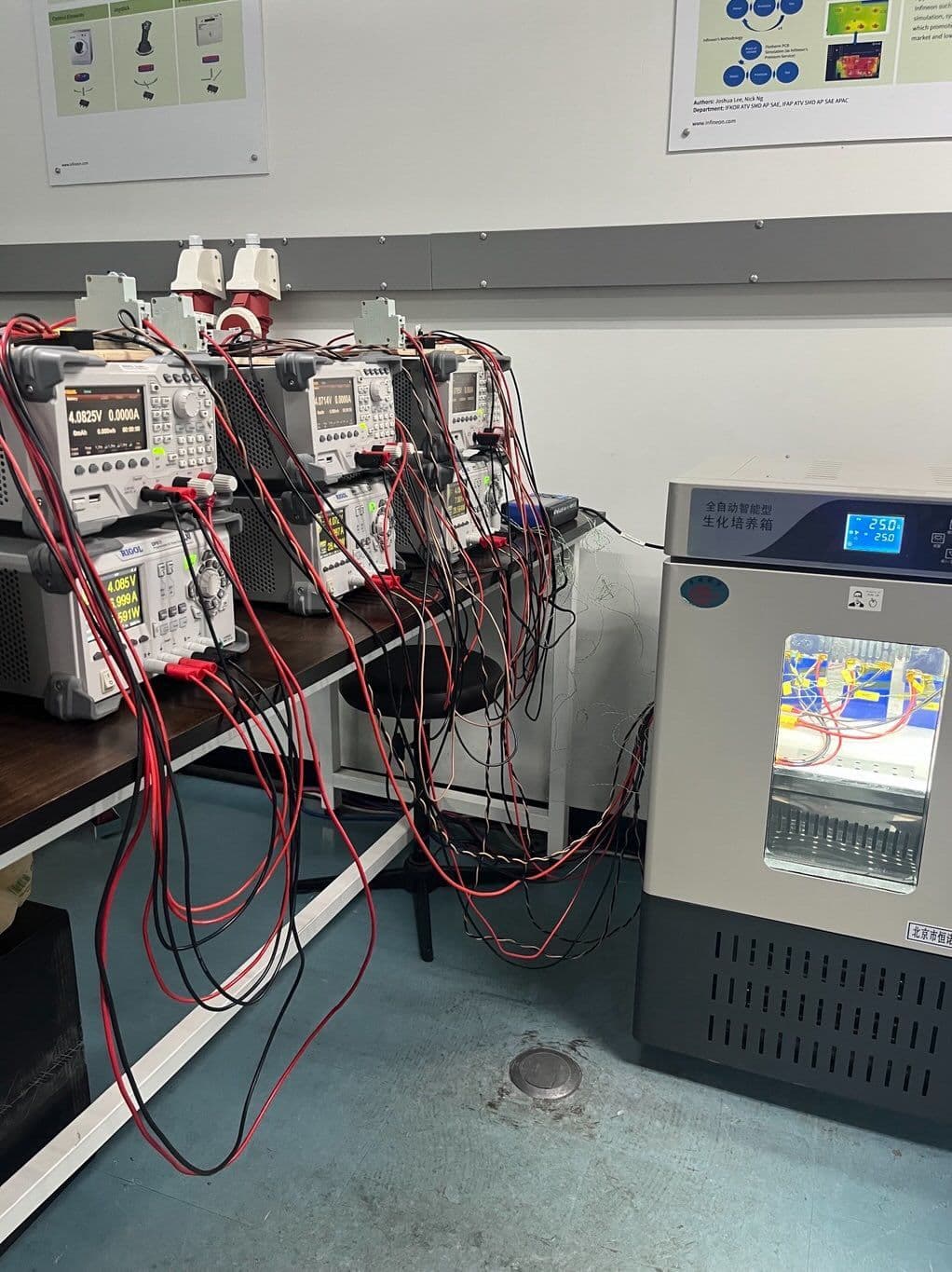
Currently, lithium batteries are widely used in electronic devices and electric vehicles, making the estimation of their State of Health (SOH) crucial. Accurate SOH estimation helps extend battery lifespan, reduce maintenance costs, and prevent safety issues such as overheating or explosions. This project aims to study and analyze mathematical models of batteries and develop SOH estimation techniques using Neural Networks to enhance accuracy and evaluation speed. The experiment involved collecting charge and discharge data from three lithium battery cells under controlled temperature conditions while maintaining a constant current. The current, voltage, and time data were recorded and analyzed to determine the battery capacity for each cycle. These data were then used to train a Neural Network model. The results demonstrated an effective method for predicting battery health status. The outcomes of this project can contribute to the development of a Battery Management System (BMS) that improves battery efficiency and longevity. Additionally, it provides a foundation for applying artificial intelligence techniques in the energy sector effectively.

คณะอุตสาหกรรมอาหาร
Spent coffee grounds (SCG) are a byproduct of the coffee brewing process, and their quantity continues to increase due to the growing global coffee consumption. SCG contain beneficial compounds such as polysaccharides, dietary fibers, and antioxidants, which can be utilized in various applications, including prebiotic extraction. This study focuses on extracting prebiotics from SCG using acid hydrolysis and enzymatic hydrolysis methods to evaluate their potential in promoting the growth of beneficial gut microorganisms. The expected results of this research include adding value to coffee industry waste, reducing organic waste, and providing a sustainable approach to developing prebiotic products for use in the food and health industries. Furthermore, this study aligns with sustainable resource utilization and environmentally friendly practices.
คณะวิศวกรรมศาสตร์
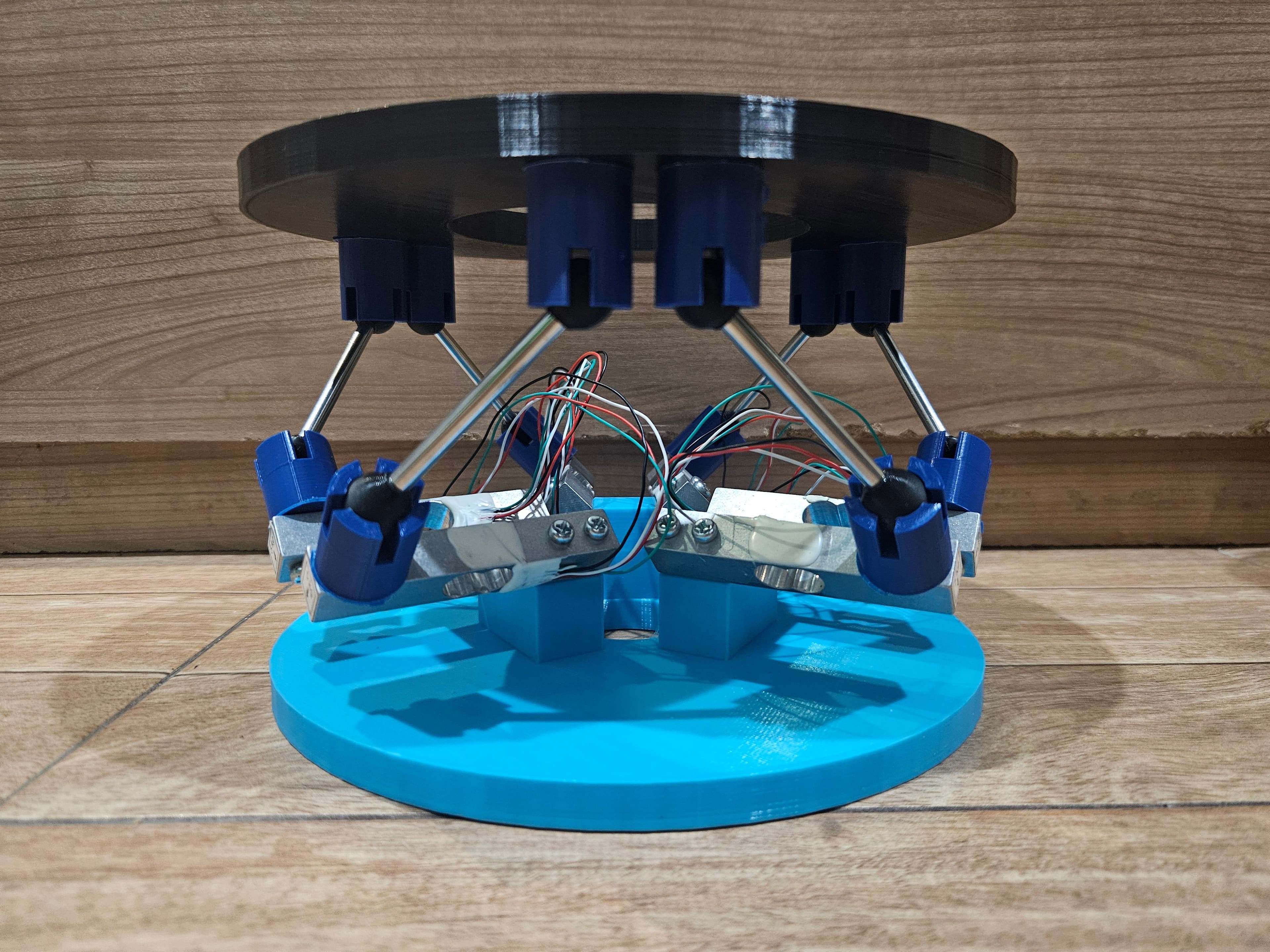
This research project focuses on the design and development of a Manual Control Robot using Load Cell technology to enhance precision and reduce the time required for robot control. The use of automation robots in industries still presents challenges due to the complexity of programming and control. Therefore, developing a manual control system that responds to force input in all directions can significantly improve the efficiency of robots, making them more suitable for tasks requiring precise and intricate control. The study integrates Load Cell sensors, an HX711 amplifier circuit, and an Arduino UNO R3 to develop a control module that translates user-applied forces into commands for an RV-7FRL-D industrial robotic arm. Additionally, MATLAB is utilized for processing Load Cell data to analyze and optimize the robot’s movement accuracy. The results demonstrate that the developed system effectively reduces robot setup time while simplifying and improving control flexibility. This project represents a crucial step in enhancing the capabilities of industrial robots, allowing for seamless human-robot interaction through a manual control system that directly responds to user-applied forces.