

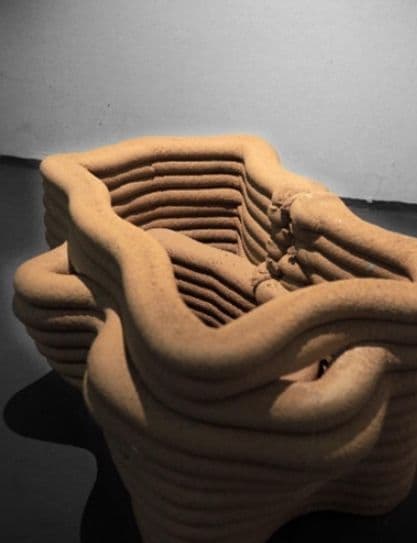
This study explores the design, production, and installation of 3D-printed modular artificial reefs (3DMARs) at Koh Khai, Chumphon Province, Thailand, through a design thinking framework. Collaborating with SCG Co., Ltd. and the Department of Marine and Coastal Resources, the research establishes design criteria and installation methods, utilizing content analysis and qualitative research. Key principles such as modularity, flexibility, environmental sustainability, and usability are identified. The user-centered approach optimizes the 3DMARs for transport and deployment, enabling local community involvement and fostering sustainable practices. The modular design supports scalability, enhancing marine habitats and coral larval settlement. Furthermore, underwater monitoring techniques enable site-specific data collection, allowing for the generation of digital twin models. This research offers a practical framework for marine ecosystem restoration and empowers coastal communities in Thailand and beyond
-

วิทยาลัยวิศวกรรมสังคีต
Musical stories to enhance thinking skills of children aged 0-3 years using EF skills as a tool to enhance children development by focus on 3 basic skills. 1. Working memory 2. Inhibitory Control 3. Cognitive Flexibility
คณะบริหารธุรกิจ
The goal of the processed pineapple study is to reduce the number of pineapples wasted as a result of climate change and to determine the best way for processing different pineapple species. The drying method, also known as dehydration, is chosen for processing because it is appropriate for the variety's features and will provide the maximum benefit while reducing waste, resulting in the most value for the product. This study was carried out to develop the processing of new kinds, use various processing principles to adapt to this pineapple variety, raise the value of agricultural goods, significantly reduce waste, and provide marketing potential in the future.
คณะวิศวกรรมศาสตร์
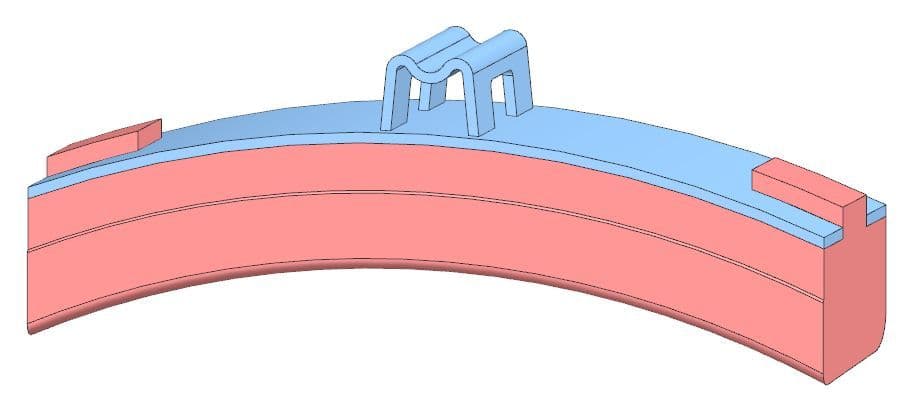
The railway brake system usually uses compressed air brake system which uses high-pressure air to press the brake shoe on the surface of the wheel to reduce the speed of the train. Repeated friction generates heat at the contact surface, increasing thermal stress on the cast iron brake shoe. The purpose of this study is to investigate the thermal stress on a prototype of cast iron brake shoe using the finite element method compare the analytical results to the actual brake shoe and redesign a brake shoe prototype to reduce thermal stress. Based on the results of the thermal stress study using the finite element method, it has shown that the location of the thermal stress on the prototype brake shoe according to the location of the crack on the real brake shoe. The brake shoe's design which includes single notch in the center of brake shoe which is can help to reduce thermal stress. The results from this study should be validated with the results from the field test to evaluate both of thermal distribution and braking efficiency in term of braking distances as well.