
BrushXchange is a toothbrush brand dedicated to reducing plastic waste in Thailand by offering toothbrushes made from recycled plastic with replaceable bristles. These products help minimize waste generated by traditional toothbrushes. The design is modern and user-friendly, emphasizing durability, comfort, and affordability, making it appropriate for health-conscious and environmentally aware consumers. The brand aims to drive change in the oral care industry by providing high-quality products at accessible prices. Its marketing strategy focuses on using social media platforms like Instagram and TikTok and collaborating with organizations that promote sustainability. The product is distributed through retail stores such as Lotus’s and Tops. BrushXchange also prioritizes environmental responsibility by using recycled paper packaging and organizing sustainability campaigns. The brand's long-term goal is to become a widely recognized brand image in the eco-friendly toothbrush market in Thailand while encouraging sustainable living habits within society.
1.ปัญหาขยะพลาสติกในประเทศไทย ประเทศไทยมีการผลิตขยะรวม 27.8 ล้านตันต่อปี โดยขยะพลาสติกคิดเป็น 12-13% ของปริมาณขยะทั้งหมด โดยขยะพลาสติกจากแปรงสีฟันที่ใช้แล้วทิ้งเป็นอีกปัจจัยที่ทำให้ปริมาณขยะเพิ่มขึ้น ด้วยจำนวนประชากรไทยกว่า 66 ล้านคน มีความเป็นไปได้ที่จะมีแปรงสีฟันที่ถูกทิ้งปีละประมาณ 66 ล้านชิ้น 2.มุ่งเน้นการสร้างความตระหนักรู้เกี่ยวกับปัญหาขยะพลาสติกในชุมชนและสังคม 3.เราต้องการนำเสนอผลิตภัณฑ์ที่ตอบสนองความต้องการของผู้บริโภคที่ใส่ใจสิ่งแวดล้อม โดยยังคงคุณภาพ ทนทาน และใช้งานได้สะดวก
คณะวิศวกรรมศาสตร์
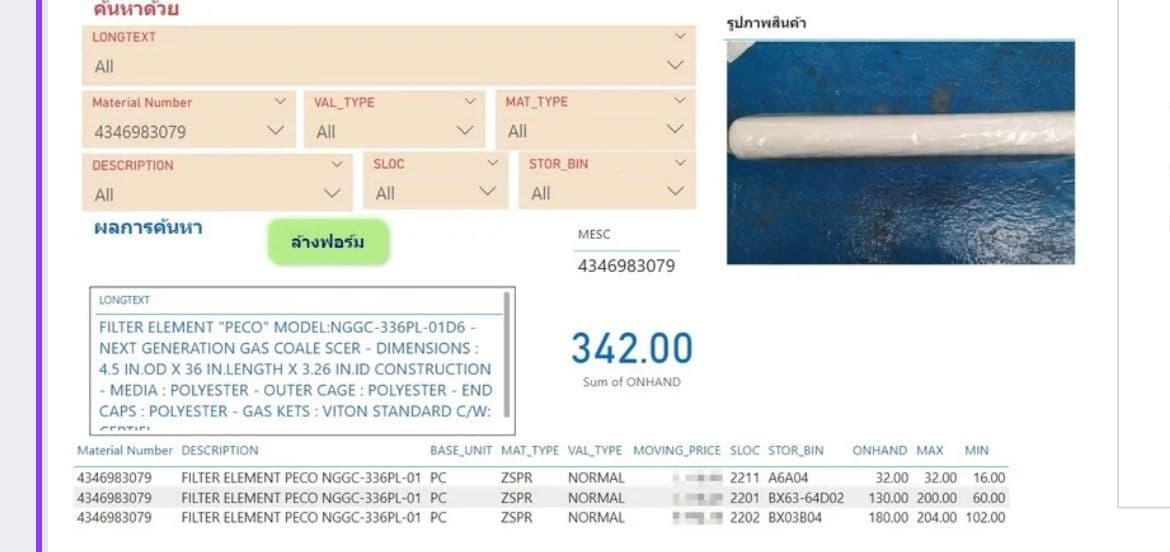
This cooperative education project aims to enhance speed and facilitate the verification process for stock issuance, transfers, distributions, and receipts in the warehouse. The primary focus is to address issues related to wasted time and delays in operational processes. Through analysis, it was found that SAP, the current system, involves complex processes requiring specialized expertise. Although the company has developed the iWarehouse system to improve efficiency, delays and procedural complexity persist. To resolve these challenges, Power BI was utilized to visualize data related to stock issuance, transfers, distributions, and receipts, allowing warehouse staff to work more efficiently by minimizing waste and accelerating processes. Additionally, Power Automate was integrated to automate the processing of received stock numbers from emails, reducing errors and delays caused by manual data entry. The results of this improvement indicate a significant increase in employee efficiency and a noticeable reduction in wasted time. Upon project completion, the findings and development approach will be provided to the company for further enhancement.

คณะวิทยาศาสตร์
This project aims to investigate and develop an energy storage system utilizing solar energy sources through the integration of solar cell technology and Graphene Quantum Dot Battery, representing a novel approach to enhancing energy storage efficiency and prolonging the lifespan of renewable energy systems. The selection of graphene and quantum dots as materials for battery development is attributed to their exceptional properties, including high electrical conductivity, charge storage capacity, efficient energy transfer, and enhanced stability.
คณะวิศวกรรมศาสตร์
In this project, we introduce Power Grid Analyzer (PGAz), an open-source software package based on MATLAB, specifically designed for analyzing and controlling future power grids. Initially, PGAz is equipped with four fundamental features: power flow (PF), optimal power flow (OPF), small-signal stability analysis (SSSA), and time-domain simulation (TS). At this stage, Part I concentrates on the development of PF and OPF. The formats of our developed tool are presented, along with its command prompts. In this part, we have developed several conventional yet effective methods in the PGAz package to address PF and OPF problems, including techniques such as the Newton-Raphson method, Gauss-Seidel method, Interior Point Method, Iwamoto’s method, Fast Decoupled Load Flow, Genetic Algorithm, and Particle Swarm Optimization. Additionally, it emphasizes important aspects, algorithms, and various case studies that have been tested against IEEE benchmarks ranging from the IEEE 5-bus to the IEEE 300-bus test systems. The results demonstrate the capabilities of PGAz for future educational and research applications in PF and OPF. Finally, we outline a plan for developing Part II, which will mainly focus on SSSA and TS.