

-
-
คณะสถาปัตยกรรม ศิลปะและการออกแบบ
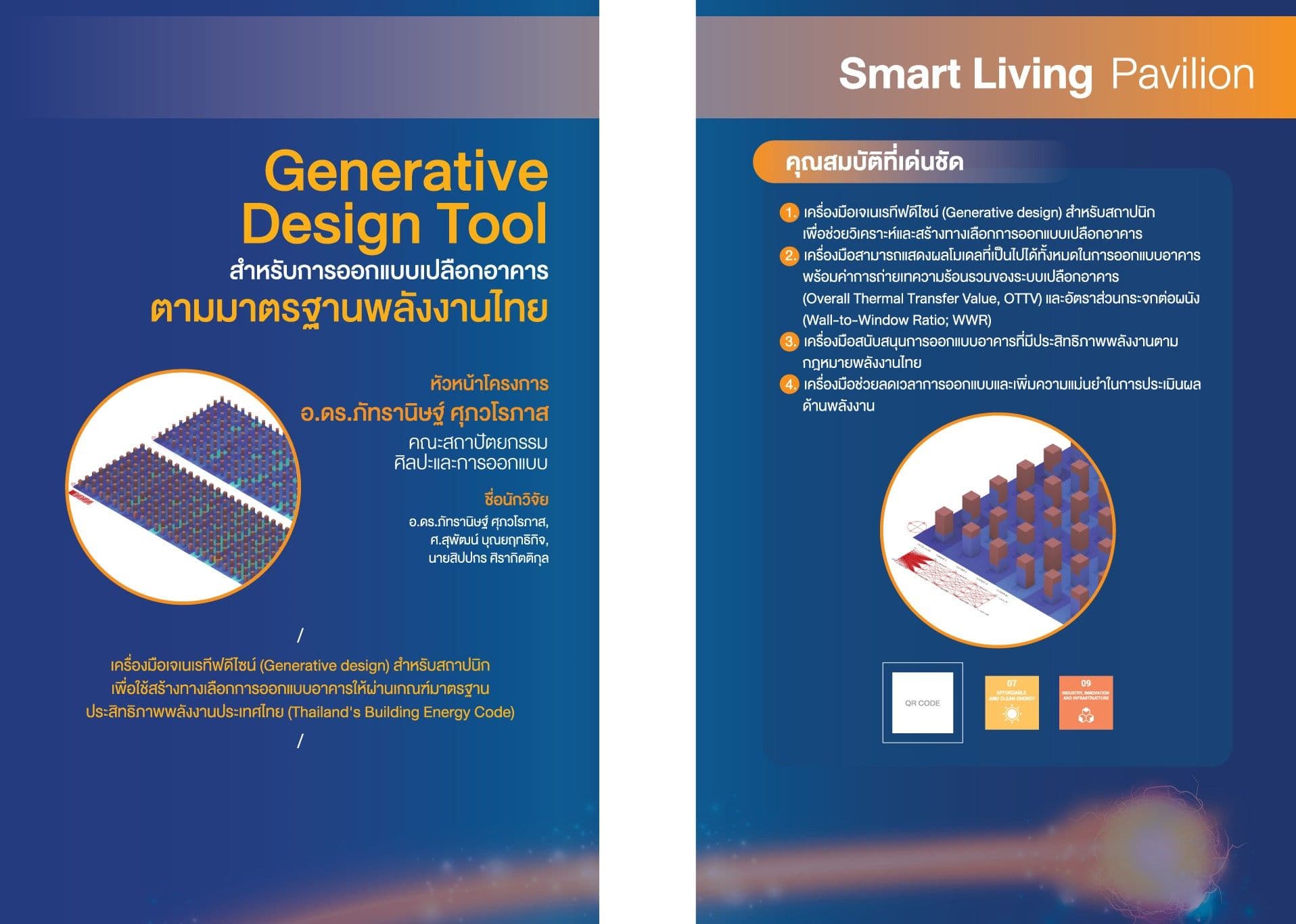
Architectural design should prioritize improving building energy efficiency. The potential of generative design can automatically generate building design alternatives, thereby saving time and increasing opportunities to discover design solutions that enhance building energy performance. In this context, the building envelope is considered one of the key factors affecting building energy consumption and is addressed during the early stages of design, making it directly relevant to architects. However, studies linking generative design with building design based on energy standards in the Thai context remain limited. Therefore, this study aims to develop a building envelope design support tool using a Generative Design process based on Thailand’s Building Energy Code (BEC), implemented as an add-in for software commonly used by architects in building design. The tool is designed to generate building design alternatives based on the Window-to-Wall Ratio (WWR), while automatically visualizing three-dimensional building models and calculating the Overall Thermal Transfer Value (OTTV). The results of this research provide architects and designers with a tool that can reduce design time, improve accuracy throughout the design process, and promote environmentally responsible building design in accordance with Thailand’s energy efficiency standards.
คณะแพทยศาสตร์
-

คณะครุศาสตร์อุตสาหกรรมและเทคโนโลยี
-