
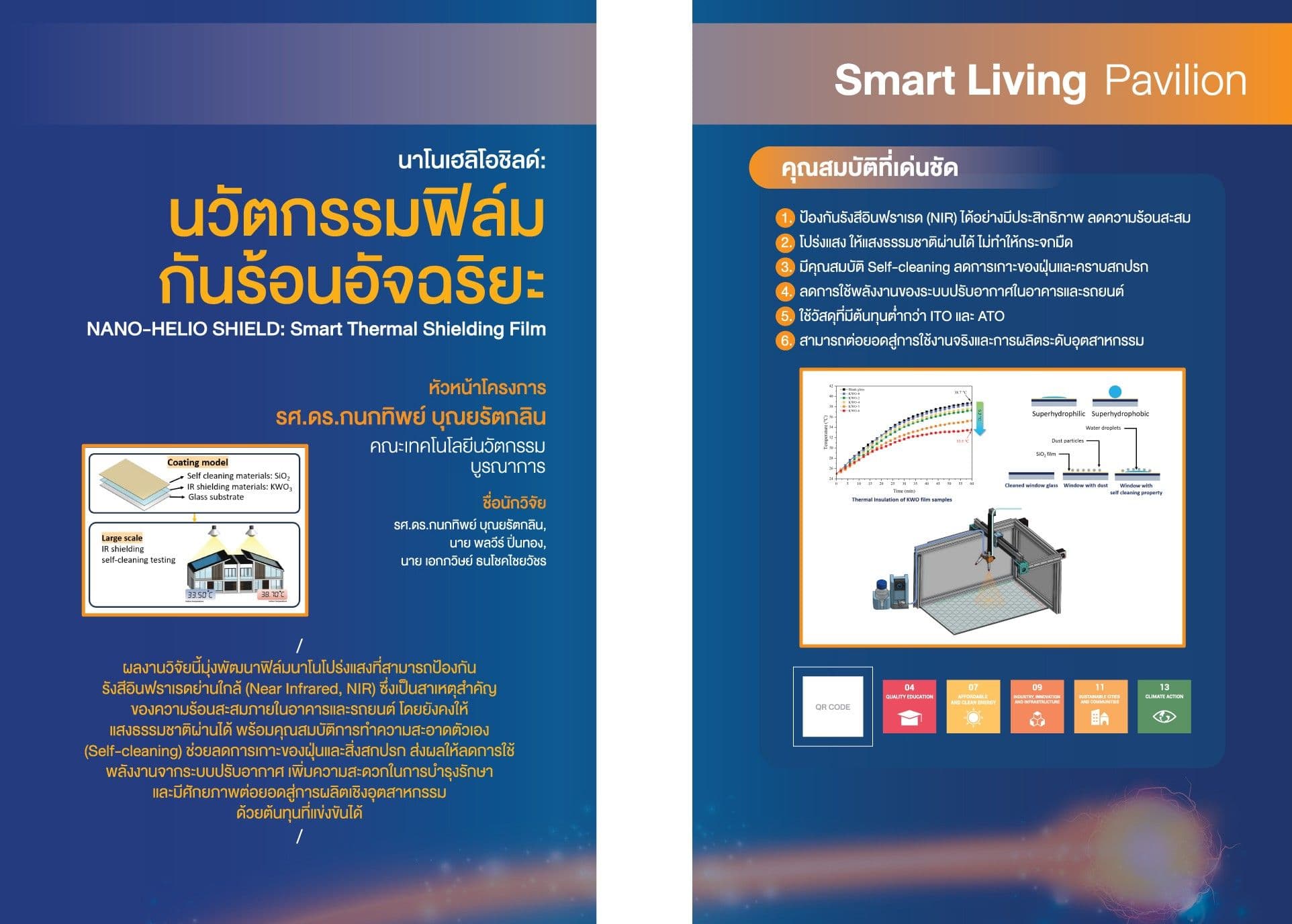
This project aims to develop a nanofilm that effectively blocks near-infrared radiation, possesses self-cleaning properties, and maintains transparency to allow natural light into buildings, thereby reducing energy consumption from cooling. The prototype has potential applications in the glass or automotive film industries.
ปัจจุบัน พลังงานในภาคครัวเรือนมีการใช้สูง โดยเฉพาะเพื่อการทำความเย็นในอาคาร ซึ่งมีสาเหตุมาจากการทะลุผ่านของ รังสีอินฟราเรดย่านใกล้จากแสงอาทิตย์ผ่านกระจกหรือหน้าต่าง โครงการนี้จึงมีเป้าหมายในการพัฒนาฟิล์มนาโนที่สามารถป้องกัน ความร้อนจากรังสีอินฟราเรดย่านใกล้ได้อย่างมีประสิทธิภาพ พร้อมทั้งคงความโปร่งแสง เพื่อให้แสงธรรมชาติเข้าสู่ตัวอาคารได้ โดยวัสดุเป้าหมายคือโพแทสเซียมทั้งสเตนบรอนซ์ (K0.3WO3) ซึ่งมีประสิทธิภาพในการดูดกลืนรังสีอินฟราเรดย่าน 780-2500 นาโนเมตร โครงการจะนำเทคนิค Ball Milling ร่วมกับการเคลือบผิวด้วยซิลิกา (SiO2) เพื่อเพิ่มคุณสมบัติการทำความสะอาดตัวเอง แบบไฮโดรโฟบิก โดยมีเป้าหมายเพื่อพัฒนาเป็นต้นแบบวัสดุที่สามารถนำไปใช้ได้จริงในอุตสาหกรรมกระจกหรือฟิล์มรถยนต์
คณะวิทยาศาสตร์
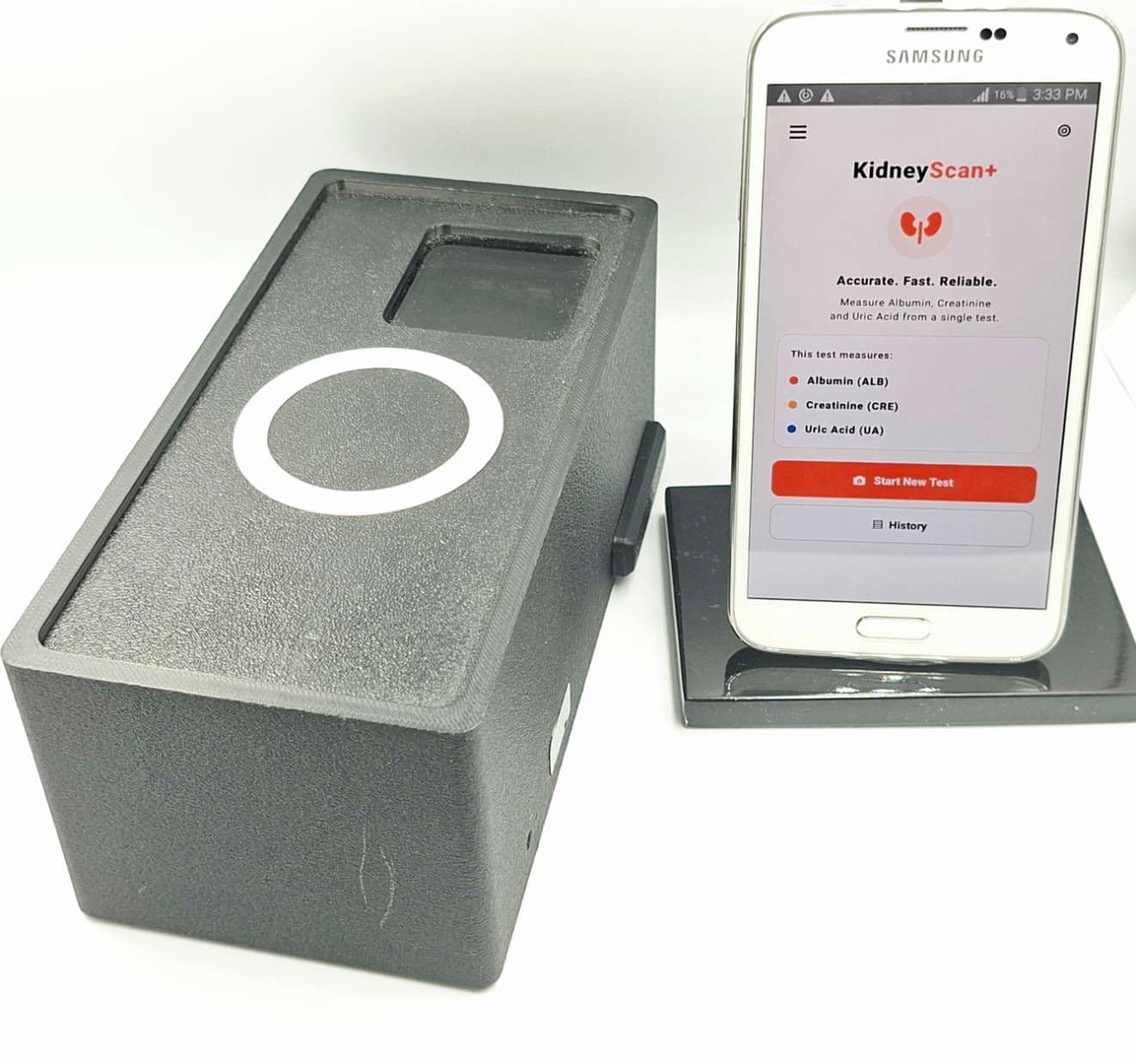
Chronic kidney disease (CKD) and kidney stones are major public health concerns in Thailand, particularly among elderly individuals and patients with diabetes mellitus or hypertension. Early detection of kidney impairment is essential for delaying disease progression and reducing the risk of end-stage renal disease. The albumin-to-creatinine ratio (ACR), together with urinary uric acid measurement, provides valuable clinical information for the early screening and diagnosis of kidney disorders. However, current analytical methods are unable to simultaneously determine all three biomarkers in a single assay and generally require sophisticated laboratory instruments, making them unsuitable for point-of-care testing (POCT) or home-based screening. This research project aims to develop a dual-layer microfluidic paper-based analytical device (µPAD) capable of simultaneously determining urinary albumin, creatinine, and uric acid in a single test. The upper layer will function as a filtration unit, enabling direct analysis of urine samples without dilution or other sample pretreatment, while the lower layer will contain specific colorimetric sensing zones for the selective detection of each analyte. This design is expected to simplify the analytical procedure, minimize matrix interference, and improve user convenience. In addition, a smartphone application, **KidneyScan+**, will be developed for both Android and iOS platforms. The application will employ artificial intelligence (AI)-based image analysis to capture the colorimetric responses from the µPAD, quantify the concentrations of the target analytes, calculate the albumin-to-creatinine ratio (ACR), and provide an immediate assessment of kidney disease risk. The project encompasses the design and fabrication of the µPAD, optimization of analytical conditions, evaluation of analytical performance, validation using real urine samples, and verification of the accuracy and reliability of both the sensing platform and the smartphone application. A portable packaging system containing the testing device, accessories, and user instructions will also be developed to facilitate practical implementation. The expected outcome is an integrated POCT platform consisting of a portable paper-based test and a smartphone application that enables rapid, accurate, and user-friendly screening of chronic kidney disease and kidney stones. The developed technology is anticipated to promote self-screening, support remote healthcare (telehealth), improve access to early diagnosis, and ultimately reduce the burden of kidney diseases on the healthcare system.
คณะอุตสาหกรรมอาหาร
-
คณะวิศวกรรมศาสตร์
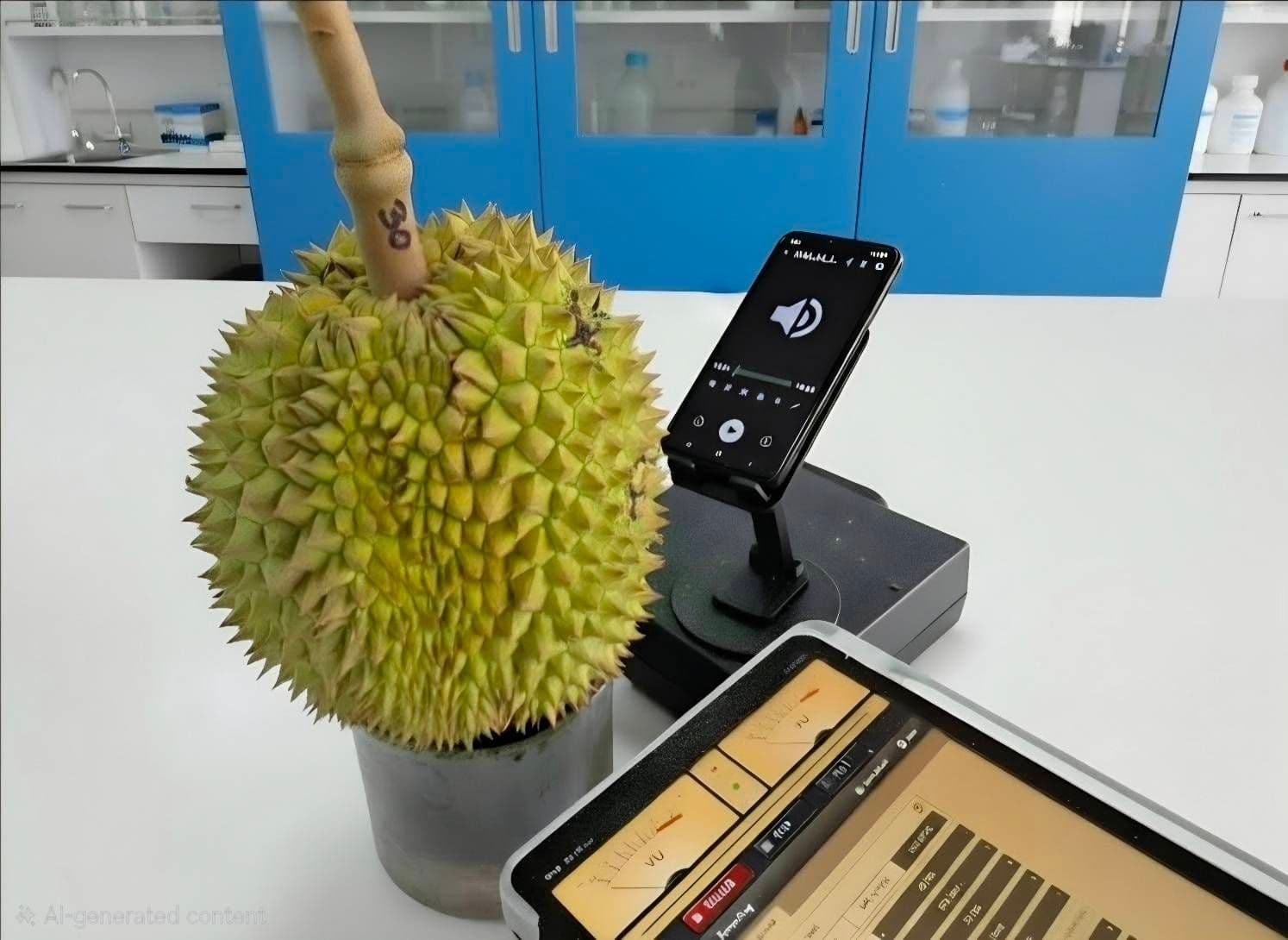
Durian is one of Thailand's most valuable economic fruits, yet ripeness assessment still relies primarily on experienced inspectors who evaluate the fruit by tapping and listening to its acoustic response. This conventional method is subjective and may lead to inconsistent results. This study presents the development of an AI-based acoustic system for non-destructive durian ripeness classification. The system integrates an acoustic acquisition device with an artificial intelligence model that analyzes tapping sounds. Audio signals are converted into Mel spectrograms and processed using a deep learning model to classify durian into three ripeness levels: Unripe, Mid-ripe, and Ripe. The system provides real-time classification results together with prediction confidence scores to support decision-making. The developed prototype demonstrated rapid, accurate, and consistent ripeness classification, reducing reliance on human expertise while improving the standardization of quality assessment. The proposed innovation offers significant potential for practical implementation in durian orchards, packing houses, and export industries by enhancing quality control, reducing classification errors, and supporting smart agriculture and digital transformation in Thailand's durian supply chain.