

Nowadays, automobiles are the most widely used form of transportation. This increases the risk of accidents. Therefore, car users prefer to get insurance to reduce the risk in the event of an accident. As for the insurance company, the company will be responsible for damages according to the conditions of the policy. One of the duties of a company's claims department is to procure spare parts to control costs. However, in the case of compensation, there may be erroneous operations, such as ordering the wrong parts or ordering more than necessary. Currently, insurance companies do not have a very efficient management system. This research aims to develop a system for managing and storing automobile parts for insurance companies. The system is designed to be able to track the status of spare parts from storage to disbursement. It uses barcode technology to increase accuracy and reduce errors in data recording. Such a system will help insurance companies manage spare parts systematically, reduce unnecessary costs, and increase efficiency in providing services.
การประกันภัยเป็นที่นิยมมากในปัจจุบัน บริษัทประกันจึงจำเป็นที่จะต้องปรับตัวรับมือกับกรมธรรม์ที่มากขึ้นในทุกๆปี ทำให้จะต้องมีระบบในการรองรับและจัดการต่างๆ ซึ่งในหน่วยงานของสินไหมรถยนต์เอง ก็ต้องมีระบบและการจัดการที่มีประสิทธิภาพเช่นกัน และหนึ่งในนั้นคืองานระบบภายในและระบบภายนอกที่เกิดจากความต้องการของสาขาต่างๆของบริษัท และคู่ค้าสัญญาในเครือ ซึ่งทำให้เกิดระบบขึ้นมา ได้แก่ ระบบจัดการและจัดเก็บอะไหล่

คณะวิทยาศาสตร์
The purpose of this study was to examine and analyze the factors influencing household energy expenditures in Thailand. With sample group of 57,600 households. The findings reveal that the majority of the sample population is male, with an average age of 54.31 years, and most are married. The majority have an education level of primary or secondary school and are primarily Own-account worker (without employee), Private company employee or engaged in other job. In terms of social characteristics, the average household size is 2.71 people. Most residences are located in the Central, Northeastern, and Northern regions with similar proportions, followed by the Southern region and Bangkok, respectively. Most type of dwelling in detached houses, with materials of construction being cement or brick, followed by half concrete and wood. Regarding tenure, almost own dwelling and land, with an average of 2.88 rooms per household. Electricity is available in all households, with an average of 2.30 vehicles per household and an average of 22 electrical appliances per household. Regarding economic characteristics, most respondents have government/state enterprise welfare and receive benefits from the government programs. The majority have never borrow money from government funds. The average communication services of respondents amount to 788.46 THB, while the average household debt stands at 4,760.74 THB. At a significance level of 0.05, the factors influencing household energy expenditures in Thailand include gender, education level, marital status, job, household size, residential region, type of dwelling, material of construction, tenure, number of rooms, number of vehicles, number of electrical appliances, welfare of medical services, receive benefits from the government programs, borrow money from government funds, communication services, and household debt. However, age does not affect household energy expenditures in Thailand. The results of multiple linear regression analysis indicate that six quantitative independent variables—communication services, number of household electrical appliances, number of vehicles in the household, household debt, number of rooms, and household size—explain variations in household energy expenditures, with an Adjusted R Square value of 0.561.
วิทยาลัยอุตสาหกรรมการบินนานาชาติ
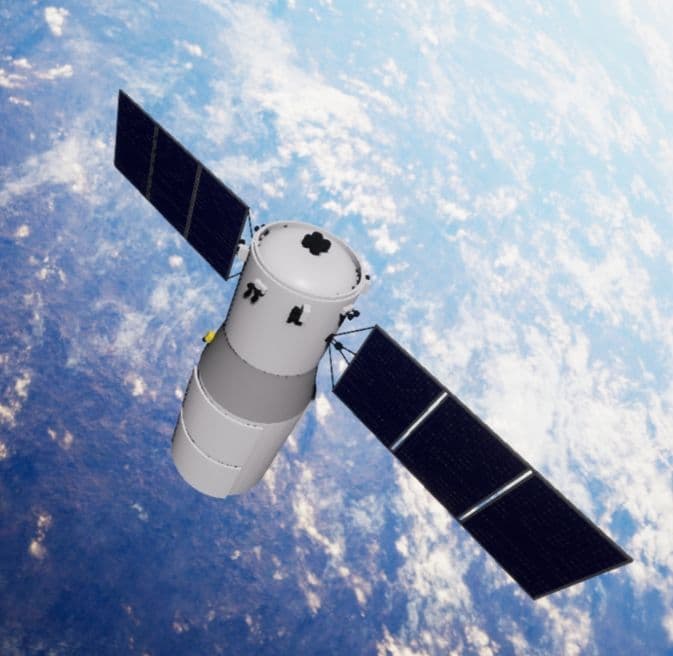
The capture of a target spacecraft by a chaser is an on-orbit docking operation that requires an accurate, reliable, and robust object recognition algorithm. Vision-based guided spacecraft relative motion during close-proximity maneuvers has been consecutively applied using dynamic modeling as a spacecraft on-orbit service system. This research constructs a vision-based pose estimation model that performs image processing via a deep convolutional neural network. The pose estimation model was constructed by repurposing a modified pretrained GoogLeNet model with the available Unreal Engine 4 rendered dataset of the Soyuz spacecraft. In the implementation, the convolutional neural network learns from the data samples to create correlations between the images and the spacecraft’s six degrees-of-freedom parameters. The experiment has compared an exponential-based loss function and a weighted Euclidean-based loss function. Using the weighted Euclidean-based loss function, the implemented pose estimation model achieved moderately high performance with a position accuracy of 92.53 percent and an error of 1.2 m. The in-attitude prediction accuracy can reach 87.93 percent, and the errors in the three Euler angles do not exceed 7.6 degrees. This research can contribute to spacecraft detection and tracking problems. Although the finished vision-based model is specific to the environment of synthetic dataset, the model could be trained further to address actual docking operations in the future.

คณะอุตสาหกรรมอาหาร
The "PRIVARY" product is an innovative herbal jelly beverage designed to support weight management and promote health through the benefits of four Thai herbs: roselle, safflower, chrysanthemum, and bitter melon. These herbs are rich in active compounds such as flavonoids, beta-carotene, and anthocyanins, which help reduce blood lipids, prevent inflammation, and exhibit antioxidant properties. The product emphasizes convenience and caters to health-conscious consumers using advanced production techniques like Inverse and External Gelation to create spheres encapsulating key bioactive compounds. Additionally, the product aligns with sustainability goals by enhancing the value of Thai herbs and supporting local communities.